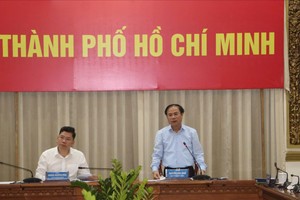
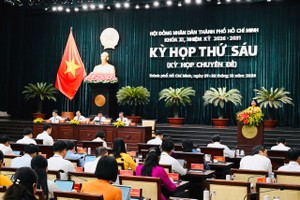
On the afternoon of October 29, deputies at a group discussion session during the sixth meeting of the 11th-term Ho Chi Minh City People's Council for 2026-2031 contributed opinions on a draft resolution approving the HCMC Master Plan for the 2025-2050 period, with a 100-year vision.
Discussions focused on clearly identifying the advantages of each area, organizing urban and industrial space effectively, and selecting economic sectors that match the city's strengths and competitiveness.
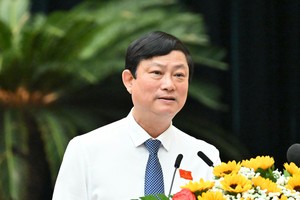
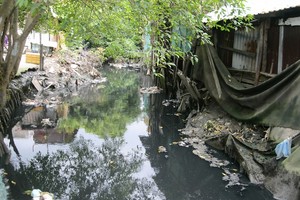
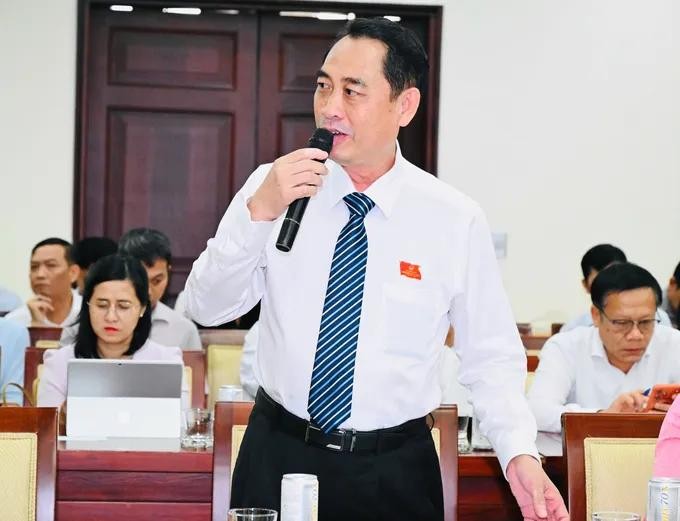
Deputy Nguyen Hoan Vu, chief executive officer of Becamex Group, proposed that the plan clearly identify industrial zones that will receive manufacturing facilities relocated from the urban core. This would free up land for urban renewal projects and help address traffic congestion, flooding, and environmental pollution.
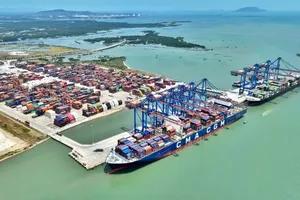
According to deputy Nguyen Hoan Vu, the plan should specify receiving locations, relocation roadmaps, and necessary infrastructure requirements. The development of new industrial parks should be implemented in a synchronized and scientific manner, ensuring transportation connectivity and long-term production growth.
Regarding urban space planning, deputy Nguyen Van Duc, Secretary of the Party Committee and chairman of the People's Council of Tan Thoi Hiep Ward, proposed studying elevated-space development associated with transit-oriented development (TOD) models in suitable areas while ensuring defense, security, and aviation safety requirements.
He said the approach could create additional space for resettlement projects and urban renewal while allowing more ground-level land to be allocated for green areas and public facilities.
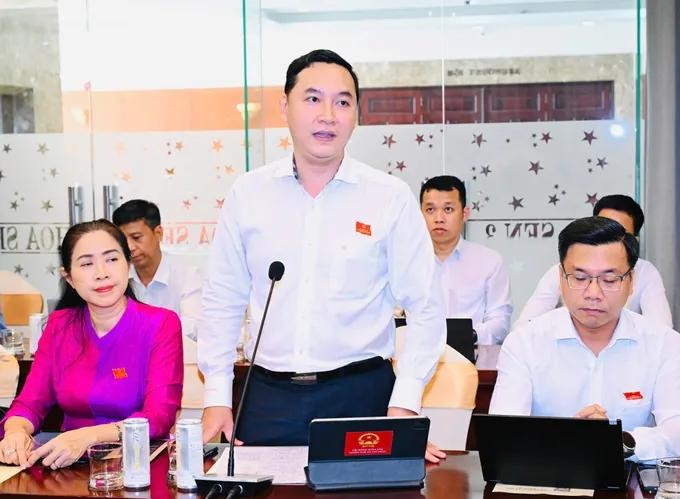
For underground development, deputy Nguyen Van Duc called for integrated planning to connect public facilities, rail systems, drainage infrastructure, housing, and related projects.
From the perspective of science and technology development, deputy Mai Huu Quyet, Secretary of the Party Committee and chairman of the People's Council of Thu Duc Ward, noted that six of HCMC's planned 11 digital technology zones are located in the former Binh Duong area, where a northern science and technology urban zone project has already been announced.
Meanwhile, land availability in the eastern part of the city, home to Vietnam National University-HCMC and the High-Tech Park, is becoming limited. Deputy Mai Huu Quyet therefore proposed expanding the science and technology corridor northward, linking high-tech industry with research and development (R&D) activities to foster the creation of new products.
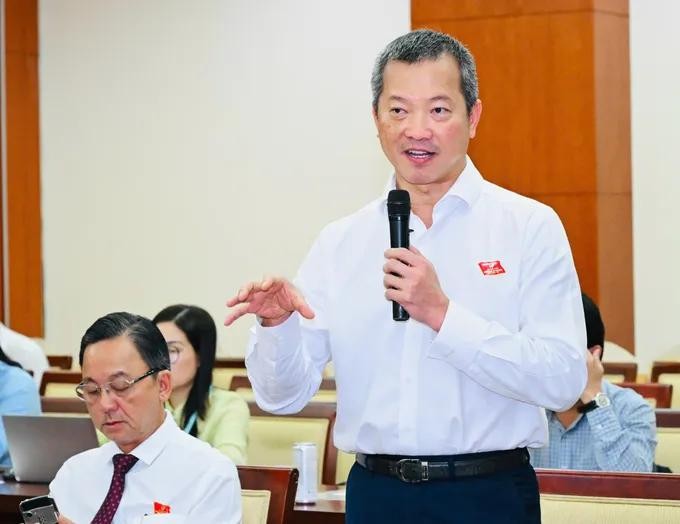
Deputy Mai Huu Tin, Chairman of the HCMC Business Association (HUBA), said the city should clearly define value chains, technology segments, and core competitive advantages that can be developed in sectors such as advanced manufacturing, artificial intelligence (AI), semiconductors, and emerging technologies.
The HUBA Chairman also recommended that the HCMC People's Council and People's Committee include high-tech agriculture and deep processing among priority sectors, saying these fields could contribute to maintaining economic stability.
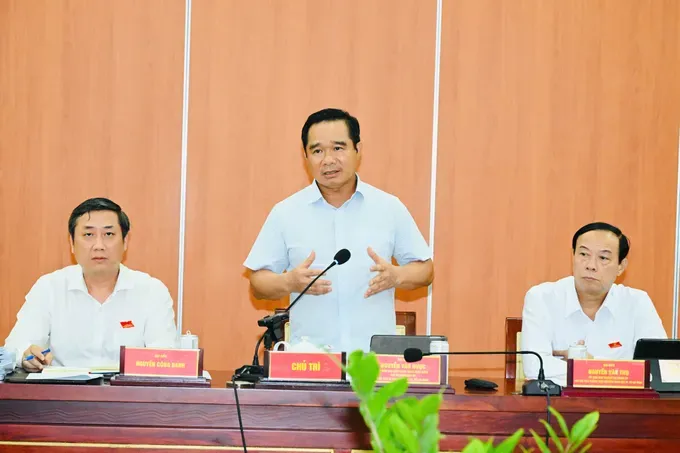
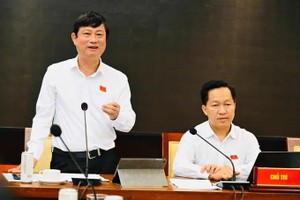
Speaking at the discussion session, HCMC People's Committee Chairman Nguyen Van Duoc stressed that the city's master plan would serve as a particularly important foundation for governance and development management.
Following the merger, Ho Chi Minh City now has a larger geographical area, a bigger population, and greater development potential. Therefore, the plan must maximize the advantages of each area, creating overall synergies while ensuring coordinated, effective, and sustainable development.
After approval by the municipal People's Council, the Chairman of the HCMC People's Committee will formally approve the plan for implementation. Mr. Nguyen Van Duoc instructed departments, agencies, and local authorities to use the plan as the basis for area management, investment project approval, and urban development, ensuring synchronized infrastructure that aligns with development goals and the city's broader interests.
The Chairman of the Ho Chi Minh City People’s Committee affirmed that transforming the city into a metropolis of regional and global stature requires a long-term vision backed by rigorous implementation. He said the city has mobilized resources and enlisted experienced domestic and international consultants to support the planning process, laying the groundwork for managing and guiding socio-economic development in both the immediate future and over a 100-year horizon.