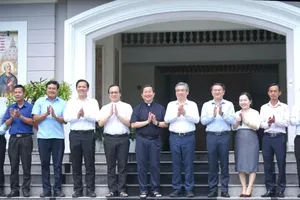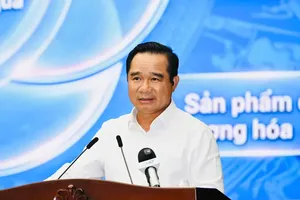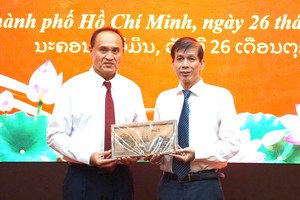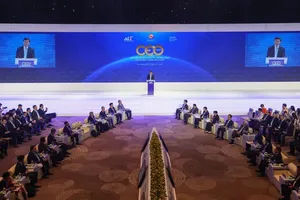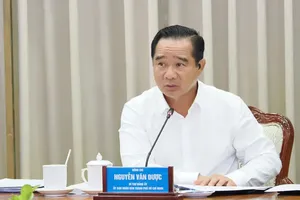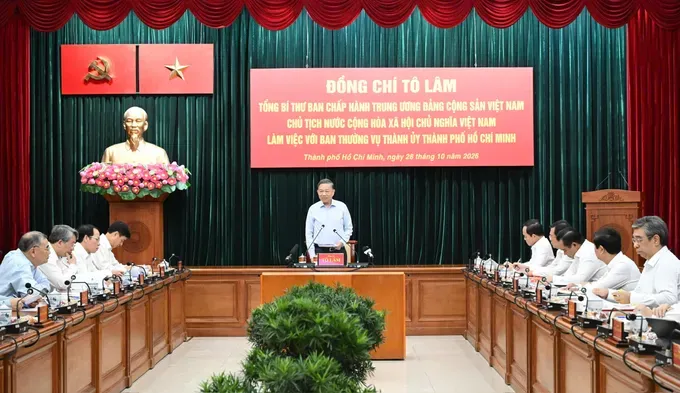
The working session focused on the implementation of the 14th National Party Congress Resolution and strategic resolutions adopted by the Party Central Committee and the Politburo.
Discussions also covered the city’s socio-economic performance in the first nine months of 2026 and its plan to achieve double-digit economic growth.
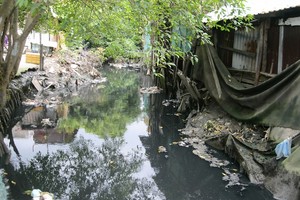
Participants reviewed efforts to address longstanding challenges facing the city, including traffic congestion, flooding and environmental pollution.
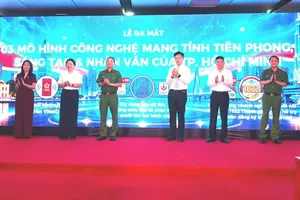
The working session also addressed plans to build a civilized Ho Chi Minh City free of drugs, mobilizing the strength of the entire political system and the public to tackle drug-related social ills at their root and maintain social order and safety.
Coordinated implementation of strategic resolutions
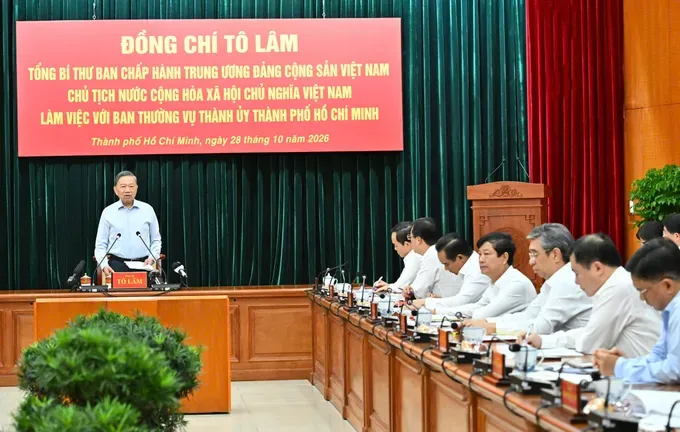
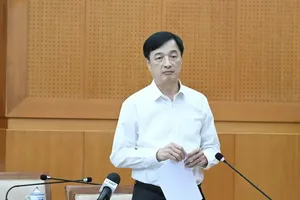
Reporting at the meeting, Mr. Le Quoc Phong, Standing Vice Secretary of the Ho Chi Minh City Party Committee, said the committee had issued all required programs and action plans to implement the Politburo’s strategic resolutions. Responsibilities, deadlines and deliverables had been clearly assigned, with implementation results linked to KPI-based personnel assessments.
Tasks assigned by Party General Secretary and State President To Lam have been carried out urgently and in a coordinated manner. The city has focused on accelerating implementation, resolving difficulties and addressing overdue and outstanding issues.
To implement Politburo Resolution No. 09-NQ/TW on building and developing Ho Chi Minh City in a new era, the city is prioritizing three breakthroughs in institutions, infrastructure and human resources. To date, the Ho Chi Minh City People’s Council has issued 25 of the 125 resolutions required to concretize the Urban Development Law. The city has launched a “30-day-and-night campaign to clear institutional bottlenecks” and is closely monitoring progress to bring new mechanisms into practice as soon as possible.
Party building and rectification remain a priority. The city is gradually renewing the Party’s leadership methods at all levels while improving the quality of political and ideological work, Party cell activities, role-model responsibilities and the performance of leading officials.
On economic development, Ho Chi Minh City remains committed to its double-digit growth target, collecting more than VND1 quadrillion in budget revenue and disbursing 100 percent of its 2026 public investment capital allocation. Under its economic management scenario, the city aims for gross regional domestic product (GRDP) growth of 12.3 percent in the fourth quarter, bringing full-year growth to 10.2 percent.
Ho Chi Minh City steps up efforts to tackle urban bottlenecks
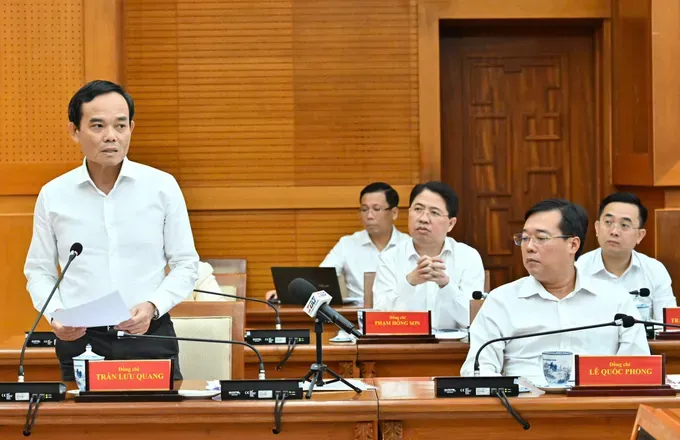
To ease traffic congestion, Ho Chi Minh City is focusing on infrastructure development, stronger interregional connectivity and traffic management adjustments.
Metro Line No. 2 has completed 100 percent of site clearance. The main section of the Ho Chi Minh City–Moc Bai Expressway has broken ground, with site clearance exceeding 95 percent in Ho Chi Minh City and reaching 98 percent in Tay Ninh Province.
The city has also opened Component Project 3 of the Bien Hoa–Vung Tau Expressway, as well as an underpass and an overpass at the An Phu interchange.
Ho Chi Minh City operates 180 bus routes, provides full fare subsidies on 134 inner-city routes and has optimized traffic signals at 216 major intersections.
However, traffic congestion remains a persistent problem. The city will continue addressing bottlenecks at specific locations, along routes and in individual areas, while accelerating projects at major gateways and improving connections to seaports and airports, alongside public transport development. Progress must be measured by travel times, reductions in congestion and actual traffic capacity.
On flood prevention, the Tham Luong–Ben Cat–Nuoc Len Canal project is approximately 80 percent complete, with around 62 kilometers of embankments finished. The city aims to substantially complete all approved project components by the end of 2026.
The cleanup projects along the Northern Bank of Doi Canal and Xuyen Tam Canal are being implemented concurrently. The Xuyen Tam Canal project is targeted for completion by the end of 2027.
In the environmental sector, the collection and treatment rate for domestic solid waste has reached 100 percent. However, the proportion recycled or treated using new technologies stands at around 38 percent, below the target of more than 45 percent. Phase 2 of the Ho Chi Minh City Environmental Sanitation Project is approximately 86 percent complete. Equipment installation is underway at the Nhieu Loc–Thi Nghe wastewater treatment plant, which is expected to be completed by the end of 2026 and begin operations in 2027.
As part of the goal of making Ho Chi Minh City drug-free by 2030, law enforcement agencies detected and handled 6,401 drug-related cases involving 17,756 suspects between December 15, 2025, and October 14, 2026. They initiated criminal proceedings in 4,527 cases against 14,699 defendants.
The city is linking efforts to control drug-related activities and transform high-risk areas with political responsibilities and assessments of the performance of heads of Party committees and local administrations in its communes, wards and special administrative zones.
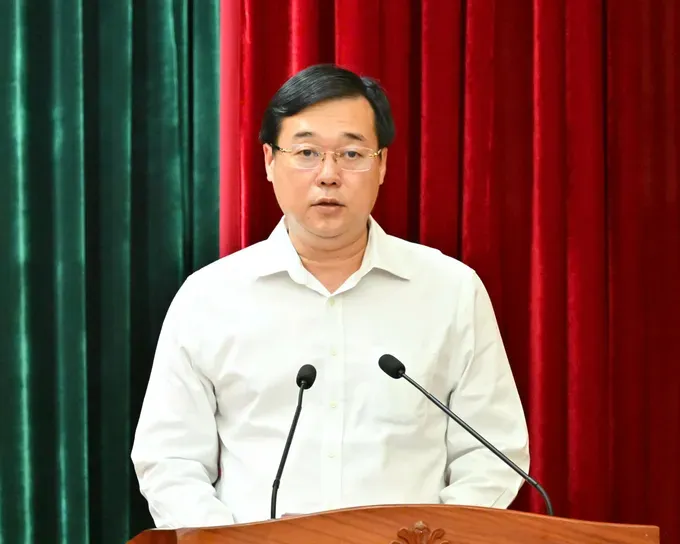
Ho Chi Minh City’s state budget revenue reaches VND676.937 trillion
- The city’s gross regional domestic product (GRDP) grew 9.86 percent in the third quarter and 9.06 percent in the first nine months of 2026. State budget revenue reached VND676.937 trillion (US$26.2 billion), equivalent to 84.2 percent of the central government’s assigned estimate. Public investment disbursement reached 77.5 percent of the centrally assigned plan. The industrial production index rose 10.9 percent, while exports totaled approximately US$76 billion, up 10.6 percent.
- Tourism revenue reached VND282.696 trillion, up 43.4 percent, with 8.51 million international visitor arrivals. A total of 42,423 new businesses were established. Foreign direct investment (FDI) attracted approximately US$17.8 billion, exceeding the annual target by 62.4 percent.
- Resources were mobilized to implement 18 strategic and key projects, with total investment estimated at US$30 billion. The city completed plans for the reorganization and handling of 10,257 state-owned housing and land facilities.
- In housing development, approximately 17.72 million square meters of floor space were added, bringing average housing space to 27.34 square meters per person. The supply of social housing reached approximately 22,900 units, while around 15,000 rental housing units were developed.
- More than 5.6 million people received health checkups, and all 163 hospitals implemented electronic medical records. A total of 1,027 classrooms were put into use, and a policy providing free general education textbooks was implemented.