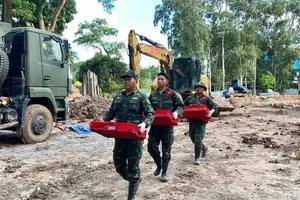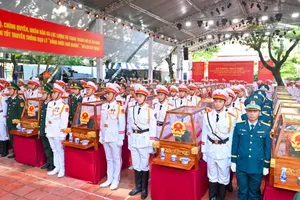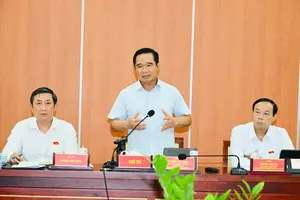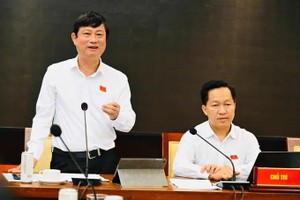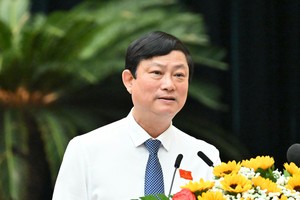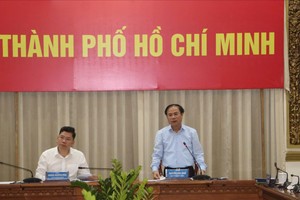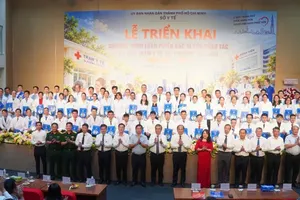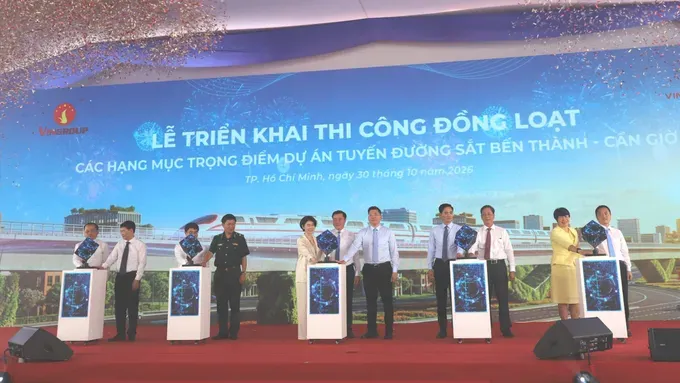
Attending the groundbreaking ceremony were Nguyen Sinh Nhat Tan, Deputy Secretary of the Ho Chi Minh City Party Committee; Hoang Nguyen Dinh, Vice Chairman of the Ho Chi Minh City People's Committee; and representatives of municipal departments and agencies.
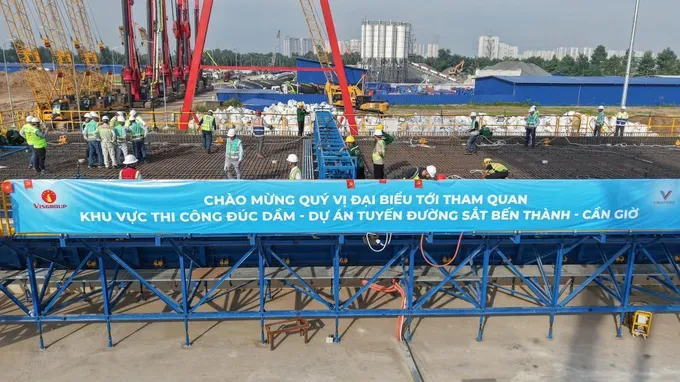
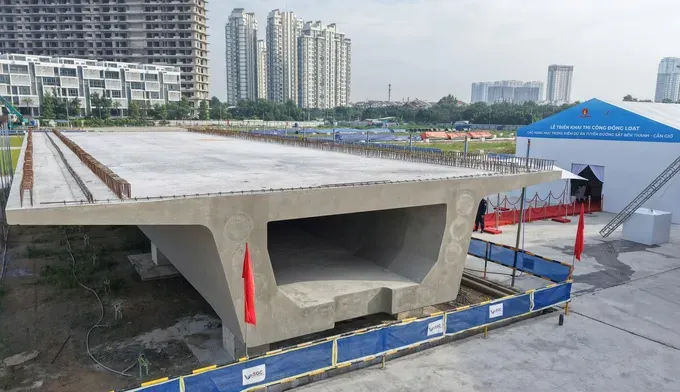
The project will expand its construction footprint, with multiple work fronts operating simultaneously along the entire route. Key construction sites include Ben Thanh underground station; the Saigon Port area, where tunnel excavation using tunnel boring machine (TBM) technology will be carried out; and the Rach Dia and Ong Doi bridges, as well as the approach bridges leading to Can Gio Bridge.
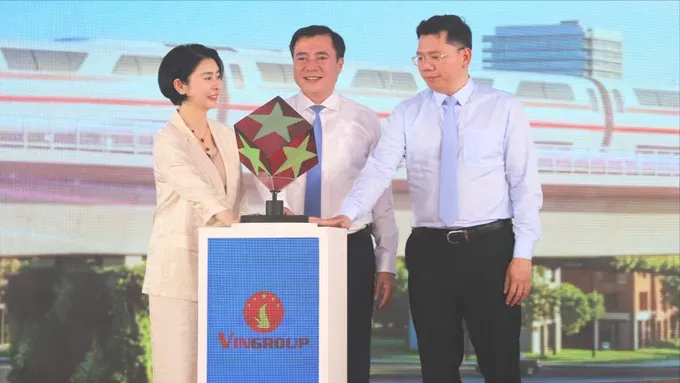
During the peak construction period, contractors are expected to mobilize approximately 10,000 workers, engineers, and technical personnel to work simultaneously across the construction sites. The simultaneous deployment of multiple work fronts is intended to accelerate progress and ensure continuity and coordination among project components.
Among the key components, Ben Thanh underground station will serve as the starting point of the line. It will be more than 565 meters long, with an excavation pit approximately 34 meters deep, and will connect to Ben Thanh Station on Metro Line No. 1. The facility presents complex engineering challenges and requires meticulous construction planning in the city's existing urban environment.
At the Saigon Port area, a tunnel section measuring more than 2,019 meters will be constructed using a tunnel boring machine with a diameter of 13 meters.
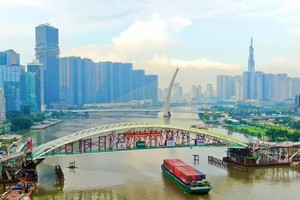
A major highlight is the main Can Gio Bridge spanning the Soai Rap River. Designed as a cable-stayed bridge with a steel truss girder, it will feature two A-shaped pylons, a main span of 360 meters and approximately 4.4 kilometers of approach bridges at both ends. Construction of the Can Gio depot and other special bridges along the route will also be prioritized in the next phase.
A representative of the project developer affirmed that Vingroup and VinSpeed would mobilize maximum financial, human, technological, and equipment resources. They would organize construction efficiently and urgently while maintaining strict quality control and ensuring compliance with safety, technical, aesthetic and environmental requirements, with the aim of completing the project on schedule.
In his remarks, Vice Chairman of the Ho Chi Minh City People's Committee Hoang Nguyen Dinh stressed that the Ben Thanh–Can Gio railway is a strategically important infrastructure project that will expand the city's development space, strengthen transport connectivity and unlock Can Gio's potential in the marine economy, tourism and services, thereby creating a new growth driver for the city.
He called on Vingroup and VinSpeed High-Speed Railway Investment and Development JSC (VinSpeed) to select and mobilize capable contractors with proven experience, both at home and abroad, and explore cooperation with leading global railway technology corporations.
He also proposed establishing a domestic and international expert advisory council to oversee and provide technical scrutiny of the project, as well as promptly recommend solutions for complex, high-tech components such as power supply, signaling, and automatic train control systems.
According to the schedule, local authorities are expected to complete the handover of all land required for the project in the fourth quarter of 2026. Construction is scheduled for completion in the fourth quarter of 2028, followed by trial operations before the railway enters commercial service in 2029.