Teacher recruitment in Ho Chi Minh City has shown signs of improvement, but shortages persist in specialized subjects such as music and fine arts, according to newly released results for the second recruitment round of the 2025–2026 academic year.
Demand for 117 fine arts teachers, only 3 hired
The 2025–2026 academic year marks the first time Ho Chi Minh City has implemented a centralized teacher recruitment process on a citywide scale, spanning all educational levels from preschool and primary to lower and upper secondary, as well as continuing education. This centralized approach has enabled the education sector to streamline recruitment management and more effectively address the specific teaching requirements of schools across the city.
According to the Ho Chi Minh City Department of Education and Training, demand in the second recruitment round exceeded 1,400 teachers. A total of 686 candidates passed the exam, meeting 49 percent of demand. Across both recruitment rounds, the city hired 4,594 teachers, fulfilling about 80 percent of its annual target.
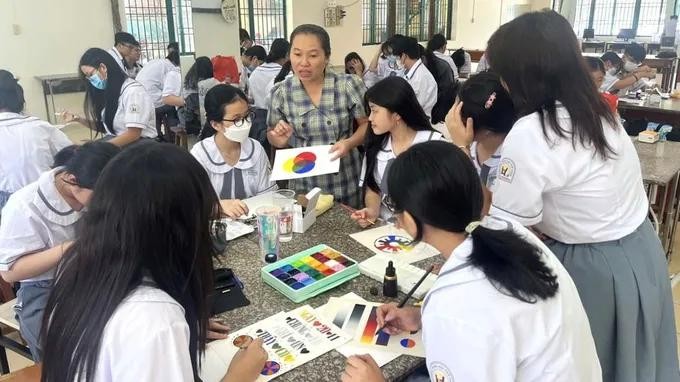
Head Tong Phuoc Loc of the department’s personnel division said results show that some specialized subjects still fall far short of demand. For example, lower secondary schools needed 117 fine arts teachers but recruited only three. Similarly, just eight music teachers were hired across all levels, compared to the demand for more than 170.
Education officials acknowledged that shortages in arts subjects have persisted for years, not only in Ho Chi Minh City but nationwide, largely due to limited training output from teacher education institutions. Combined with relatively modest salaries and working conditions, graduates in these fields often pursue better-paying opportunities outside the education sector, further shrinking the recruitment pool.
Principal Huynh Thanh Phu of Bui Thi Xuan High School in Ben Thanh Ward added that curriculum reforms have at times outpaced staffing readiness. With subjects introduced before sufficient teachers are recruited, schools are left struggling to meet teaching requirements.
Schools seek stopgap solutions
Tong Phuoc Loc said the city’s education sector has implemented several measures to maintain teaching and learning activities. One temporary solution is strengthening collaboration among schools within the same area to share teaching staff and support each other professionally.
The Department of Education and Training has also instructed local authorities to review existing teaching staff and identify shortages in order to propose reallocations. Where permanent staffing is not possible, schools may hire guest teachers to ensure classes continue without disruption. Schools can also mobilize social resources or seek parental support to organize activities in arts subjects.
Beyond short-term fixes, the sector is developing long-term policies to expand the supply of teachers in specialized subjects. These include commissioning teacher training quotas from universities and proposing additional incentives to retain educators.
Principal Nguyen Anh Dung of Hung Vuong High School in Cho Lon Ward said retaining arts teachers will require more attractive recruitment policies and compensation that better reflects the value of their work.