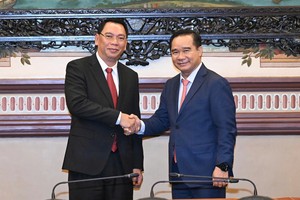
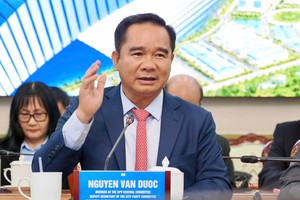
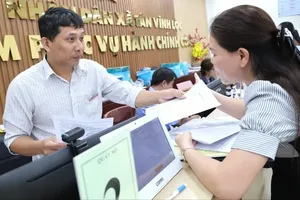
Behind this strong momentum for action are the expectations of residents and businesses that the new policies will soon take effect and resolve long-standing problems arising from practical needs.

The reporters of Sai Gon Giai Phong Newspaper (SGGP) interviewed officials, experts and residents on the implementation of the Urban Development Law and the opportunities it could create for Ho Chi Minh City.
Nguyen Thi Hong Hanh, Director of the Ho Chi Minh City Department of Justice: Building a legal framework for the new law

Following the National Assembly’s approval of the Urban Development Law, the Department of Justice is advising the Ho Chi Minh City People’s Council on a resolution to guide the drafting of legal documents needed to implement the law. This will serve as the first legal foundation for establishing a comprehensive implementation framework in the city.
The department is also mobilizing staff to review and appraise numerous draft resolutions of the People’s Council and decisions of the municipal People’s Committee. As many of the proposed mechanisms and policies are unprecedented, the appraisal process goes beyond checking legal compliance to assessing their necessity, appropriateness and feasibility, while ensuring conformity with the Constitution and international commitments.
Bui Ta Hoang Vu, Director of the Ho Chi Minh City Department of Industry and Trade: Five thematic draft resolutions underway

The municipal Department of Industry and Trade has taken the initiative in drafting five thematic resolutions to implement policies in the sector under the Urban Development Law. The department is now working to complete the drafts and submit them to competent authorities for approval, paving the way for their early implementation once the law takes effect.
The proposed policies focus on three key areas: energy, trade and the development of functional zones.
In the energy sector, they aim to secure a stable, sustainable and proactive supply while laying the groundwork for a clean-energy hub in Ho Chi Minh City.
In trade, the department is developing mechanisms for duty-free shops and supporting service ecosystems. At the same time, policies to promote investment in functional zones are being prepared to expand the city’s logistics capacity and strengthen its competitiveness.
Nguyen Thi Thanh Mai, Deputy Head of the Legal Affairs Committee of the Ho Chi Minh City People’s Council: Ensuring timely implementation of the law

Following the direction of the Standing Committee of the Ho Chi Minh City People’s Council, the Legal Affairs Committee is working to appraise, finalize and submit resolutions to implement the Urban Development Law, ensuring they are issued on schedule.
As an immediate priority, the committee is coordinating with the Department of Justice and relevant agencies to complete the appraisal of a draft resolution on the drafting and issuance of legal documents for the implementation of the Urban Development Law. The draft is scheduled to be submitted to the People’s Council for consideration at its special session on August 27.
The resolution will establish an important legal foundation for departments and agencies to implement policies and resolutions in their respective fields.
Vo Hoang Ngan, Deputy Head of the Ho Chi Minh City National Assembly Delegation: Officials will be assessed based on results and progress
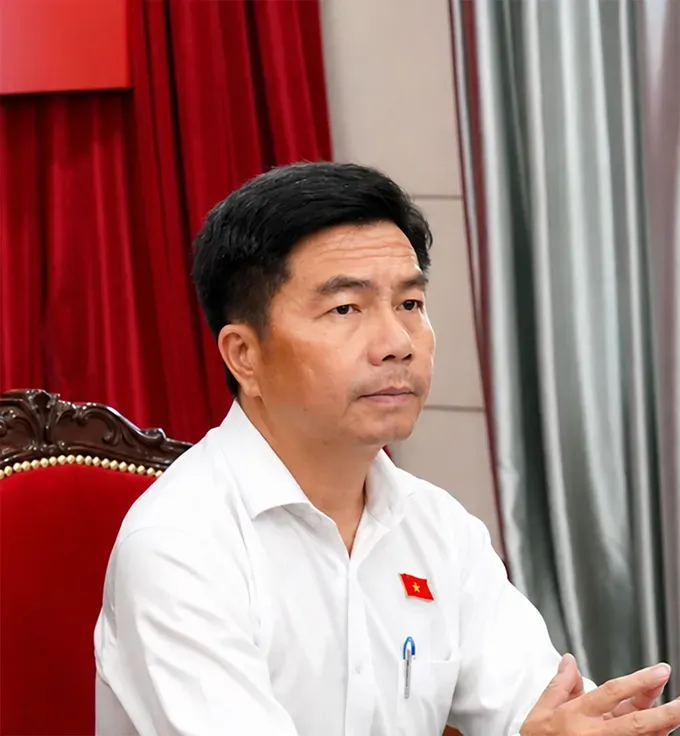
The spirit of “not giving authority to those who dare not exercise it,” emphasized by Ho Chi Minh City Party Committee Secretary Tran Luu Quang, should be clearly reflected in the implementation of the law, he said.
The city should protect officials who dare to think and act for the common good, while clearly distinguishing mistakes made in the course of innovation and creative work from deliberate violations or acts for personal gain.
Officials who exercise their authority properly, transparently and in the public interest should feel confident making decisions and taking responsibility within their assigned scope.
At the same time, those who shirk responsibility, avoid action or unnecessarily delay work should be held accountable. Officials should be assessed based on their deliverables, progress, results and personal responsibility, particularly that of agency heads.
Issues beyond an official’s authority should be promptly reported together with proposed solutions, rather than allowing documents to be passed from one agency to another.
Dr. Tran Dinh Ly, Vice Rector of Ho Chi Minh City University of Agriculture and Forestry: The law unlocks space for future development
The National Assembly’s approval of the Urban Development Law represents an important breakthrough in institutional thinking, Dr. Tran Dinh Ly said.

He believes the law could open up at least three major opportunities: unlocking resources held back by institutional constraints, including land, capital, businesses and intellectual resources; reshaping Ho Chi Minh City’s development space; and moving from “urban management” toward “urban governance and development.”
The law could enable the city to accelerate ongoing projects and generate new growth drivers, improving residents’ quality of life, creating a more favorable business environment and enhancing the city’s competitiveness.
Phan Duong Thanh Nhan, a resident of Binh Dong Ward, Ho Chi Minh City: Expecting positive changes in local communities
As a Ho Chi Minh City resident, she hopes to see the city achieve stronger development and further improve people’s quality of life.

She welcomed the city’s prompt action to put the Urban Development Law into practice following its approval by the National Assembly.
Residents in her area are looking forward to improvements in urban infrastructure and public spaces, including urban renovation, sports facilities, cultural and educational projects, as well as support for people facing difficulties.
These are practical needs that have been raised for a long time, she said. With new mechanisms now available, residents hope the policies will soon be implemented and bring concrete improvements to neighborhoods across the city.