The National Assembly’s approval of the Urban Development Law on August 24 marks a major milestone, establishing a stronger legal framework for urban development, particularly in Ho Chi Minh City.
To explore the opportunities created by the law and the city’s strategy for putting it into practice, a reporter of Sai Gon Giai Phong Newspaper (SGGP) interviewed National Assembly deputy Vo Ngoc Thanh Truc, Deputy Head of the Ho Chi Minh City National Assembly delegation.

A stable legal foundation
According to National Assembly deputy Vo Ngoc Thanh Truc, the greatest significance of the law is not simply that it provides Ho Chi Minh City with additional mechanisms and policies, but that it gives the city a stable legal foundation to address immediate challenges, proactively create development space, mobilize resources and shape its urban future within its own authority and responsibilities.
First, the city can move away from time-bound pilot mechanisms toward a stable, long-term and predictable legal framework. Previously, many policies for Ho Chi Minh City were implemented through pilot resolutions designed to address specific issues for limited periods.
The new law establishes a more comprehensive and sustainable framework for urban development, allowing the city to pursue long-term planning, boosting business confidence in investment and giving residents clearer grounds to exercise their rights and oversee local authorities.
Second, the law shifts the city from waiting for specific mechanisms to proactively driving development and taking responsibility for the results.
Within the authority granted under the law, Ho Chi Minh City can adopt solutions suited to the scale and characteristics of a major urban center, rather than waiting for a separate mechanism to address each issue. This marks a shift from handling individual exceptions to proactively shaping development, enabling faster, more practical decisions with clearer accountability.
Third, the city needs to move from managing development according to administrative boundaries toward governing a unified, multicentric and highly interconnected development space.
Following the merger, Ho Chi Minh City now covers a larger area and has a larger population, requiring the city to integrate these advantages into a unified development framework. The new master plan cannot simply combine previous plans. Instead, it must restructure the entire development space, with each area serving distinct functions while remaining interconnected and complementary.
The law has opened a new institutional door for the city, she said. From this point, the city’s responsibility is to turn the authority granted into the capacity to act, turn that capacity into projects, and turn those projects into tangible value for residents, the region and the country.
The National Assembly’s approval of the law is only the first step; its effective implementation will determine whether the new mechanisms and policies can become genuine drivers of development, she added.
Moving quickly to implement the law
Ho Chi Minh City has been preparing proactively for the implementation of the law. The city has reviewed matters under its authority and prepared the necessary draft documents to ensure a smooth transition from preparation to implementation.
A conference to introduce the law will be held on August 26, followed by a municipal People’s Council session on August 27 to review and comment on matters under its authority, to translate the law into concrete policies and actions.
Rather than waiting for the law to take effect, Ho Chi Minh City is preparing in advance across institutional, procedural and organizational aspects so the new mechanisms can be put into operation without gaps or delays.
The city’s immediate priority is to integrate planning and reorganize its development space. Urban planning must be closely coordinated with transport, land use, housing, environmental protection, technical and social infrastructure, and regional connectivity.
This will help address fragmented development along administrative and sectoral lines and establish a unified development space with a common vision and multiple, interconnected growth centers.
The city will also concentrate resources on strategic programs and projects capable of creating breakthroughs and generating broader development impacts.
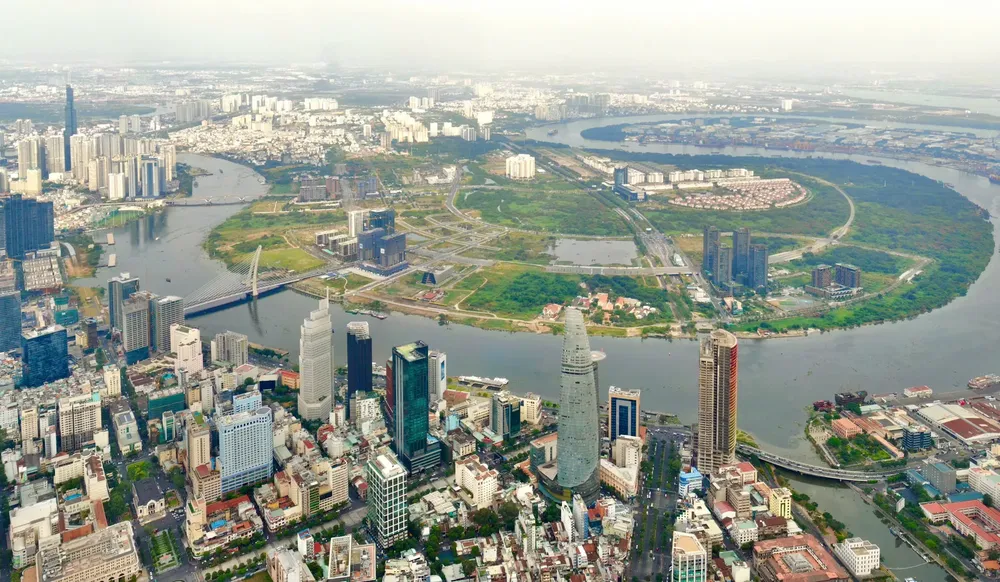
Key priorities include ring roads, urban railways, mass public transport and transit-oriented development (TOD), alongside urban renewal, renovation of old apartment buildings, relocation of houses along canals and waterways, and the development of social and affordable housing.
For TOD, Ho Chi Minh City sees the model as more than a means of exploiting land around metro stations. It is also a tool for restructuring urban space and generating new resources for development.
National Assembly deputy Vo Ngoc Thanh Truc said that part of the increase in land value generated by public investment should be captured and reinvested in public transport, urban renewal and social housing.
The effectiveness of a metro line should not be measured simply by rising land prices, but by how much it improves residents’ mobility, access to jobs and services, and quality of life.
The success of the Urban Development Law should not be measured by the number of documents issued, but by how effectively administrative procedures are streamlined, resources are mobilized, projects are implemented and people’s quality of life is improved.
The goal is to quickly turn the authority granted into decisions, decisions into projects, and projects into tangible development outcomes for the people, National Assembly deputy Vo Ngoc Thanh Truc said.