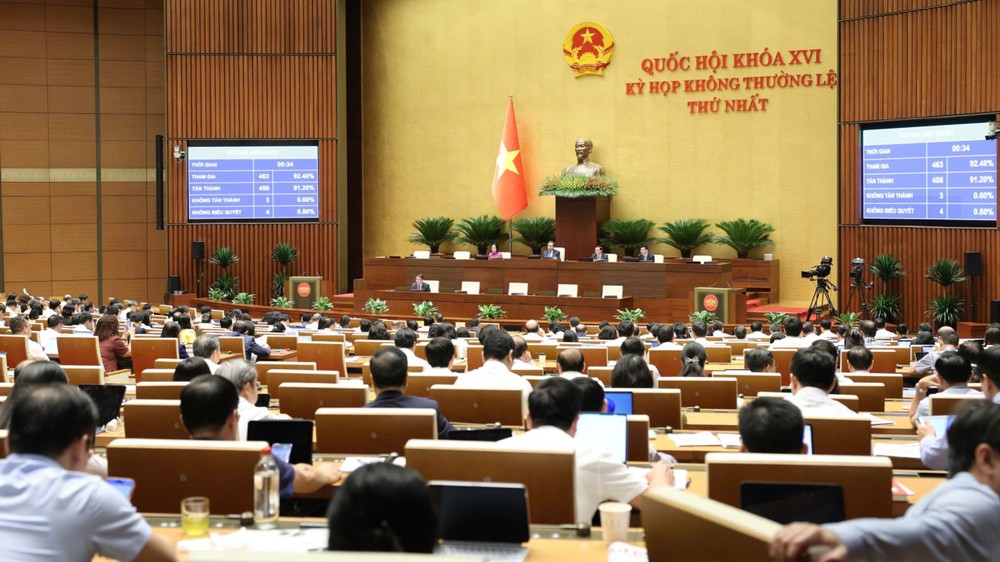
The law establishes new mechanisms to accelerate development in special urban areas such as Ho Chi Minh City, major cities and special economic zones, with greater emphasis on decentralization and the delegation of powers to local authorities.
Speaking before the vote, Justice Minister Hoang Thanh Tung said the revised legislation clarifies several special pilot mechanisms that could also be applied to cities that have not yet been classified as special urban areas and to special economic zones.
Under the law, the Government may issue pilot regulations after receiving approval in principle from the competent authorities and consent from the National Assembly Standing Committee. Such pilots must be designed to meet specific requirements of State, economic, and social management.
The legislation comprises five chapters and 66 articles, one more article than the original draft.
City-level People's Councils will be allowed to approve an increase of up to 20 percent in the number of civil servants and public employees beyond centrally allocated staffing levels, provided local authorities can finance the additional wage costs from their own budgets.
The law also introduces provisions governing investment in and development of reclaimed urban areas. Strategic investors will be eligible for mechanisms allowing them to extract construction minerals, including marine sand for land reclamation, under rules similar to those applicable to nationally significant projects.
Such projects may operate for up to 70 years. Investors will be prohibited from transferring an entire project before its completion and may transfer no more than 50 percent of the reclaimed land area for which basic technical infrastructure has been completed.
For free-trade zones and integrated logistics zones, the Governor of the State Bank of Vietnam will be authorized to set conditions under which foreign banks may establish transaction offices inside free-trade zones, to manage foreign-exchange and money-laundering risks.
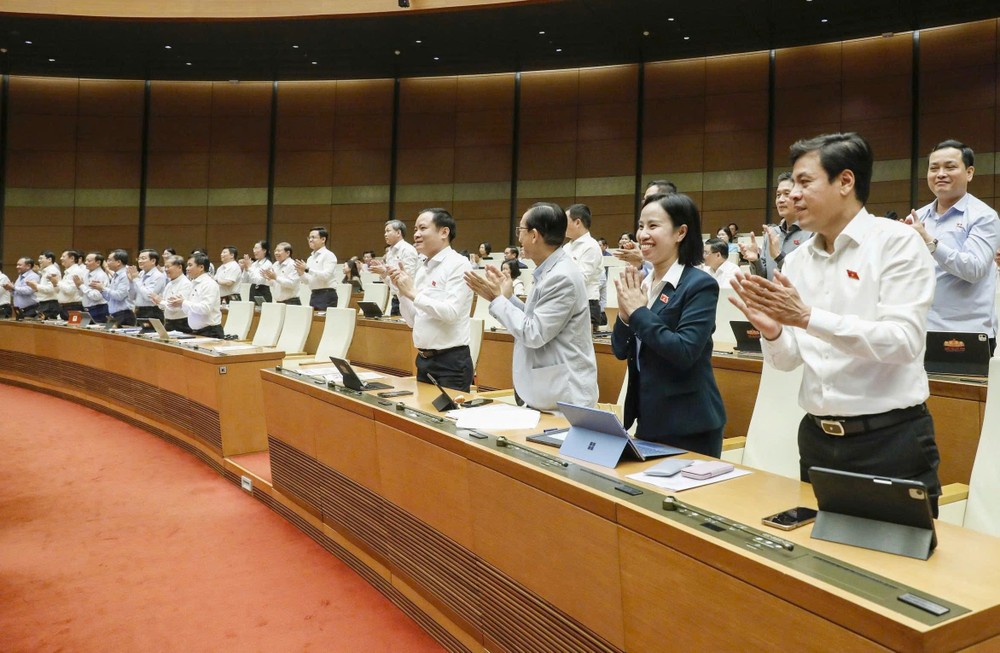
The Government will also establish procedures for granting, temporarily suspending or withdrawing preferential customs treatment for businesses operating in these zones.
Regarding international financial centers, the law gives city-level People's Councils authority to determine licensing conditions and procedures for investment banks and the issuance of international financial products, subject to agreement from the Ministry of Finance and the State Bank of Vietnam.
For special economic zones, lawmakers removed the authority of People's Councils to decide on controlled experimental mechanisms.
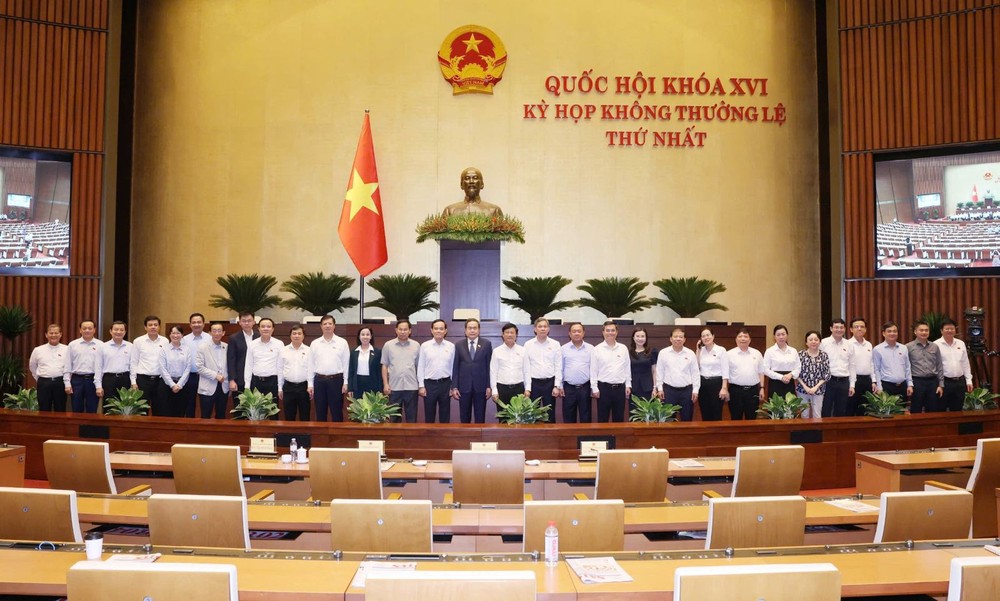
The law will take effect on October 1. However, Clause 4 of Article 7, concerning procedures for assessing and promulgating legal documents that differ from central regulations, will come into force earlier, on September 1.
Special tax incentives stipulated in Articles 39, 48, and 52 will apply from the 2027 tax year.
The new law will also alter the status of several existing resolutions on special pilot mechanisms.
Resolution 98/2023/QH15, which provides special mechanisms and policies for Ho Chi Minh City's development, will expire on April 1, 2027. Exceptions include provisions under Clause 9 of Article 5 and Clause 7 of Article 6, which will remain in force through December 31, 2030.
Resolution 136/2024/QH15, covering urban administration and special development mechanisms for Da Nang, will cease to apply to specific provisions under Point q, Clause 1, and Clause 10 of Article 12 once the Urban Development Law takes effect.
Meanwhile, Resolution 188/2025/QH15, which provides pilot mechanisms for developing urban railway networks in Hanoi and Ho Chi Minh City, will remain in force alongside the new law as required by the cities' development needs.