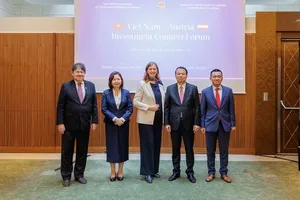
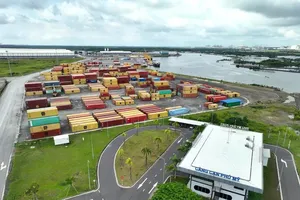
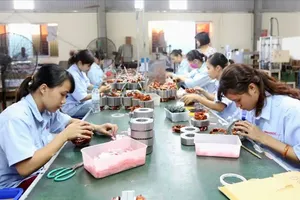
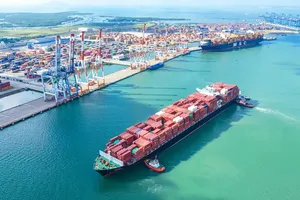
The forum brought together leaders from Ho Chi Minh City and key provinces across the Southeast and Mekong Delta regions, including Dong Nai, Can Tho, Tay Ninh, Vinh Long, Dong Thap, An Giang, and Ca Mau to boost regional connectivity, streamline joint infrastructure investments, and build integrated supply chains across the southern economic zone.
Leveraging complementary advantages
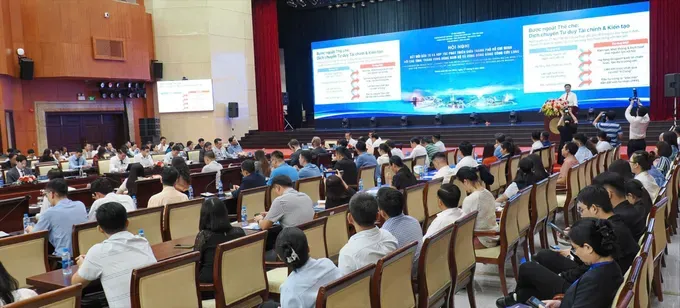
Speaking at the conference, Vice Chairman of the Ho Chi Minh City People’s Committee Bui Minh Thanh highlighted that the synergy between Ho Chi Minh City and the seven participating provinces lies in their mutually supportive strengths.
While Ho Chi Minh City boasts advantages in consumer markets, finance, science and technology, innovation, services, and international connectivity, neighboring localities offer abundant development space for industry, agriculture, energy, logistics, tourism, raw material zones, and land reserves. Connecting these assets will expand investment horizons and elevate the entire region's competitiveness, moving away from isolated local development.
The city’s Vice Chairman emphasized that Ho Chi Minh City and the provinces will shift from individual investment promotion to building a unified investment ecosystem. Under this framework, investors entering Ho Chi Minh City can easily tap into opportunities across neighboring provinces—and vice versa—within an integrated ecosystem of infrastructure, production hubs, markets, and supply chains.
Echoing this view, Dinh Hong Ky, Vice President of the Ho Chi Minh City Business Association (HUBA), noted that the gap between investor interest and actual capital commitment increasingly depends on factors beyond standalone incentives.
"The decisive factors are the quality of the business environment, integration into value chains, and administrative execution capability," Mr. Ky said. He explained that investors are willing to accept higher land and labor costs or lower tax incentives if they have clear visibility on procedural timelines, responsible agencies, infrastructure completion dates, and the enforcement of official commitments.
Conversely, a project offering generous incentives can still lose its appeal and incur massive unexpected costs if regulatory timelines remain unpredictable.
As a result, several business representatives urged local authorities to stop racing to offer incentives and instead focus on mitigating risks for investors through transparent urban planning and time-bound administrative procedures. Crucially, each investment project should have a single, fully empowered point of contact to oversee progress, enforce accountability, guide investors through site visits, and support them until execution.
Proposing the 'Four-Joints' mechanism to pool resources and clarify accountability
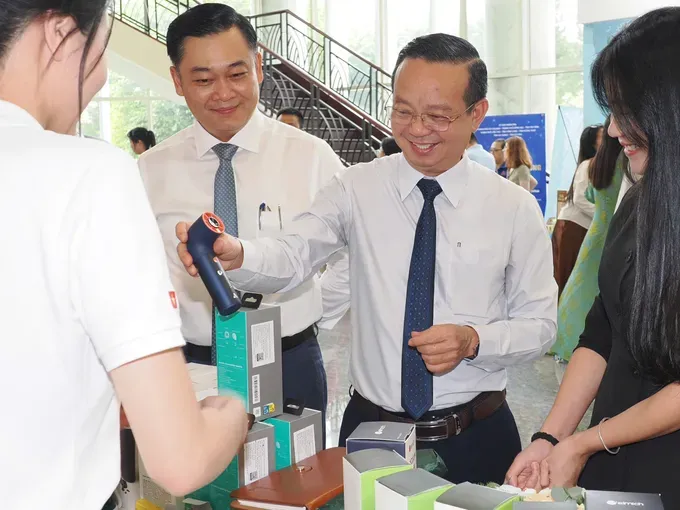
To address these imperatives, Hoang Vu Thanh, Director of the Ho Chi Minh City Department of Finance, proposed a "Four-Joints" mechanism focusing on joint strategic decision-making and planning, joint problem-solving, joint risk-sharing, and joint benefit-sharing based on added-value distribution, capital contribution, and shared financial resources. This mechanism aims to resolve a long-standing bottleneck where interregional projects remain hamstrung by fragmented responsibilities and resources split along administrative boundaries.
To help the Southeast region achieve an annual GRDP growth rate of 10 percent to 11 percent, local authorities should focus on four shared pillars, including transport and logistics infrastructure connectivity; industrial-urban economic corridors; production value chain integration; and foreign investment attraction linked to an international financial center, technological innovation, digital transformation, and high-quality human resources.
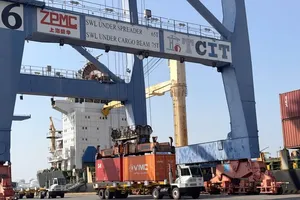
Among these, transport infrastructure must take the lead to lower logistics costs and shorten transit times between production hubs, seaports, airports, border gates, and major consumer markets.
Ho Chi Minh City also proposed exploring a pooled interregional budget model, utilizing public investment as seed capital to leverage private investment, public-private partnerships (PPP), and green finance. Priority funding could be allocated to Ring Road 3, Ring Road 4, and interregional routes linking manufacturing hubs to ports, border gates, and logistics hubs, supported by mechanisms for shared responsibility, benefit-sharing, and progress monitoring.
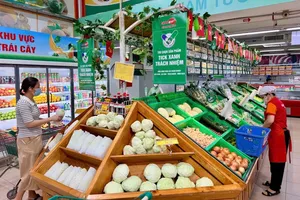
According to Mr. Pham Quang Nhat, Director of the Investment and Trade Promotion Center of Ho Chi Minh City (ITPC), immediate efforts should focus on establishing three key value chains, such as high-tech manufacturing linked to seaports, airports, and logistics; agriculture and aquaculture tied to deep processing, cold chain logistics, branding, and exports; and clean energy, circular economy, and climate change adaptation.
The core objective is to clearly define the role of each locality within each supply chain. Ho Chi Minh City will leverage its strengths in market reach, finance, distribution, science and technology, and international connectivity, while neighboring provinces provide manufacturing space, raw material zones, energy, and specialized operational links. This clear division of labor aims to curb redundant investment and allow businesses to navigate a complete, integrated supply chain rather than piecemeal projects divided by administrative borders.
In response, provincial representatives affirmed their readiness to connect infrastructure and resources while specifying handling agencies and strict timelines for each project type.
Deputy Director of the Dong Thap Department of Finance, Nguyen Dinh Phuong Uyen, noted that Dong Thap Province currently operates 10 industrial parks and plans to develop 18 more. She requested Ho Chi Minh City's support in facilitating connections and bringing investors directly to the province to assess local investment opportunities and conditions.
Leaders from Ho Chi Minh City and participating provinces committed to reviewing interregional projects capable of driving economic growth to establish a priority cooperation portfolio for the 2026–2030 period.
Vice Chairman of the Ho Chi Minh City People’s Committee Bui Minh Thanh affirmed that every commitment must have a designated focal point, a defined timeline, and measurable results; every opportunity must be tracked until a project materializes. Ho Chi Minh City will fulfill its role as a hub converging resources, connecting markets, finance, technology, high-quality human capital, and international partners with the development needs of each locality.
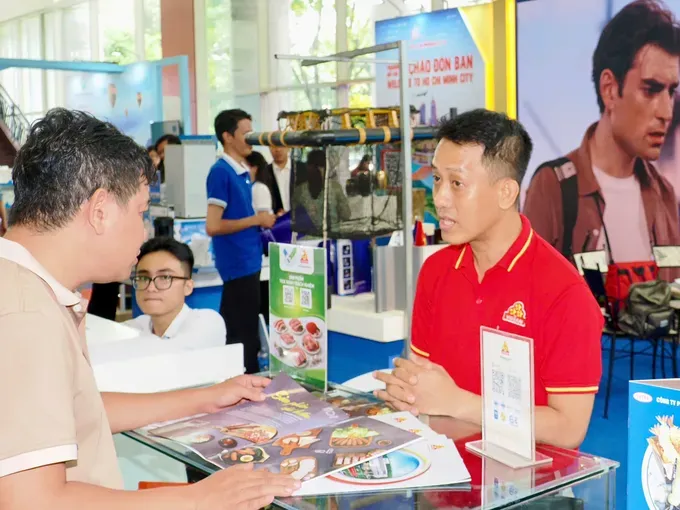
According to Chairman of the Vietnam Young Entrepreneurs Association, Dang Hong Anh, digital transformation, green transition, and artificial intelligence (AI) are opening up new investment horizons, but robust policy mechanisms are essential to unlock private sector resources.
He emphasized the need for tailored policies targeting data centers, digital infrastructure, and green energy, alongside the preparation of clean land funds, stable power supply, and regulatory sandboxes for novel business models.
Furthermore, he advocated for streamlined administrative procedures, proposing a "green lane" or "single-window" mechanism for large-scale green transition projects, as well as expanding access to long-term funding through support funds and concessional credit. Once these bottlenecks are resolved, the private sector will be better positioned to invest in digital transformation, green transition, AI, and Environmental, Social, and Governance (ESG) standards, allowing local businesses to integrate deeper into new regional value chains, he said.
Senior Manager of Corporate Planning at AEON Vietnam, Eto Etsuko, emphasized that expanding investments across localities must be viewed within the broader context of the overall market and supply chain.
Connecting Ho Chi Minh City’s market scale and distribution network with the production capacity, raw material zones, and local supply of neighboring provinces will enable businesses to expand their footprint while integrating local goods more deeply into modern retail channels.
AEON identifies Vietnam as one of its core strategic markets, aiming to triple its operational scale in the country by 2030. To achieve this goal, the Japanese retailer plans to expand its network through diversified retail formats, enhance product development, and strengthen its supply chain to build a comprehensive AEON ecosystem in Vietnam.