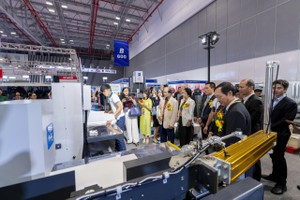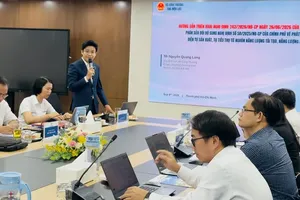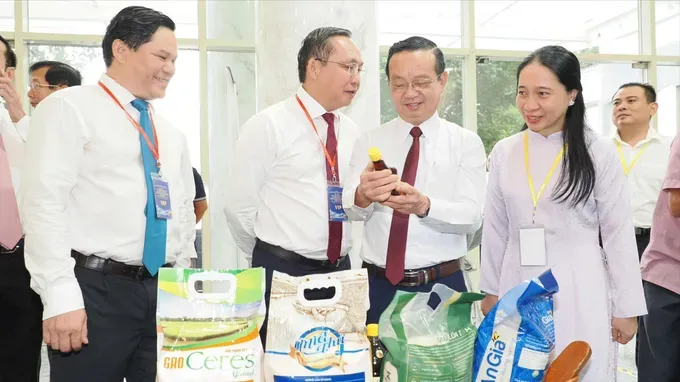
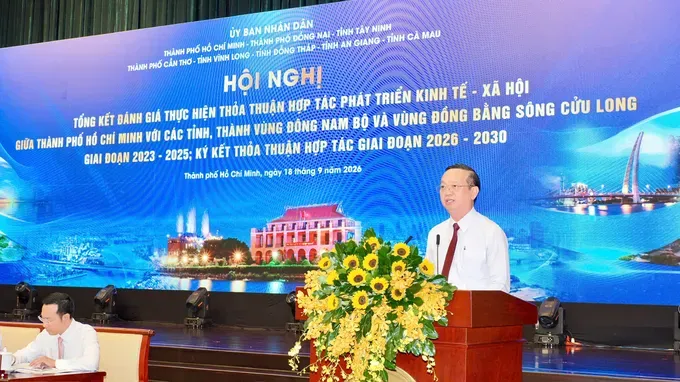
On the morning of September 18, the Ho Chi Minh City People’s Committee, together with Can Tho City, Dong Nai City and the provinces of Tay Ninh, Vinh Long, Dong Thap, An Giang, and Ca Mau, held a conference in Ho Chi Minh City to review socioeconomic development cooperation for 2023-2025 and sign a cooperation agreement for 2026-2030. More than 300 delegates attended the event.
In his opening remarks, Vice Chairman of the Ho Chi Minh City People’s Committee Bui Minh Thanh said cooperation in recent years had laid the foundation for expanding the region’s development space. In the next phase, cooperation should become more substantive, leveraging the complementary strengths of Ho Chi Minh City, the Southeast region, and the Mekong Delta to create tangible value for residents and businesses.
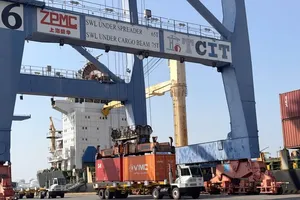
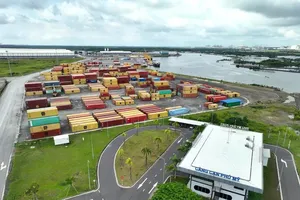
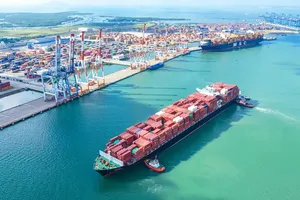
In practice, cooperation during 2023-2025 evolved from exchanges and connectivity initiatives into a range of specific programs and projects. Notable projects include Ring Road 3, Ring Road 4, and the Ho Chi Minh City-Moc Bai Expressway, along with infrastructure connecting Long Thanh International Airport, seaports, and logistics hubs.
Looking toward the Mekong Delta, localities have coordinated research into the Ho Chi Minh City-Can Tho railway, coastal roads, and inland waterways, laying the groundwork for agricultural and seafood products to reach processing, distribution, and export centers.
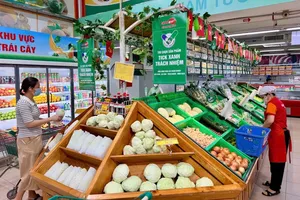
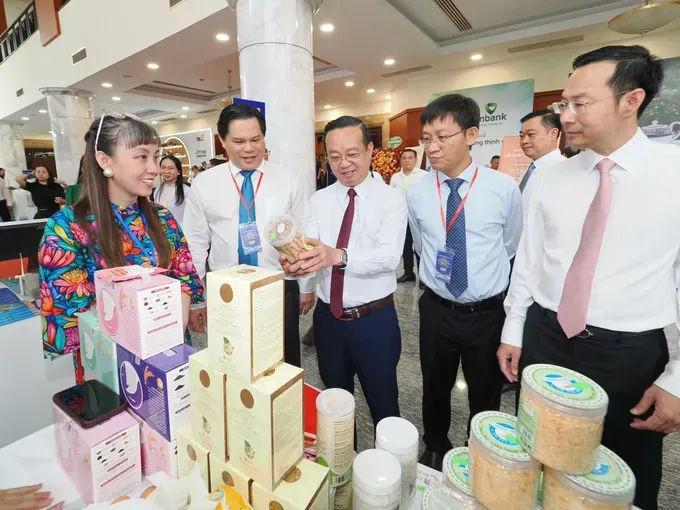
Trade linkages have also created additional market outlets for goods. A total of 113 businesses and organizations, offering 279 products, including 135 OCOP-certified products, have put their products on e-commerce platforms. A linkage chain in Vinh Long continues to supply about four tons of red tilapia fish to Ho Chi Minh City each week.
Cooperation in science and technology, labor, and healthcare has also expanded. Can Tho has partnered with 20 research institutes and universities in Ho Chi Minh City to carry out 20 science and technology projects, with total funding of nearly VND32 billion. Regional job fairs have helped connect 7,160 workers with employment opportunities, while Ho Chi Minh City has transferred a range of advanced medical techniques to localities in the region.
However, regional connectivity still lacks large-scale projects capable of creating sustainable value chains, while some transport projects continue to face difficulties in securing construction materials, and infrastructure in the Mekong Delta remains fragmented.
Against this backdrop, Nguyen Thanh Nhan, Deputy Secretary of the Party Committee and Chairman of the People’s Committee of Dong Thap Province, proposed shifting from coordination programs to joint projects, with benefits for residents and businesses serving as the key measure of effectiveness.
The top priority is to establish seamless connectivity among road, waterway, and logistics networks to shorten transport times, reduce costs, and enable goods from across the region to reach Ho Chi Minh City and international markets more quickly.
Alongside infrastructure development, the region needs to build value chains based on complementary strengths. The Mekong Delta should leverage its advantages in raw materials, agriculture, and fisheries; the Southeast should focus on industry, seaports, and logistics; while Ho Chi Minh City should capitalize on its strengths in markets, finance, science and technology, and services.
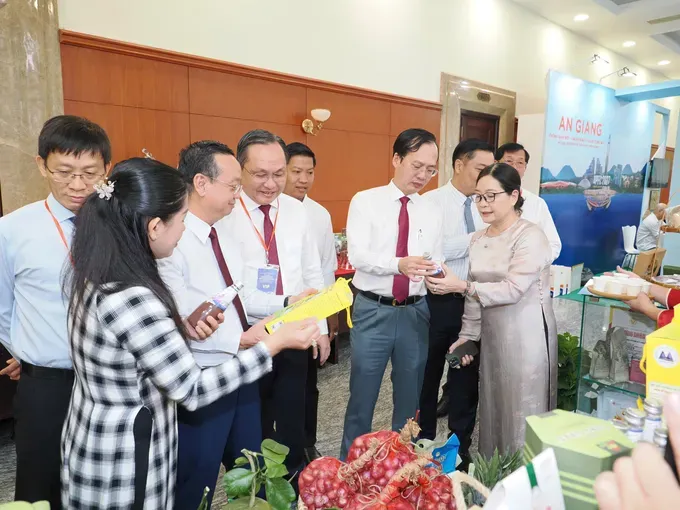
For agricultural products in particular, cooperation should cover the entire chain, from seeds and production to quality standards, processing, branding, logistics, and exports, thereby retaining a greater share of added value for businesses and residents.
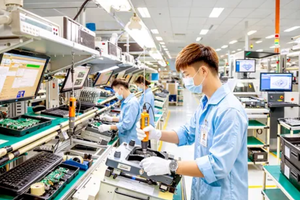
For the 2026-2030 period, Vice Chairman of the Ho Chi Minh City People’s Committee Bui Minh Thanh emphasized a shift from “coordinating together” to “co-creating,” from local-level linkages to integrated development-space connectivity, from infrastructure links to economic corridors, and from sectoral cooperation to value chains.
Ho Chi Minh City has proposed focusing on strategic infrastructure linked to urban development and logistics, connecting Mekong Delta agriculture and Southeast industry with Ho Chi Minh City’s strengths in finance and technology, and coordinating regional approaches to environmental and climate-change challenges.
“Every commitment must lead to an action, and every action must produce results,” the Ho Chi Minh City People’s Committee Vice Chairman emphasized.