The Ho Chi Minh City Department of Culture and Sports is finalizing a draft resolution on mechanisms and policies to support and commission the creation of literary and artistic works, projects and products of high ideological, substantive and artistic value for submission to the Ho Chi Minh City People's Council. If adopted, the resolution would, for the first time, allow artists and organizations outside the public sector to seek funding from the State budget.
Uneven funding: Some have more, others less
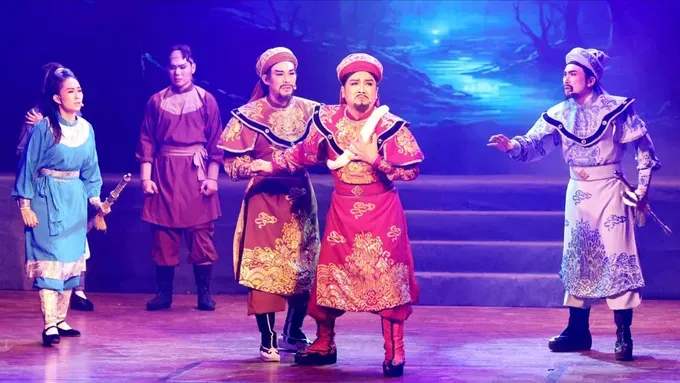
Following its administrative restructuring, Ho Chi Minh City has nine specialized literary and arts associations covering fields ranging from music, theater, cinema and dance to fine arts, photography and architecture.
According to the Ho Chi Minh City Department of Culture and Sports, a review of budget-funded activities during 2023-2025 reveals significant disparities: activities receiving VND5 billion (US$194,472) or more accounted for just 20 percent of the total number of activities but absorbed as much as 74 percent of the overall budget. Meanwhile, activities receiving less than VND500 million made up 30 percent of the total but received only around 1.6 percent of the budget.
Similarly, activities organized by specialized associations accounted for 30 percent of all activities but received just 2.7 percent of budget funding. Even more notably, all activities with identifiable budget allocations (100 percent) were funded through direct assignment and budget allocation mechanisms. None had been selected through an open competitive process accessible to organizations and individuals outside the public sector. Creative development and production—the stages at which new works are actually conceived and brought into being—accounted for only 33.3 percent of all activities.
Another reality is that most specialized cultural and arts associations currently have to rent venues for performances, while approximately 41.7 percent of activities are not further utilized after completion. Acceptance and evaluation of 36.4 percent of activities are based solely on documentation and financial records, while only 10 percent of organizations track viewership on digital platforms.
No distinction between public and non-public organizations
One of the draft resolution's most notable innovations is a support mechanism for the production, staging, and distribution of artistic works through an open and transparent selection process. Legally established organizations and eligible individuals will be able to participate on an equal footing, regardless of whether they belong to the public or non-public sector.
The proposed support of up to 50 percent of actual eligible costs, capped at VND400 million per project and a total of VND5 billion per year, is intended to provide a basis for organizations to mobilize additional resources from society.
The draft also requires recipients of funding to commit to making their supported works available to the public across the city. If an organization delivers fewer performances than committed, it must reimburse the corresponding proportion of the funding based on the number of unfulfilled performances.
If adopted and effectively implemented, the resolution on mechanisms and policies to support and commission the creation of literary and artistic works, projects and products of high ideological, substantive and artistic value will create greater space for artistic creativity and unlock the potential of Ho Chi Minh City's arts and cultural workforce.
It will also represent a necessary step toward mobilizing social resources, fostering a professional creative environment, promoting the development of the arts market and laying the groundwork for Ho Chi Minh City's cultural industries.
According to Assoc. Prof. Dr. Phan Anh Tu, Dean of the Faculty of Cultural Studies, University of Social Sciences and Humanities, Vietnam National University – Ho Chi Minh City, funding must be tied to measurable outcomes. Ho Chi Minh City has considerable advantages in terms of its history, cultural heritage, and creative workforce, providing a strong foundation for developing highly competitive cultural products. However, the city needs to further improve its institutional framework, policies, resource mobilization mechanisms and transparent selection processes.
Cultural heritage and artistic ideas are unlikely to generate real momentum for the creative economy if funding is provided without clear commitments to measurable outcomes, effective exploitation and wider dissemination in contemporary life.