However, in order to sustain its role as the nation’s economic locomotive and to realize the target of achieving double-digit GRDP growth in 2026 and the years ahead, Ho Chi Minh City is required to maintain its recovery momentum, expand development space, and address bottlenecks in infrastructure and institutional frameworks.
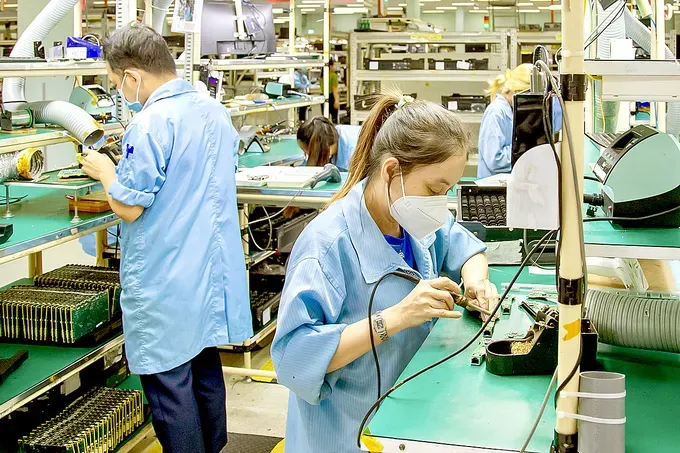
In the first quarter of 2026, Ho Chi Minh City recorded a range of positive outcomes, reflecting the economy’s strong rebound as well as the administration’s capacity for governance and adaptability amid a volatile environment.
For 2026, the city has set a target of achieving double-digit growth, which entails mobilizing total resources exceeding VND1.2 quadrillion (US$45.6 billion). Of this, more than VND148 trillion in state budget capital is expected to serve as “seed capital,” playing a pivotal role in guiding and activating other economic sectors.
As public investment disbursement accelerates, administrative procedures are promptly streamlined, land resources are utilized more efficiently, and the business environment becomes increasingly conducive. The city will gain greater room to expand production, attract investment, and generate new growth drivers.
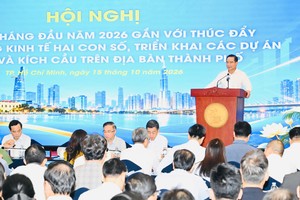
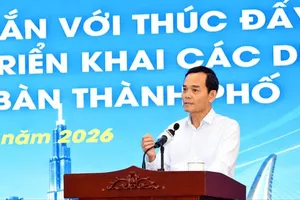
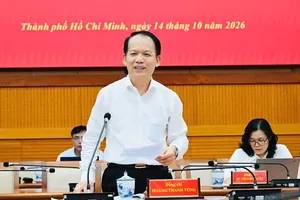
According to Vice Chairman of the Ho Chi Minh City People’s Committee, Nguyen Cong Vinh, the city has proactively issued a wide range of governance programs and action plans from the outset of the year, with quantified targets assigned to each agency, unit, and month, alongside clearly defined accountability linked to performance outcomes.
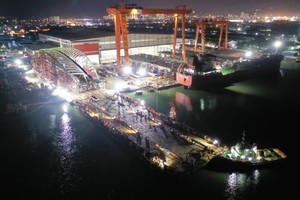
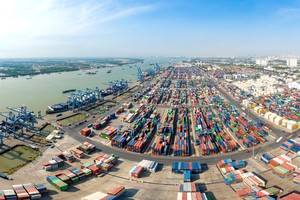
Ho Chi Minh City is focusing on developing new growth drivers, including an international financial center, a seaport system, and a free trade zone, while promoting high-tech industries, semiconductors, data centers, and artificial intelligence.
At the same time, the city is stepping up administrative reform in a substantive manner, standardizing procedures, reducing processing times, and improving the quality of services for both citizens and businesses. In parallel, efforts are being accelerated to advance emerging growth pillars such as the digital economy, green economy, science and technology, innovation, and clean energy.
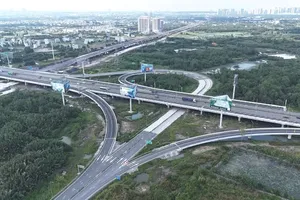
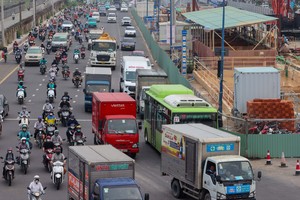
A key highlight lies in expanding development space through strategic planning, infrastructure development, and the reorganization of growth poles.
A series of major projects is set to break ground in the near future. Beyond their significance in terms of construction investment, these projects also demonstrate the city’s approach to shaping new development corridors.
In addition, Ho Chi Minh City is leveraging mechanisms provided under Resolution 260/2025/QH15 of the National Assembly of Vietnam to formulate a scheme for land resource utilization based on the transit-oriented development (TOD) model, thereby enhancing the effective use of public land assets.
When land value is harnessed rationally and efficiently, financial resources can be reinvested into infrastructure, creating a renewed cycle of development.
Placing people at the center of development
Expanding development space is not merely about adding more projects, urban areas, or transport routes. For Ho Chi Minh City, development must ultimately aim to improve the quality of life for its people.
In this process, the city consistently upholds the principle of placing people at the center, ensuring that citizens are able to benefit from the outcomes of development.
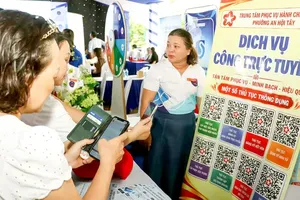
Since the beginning of 2026, a wide range of social welfare policies has been vigorously implemented, reflecting the city’s strong commitment to supporting policy beneficiaries, vulnerable groups, poor and near-poor households, workers, and other groups in need of assistance.
Under Resolution 71/2025/NQ-HDND issued by the Ho Chi Minh City People's Council, the maximum loan amount for poverty reduction and job creation support has been increased from VND100 million to VND200 million.
This policy enables poor and near-poor households, workers, and individuals who have completed prison sentences to access greater financial resources for job creation, vocational training, and livelihood stabilization.
In addition, the introduction of preferential loans for children from poor and near-poor families to cover university expenses, along with credit support for rehabilitated individuals to generate employment and pursue vocational training, underscores the city’s approach to social welfare as an investment in people, human resources, and long-term social stability.
From April 2026, Ho Chi Minh City has officially begun implementing its goal of providing free health check-ups for all residents at medical stations across 168 wards, communes, and special zones.
The city has also allocated more than VND2 trillion to support health insurance contributions for students and the elderly, while implementing tuition exemptions and reductions for students. These policies help ease the burden of essential living costs for residents, particularly as the city expands its development space and faces rising demand for social welfare and public services.
Chairman of the Ho Chi Minh City People’s Committee, Nguyen Van Duoc, has repeatedly emphasized the importance of social welfare and improving people’s living standards. The city remains committed to enhancing both the material and spiritual well-being of its residents, ensuring that they can benefit from the outcomes of development. This also serves as a key benchmark for the quality of growth: economic expansion must translate into job opportunities, improved public services, a better living environment, and higher levels of satisfaction among citizens and businesses.
During the upcoming holidays, including the 51st anniversary of the Liberation of the South and National Reunification (April 30, 1975–2026) and International Workers' Day (May 1), as well as in the second quarter of 2026, several major projects are set to be commenced or ground broken in Ho Chi Minh City.
These include the Central Square and City Administrative Center project, Metro Line No. 2 (Ben Thanh – Thu Thiem), the Cai Mep Ha General and Container Port Investment project, the renovation and upgrading of the Ho Chi Minh Museum – Ho Chi Minh City Branch, the Berjaya International University Urban Area Project, the Can Gio International Transshipment Port project, the Ho Tram – Long Thanh Airport Expressway project, and the road and bridge project connecting Can Gio and Vung Tau.