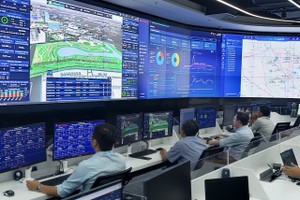
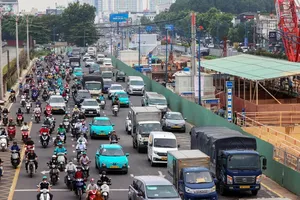
Strategic infrastructure refers to vital systems that support urban growth and, when fully realized, can transform a city’s economic trajectory. Party General Secretary and State President To Lam has highlighted three critical bottlenecks the city must resolve, including traffic congestion, flooding and air pollution. These challenges stem from infrastructure failing to keep up with rapid urbanization.
Removing this “trio of constraints” is key to unlocking productivity and enhancing investment attractiveness. With its expanded boundaries, the value of strategic infrastructure multiplies. Metro systems, deep-water seaports, flood control networks, and digital infrastructure must now connect the entire urban space and spread economic benefits across the broader region, rather than serving only the city center.
Several resolutions 98, 260, 188 and 222 have created an unprecedented “special legal framework” enabling Ho Chi Minh City to proactively implement major priorities.
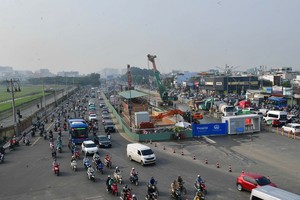
The first outcomes are taking shape, with metro lines breaking ground, seaport developments attracting significant private capital, flood control programs back in motion, and digital infrastructure gaining priority status.
A notable highlight is the US$1.23 billion in recent investment in artificial intelligence (AI), biomedicine, and smart batteries, signaling strong international trust in the city’s innovation ecosystem. Meanwhile, public-private partnerships (PPP) are taking on greater substance as major corporations engage in new projects.
However, groundbreaking is only the first step. Ensuring progress requires simultaneously addressing site clearance, flexible approval mechanisms, and project management capacity. Emerging issues in implementing strategic infrastructure must continue to be reviewed and incorporated into the draft Law on Special Urban Areas and the city’s master plan.
Ho Chi Minh City cannot afford to miss this rare opportunity to fundamentally transform its development model over the next five to ten years. Experiences from Seoul (RoK), Singapore and Shenzhen (China) show that strategic infrastructure not only supports current economic activity but also reshapes economic structures for decades to come.
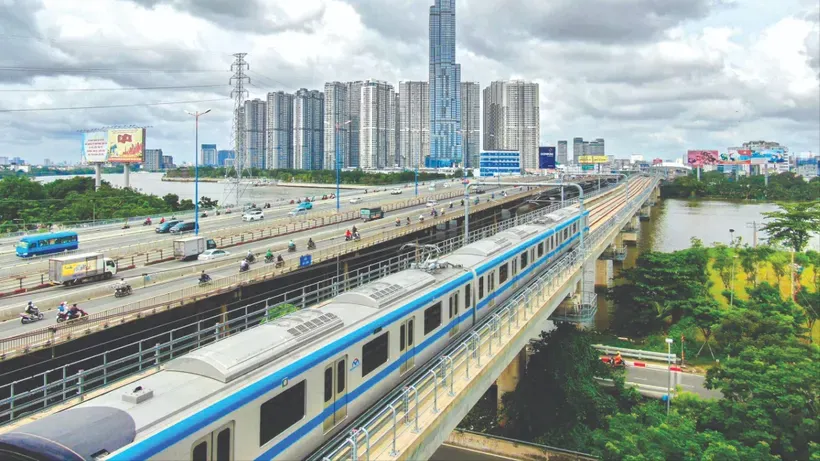
The city should therefore proactively reorganize its economic space along infrastructure corridors with metro lines should follow transit-oriented development (TOD) models with dense service, commercial and residential hubs; areas surrounding new ports should be designated for logistics and high-tech industry; and “digital zones” should attract AI, fintech, and health technology linked to the Saigon Hi-Tech Park and the eastern innovation urban area.
The issue is no longer about having the right mechanisms, but about the resolve and vision to use them effectively. Each kilometer of urban railway, each data center, and each modernized container port should spark a purposeful wave of economic transformation.
The mechanisms and policies have opened the door. Billions of dollars in investment are flowing in. Numerous strategic infrastructure projects are underway. Ultimately, Ho Chi Minh City’s future will be shaped not by policy or resources, but by the leadership and vision of those guiding it into a new era of development.






)