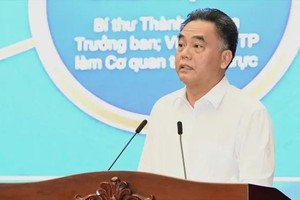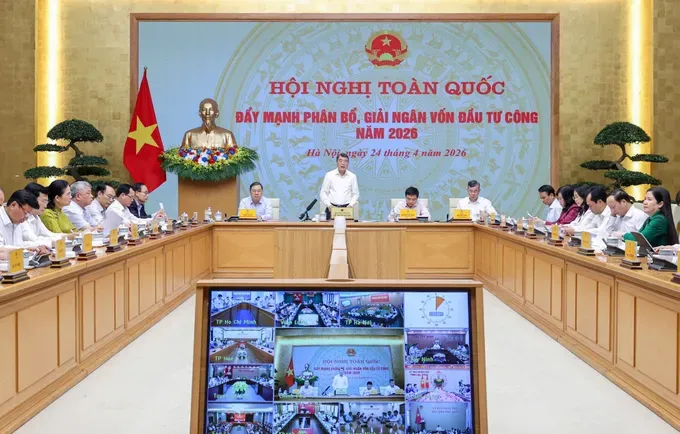
According to Vice Chairman of the Ho Chi Minh City People’s Committee Bui Xuan Cuong, the city’s public investment disbursement progress to date has been more positive compared to past years.
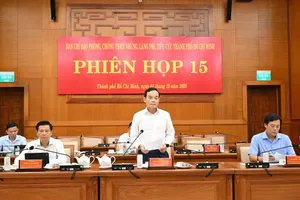
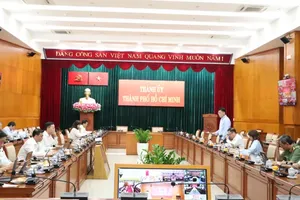
The statement was made in the context of a nationwide online conference held on April 24, chaired by Prime Minister Le Minh Hung, focusing on accelerating the allocation and disbursement of public investment capital in 2026.
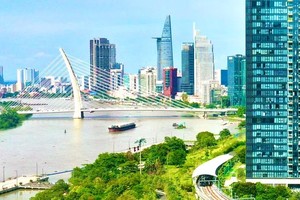
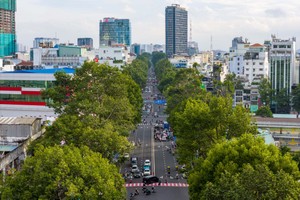
As the locality with the largest public investment capital scale in Vietnam, Ho Chi Minh City is pushing ahead with disbursement efforts in 2026, aiming to leverage major infrastructure projects as a key driver of development.
At the conference, Vice Chairman of the Ho Chi Minh City People’s Committee Bui Xuan Cuong said the city has been assigned a 2026 public investment capital plan of VND147,599 billion (US$5.6 billion) by the Prime Minister.
According to data from the Ministry of Finance, Ho Chi Minh City has so far disbursed around VND16,500 billion (US$629.4 million), equivalent to 11.2 percent of the plan. Meanwhile, the city’s own figures show that by April 30, disbursement is expected to reach VND22,000 billion (US$835.2 million), or about 15 percent of the total allocation.
Ho Chi Minh City leaders emphasized that the large capital allocation represents a significant opportunity to accelerate the implementation of strategic infrastructure projects. The city currently has 46 key, high-priority projects with individual capital allocations exceeding VND500 billion, accounting for approximately 53 percent of the total investment structure, and these are being actively implemented.
Among them, several major projects are being prioritized for bottleneck removal to ensure disbursement as early as May, including Metro Line No. 2. The city expects that in early May alone, around VND7,000 billion could be disbursed for this project once remaining procedural issues are resolved.
In the coming time, Ho Chi Minh City will continue to balance and mobilize additional revenue sources to raise its total 2026 public investment plan by around VND17,000 billion, bringing the total to approximately VND164,000 billion.
This additional capital will be allocated to several important areas, including the site, major works, and strategic infrastructure projects. A significant portion will also be reserved as counterpart funding for 21 public–private partnership (PPP) projects, with an estimated value of more than VND14,000 billion.
According to Vice Chairman of the HCMC People’s Committee Bui Xuan Cuong, the city’s disbursement performance to date has been better than in previous years, and the city is fully confident of achieving 100 percent disbursement by year-end.
In line with administrative restructuring and the merger model applied to several localities, Ho Chi Minh City has reorganized its project management apparatus to improve efficiency. Previously, the city had 10 specialized project management boards; this has now been consolidated into 4 boards.
Similarly, 71 units involved in site clearance, compensation, land fund development branches, and district-level project management boards have been reorganized into 37 units. This restructuring is aimed at streamlining operations and enhancing coordination across investment projects.
Ho Chi Minh City is also focusing on resolving outstanding bottlenecks, particularly those related to the arrangement of project owners, in order to safeguard implementation progress and ensure timely disbursement.
The city's authorities has assigned Vice Chairpersons of the People’s Committee to directly oversee key areas, including site clearance, compensation, and public investment disbursement. The city has also established dedicated task forces on disbursement, operating under the principle of “on-site resolution, on-site decision-making” to speed up implementation.
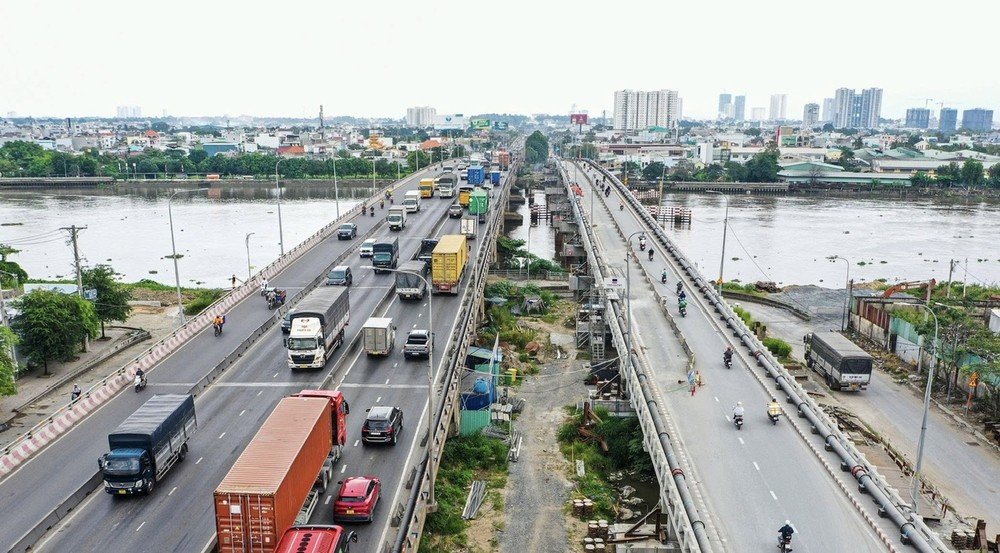
To further improve disbursement efficiency and ensure project progress, Vice Chairman Bui Xuan Cuong proposed that the Government allocate medium-term public investment capital early for the 2026–2030 period. This would help localities proactively plan and implement major strategic projects, including the North–South high-speed railway.
Regarding construction materials, Ho Chi Minh City also recommended that the Government issue unified regulations or assign the Ministry of Construction to soon promulgate guiding circulars. The guidance would be similar to regulations issued in 2008 on price adjustment and construction contracts in response to fluctuations in raw material costs.
According to city authorities, while the management of construction costs has remained relatively stable over the past nearly two decades, recent market developments show similar volatility to the 2008 period. Therefore, timely guidance is necessary to ensure smooth implementation at the local level.
Ho Chi Minh City has proposed additional regulatory guidance for public–private partnership (PPP) projects involving State capital, aiming to address challenges arising from fluctuating construction material prices that have significantly affected the progress of many projects.
According to the Ministry of Finance, as of April 15, compared with the plan assigned by the Prime Minister, seven ministries, central agencies, and 16 localities recorded disbursement rates equal to or higher than the national average. These include the Vietnam Bank for Social Policies, Vietnam Expressway Corporation (VEC), the Ministry of Justice, Ministry of National Defence, Ministry of Industry and Trade, Ministry of Public Security, and Ministry of Agriculture and Environment, Hanoi, Hai Phong, Quang Ninh, Ca Mau, Dien Bien, Thai Nguyen, Ha Tinh, Lai Chau, Tuyen Quang, Gia Lai, Hue City, Lao Cai, Phu Tho, Khanh Hoa, and An Giang.
However, the report also highlighted that 28 ministries and central agencies, along with 18 localities, remain below the national average in terms of disbursement progress.
Notably, some agencies reported extremely low or even zero disbursement rates, including the Ministry of Foreign Affairs, Ministry of Education and Training, State Bank of Vietnam, Government Inspectorate, State Audit Office of Vietnam, Voice of Vietnam, Vietnam Television, Vietnam Academy of Science and Technology, Vietnam Cooperative Alliance, Ho Chi Minh National Academy of Politics, Ministry of Ethnic and Religious Affairs, and Vietnam Development Bank.
)