Chairman Bui Thanh Nhan first discussed the adjustments that the HCMC Labor Federation has made for this year’s Workers’ Month to ensure activities translate into substantive outcomes. Clearly, if activities remain merely superficial and lack depth, it’ll be exceedingly difficult to forge long-term loyalty among employees. Therefore, this year’s orientation is to organize initiatives in a substantive manner, utilizing efficiency as the ultimate metric to genuinely facilitate the advancement of workers.
Under the theme “Vietnamese Workers: Innovation and Labor Productivity Enhancement,” the activities don’t merely focus on immediate welfare but are geared towards elevating the caliber of the workforce. All programs must closely align with the practical needs and specific conditions of each unit and enterprise, concentrating resources on initiatives whose efficacy can be analytically measured through the actual income and skill sets of union members.
“Caring for vulnerable workers isn’t solely a humanitarian endeavor; it’s about retaining ‘precious capital’ to ensure the city’s manufacturing stability.”
Bui Thanh Nhan, Chairman of the HCMC Labor Federation
In order for the theme to be transformed into intrinsic motivation for millions of workers and laborers, the novelty lies in the federation’s approach is to place employees at the center, utilizing grassroots labor unions as the foundation, leveraging digital transformation as a tool, and adopting substantive efficiency as the benchmark.
The city’s labor union organization is also intensifying social housing projects, coordinating with various entities to deploy training initiatives, and executing comprehensive, widespread health screening programs for workers.
Numerous targets have been quantified:
- 80 percent of enterprises with 100 or more employees participating;
- 10 percent of union members proposing initiatives, with at least 30 percent of which being successfully implemented;
- programs to construct 50 “Labor Union Shelters”;
- health screenings for roughly 50,000 female workers;
- occupational disease examinations for around 30,000 employees;
- advanced vocational training.
More crucially, these activities and initiatives must be directly correlated with labor productivity, translating into enhanced profitability for enterprises, thereby establishing a solid foundation for wage increases and bonuses for workers.
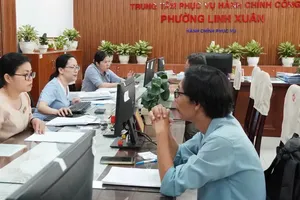
Beyond revamping the content of activities, the organizational structure of labor unions has been adjusted to meet these novel demands, which constitutes one of the primary focal points this year. Given the new developmental landscape, labor unions must undergo corresponding recalibrations to ensure there is no “lag time” in resolving workers’ issues.
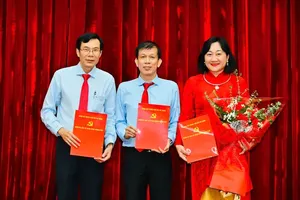
Consequently, in May, the federation is executing a large-scale systemic restructuring aimed at bringing unions closer to the grassroots level. Specifically, it’ll inaugurate the City Export Processing and Industrial Zones Labor Union, and establish a task force of approximately 300 labor union collaborators, comprising retirees and seasoned cadres, to bolster grassroots support.
Notably, it’s seconding roughly 40 percent of dedicated labor union officials from the municipal level to directly assist labor unions in wards, communes, and special economic zones. This is considered a pilot initiative to delegate greater autonomy to grassroots labor unions. Specialized task forces are maintained while a “Labor Union Activity Advisory Group” is established with diverse participation, ensuring that decisions are practical, multi-dimensional, and devoid of subjective imposition.
Following HCMC’s administrative expansion for development, the workforce has grown vastly and become more diverse. The HCMC Labor Federation must ensure vulnerable workers aren’t overlooked in a megacity of over 14 million residents.
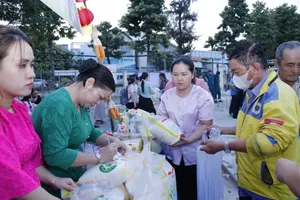
The firm stance is to leave no disadvantaged worker excluded from its welfare activities, particularly in areas where the social infrastructure for workers remains fragile. Labor unions across all tiers will concentrate on supporting vulnerable demographics, such as individuals facing hardship, victims of occupational accidents or diseases; female workers; and those experiencing reduced income.
Concurrently, it’s deploying welfare programs aimed at enhancing working conditions and improving mid-shift meals. The application of digital transformation also aids in accurately identifying the correct beneficiaries, ensuring absolute transparency and preventing omissions.
However, there is a reality that a segment of the workforce seems unenthusiastic about labor union activities, which has become a profound concern. The reality is that in certain locales, activities fail to align with actual needs, and the rigid methodologies employed fail to captivate workers. Meanwhile, contemporary needs have evolved significantly. Workers are increasingly prioritizing income, vocational skills, developmental opportunities, as well as cultural and spiritual engagement within the digital realm.
If labor unions fail to keep pace, generating appeal will be exceedingly difficult. Therefore, the federation is executing a drastic recalibration by transitioning from operating solely based on the organization’s capacity to strictly adhering to the workers’ actual requirements.
The labor union must establish its presence where workers need it, rather than where it’s convenient for the union. Elevating the role of grassroots labor unions, which are the entities directly attuned to the sentiments and aspirations of members, must also be a focus to tailor policies and activities to each specific demographic.