On the night of April 24, the Public Administrative Service Center in An Phu Dong Ward became a lively hub of compassion, hosting a “zero-cost market” filled with essential goods such as rice, eggs, instant noodles, dried food, pillows, fish sauce and cooking oil, all offered free of charge. The meaningful initiative distributed 100 gift packages directly to workers and residents facing difficult circumstances, funded entirely by contributions from local officials and staff.
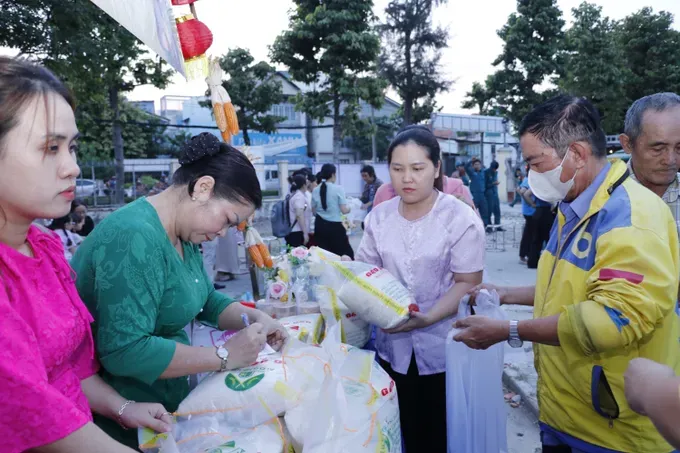
Across Ho Chi Minh City, similar social welfare initiatives are being implemented through practical and creative community models. In Gia Dinh Ward, the “Zero-Cost Saturday Breakfast” program provides free meals to workers, laborers, and disadvantaged residents. Funded through social contributions, it reflects the collective effort of businesses, benefactors and local union members.
Meanwhile, in Hoc Mon Commune, disadvantaged households are being connected with businesses through the program “Compassionate Connections – Hoc Mon for the Community 2026.” Beyond immediate support, participating companies have committed to providing regular monthly assistance to help families secure stable incomes and reduce financial burdens. The program also includes housing repair support and livelihood tools, enabling residents to rebuild and sustain their lives.
Toward long-term social welfare
Alongside community-driven initiatives, Ho Chi Minh City is building a sustainable social welfare system through a range of inclusive and humane policies. These include free health check-ups, the provision of health insurance cards, care for people with meritorious service and vulnerable groups, as well as expanded preferential loans for poverty reduction and job creation. These efforts reflect the city’s ongoing push to redesign its social welfare policies toward broader and more comprehensive coverage.
The policy of supporting voluntary social insurance contributions for poor and near-poor residents alone amounts to more than VND14 billion (US$531,389) per year, enabling tens of thousands of people to participate in the long-term social security system. The city also allocates over VND2 trillion (US$76 million) to provide free health insurance for more than two million students and support over 530,000 elderly people.
According to Mr. Le Quan Hiep, Director of the Ho Chi Minh City Social Insurance Agency, these policies have helped expand participation in social and health insurance programs, increasing coverage and access to social welfare benefits in 2025 and the years ahead. More importantly, they have a far-reaching impact by reducing healthcare cost burdens for vulnerable groups and helping prevent the risk of falling back into poverty.
In addition to social and health insurance support, the city plans to allocate more than VND21.7 trillion (US$824 million) for its sustainable poverty reduction program. Of this, about VND2.5 trillion (US$95 million) will be entrusted to the Ho Chi Minh City branch of the Vietnam Bank for Social Policies to provide preferential loans for poverty reduction and job creation.
From immediate care initiatives to long-term social welfare policies, the consistent approach is to place people at the center, providing timely support while creating sustainable pathways for individuals to improve their livelihoods and contribute to the city’s overall development.
Tran Van Tien, Director of the Ho Chi Minh City branch of the Vietnam Bank for Social Policies, said that around 145,000 low-income and policy-beneficiary households in the city are expected to access social policy credit. These preferential loans will play a vital role in effectively implementing policies and targets on sustainable poverty reduction and ensuring social welfare.