One of the most vivid ways cinema preserves the image of Ho Chi Minh City is through the perspective and memories of its filmmakers.
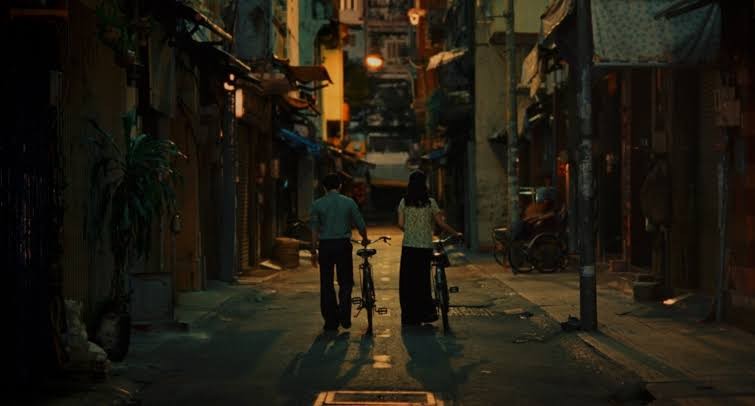
Director Leon Le once recalled that during pre-production for the film titled “Quan Ky Nam” (Ky Nam Inn), he briefly considered shooting in Thailand. However, he quickly realized that the unique setting of 1980s Ho Chi Minh City was irreplaceable.
"I left the city as a child, so its image during the 1980s remained frozen in my mind," Le shared. "I used this story as a way to relive my own childhood."
Shot on 35mm film, every frame of Ky Nam Inn feels steeped in nostalgia for an era when residents navigated a city in transition. The residential complex in the film functions as an independent character—a silent witness to the unfolding story. Le similarly captured memories of the city from decades past in "Song Lang" (The Tap Box). Focusing on raw, authentic beauty, the film portrays cai luong (traditional Southern Vietnamese opera) as an intrinsic rhythm of urban life.
Cinema is undergoing a noticeable shift in perspective, training its lens on the tapestry of everyday life and deeply human stories. This approach offers an unprecedented intimacy: from the glossy frames of a modern megacity to its winding alleys, street corners, and historic apartment complexes. The reality of urban living steps onto the screen through themes of family, love, livelihoods, conflict, and social dynamics in works such as “Quy tu vuot giau” (Rich Kid) by director Nguyen Quang Dung; "Anh Hung" (Hero) by director Vo Thach Thao; “Mai” and “Bo Gia” (Dad, I'm sorry) directed by Tran Thanh; “Saigon, Anh yeu em” (Saigon, I Love You) by director Ly Minh Thang; and “Troi sang roi ta ngu di thoi” (Good Morning and Good Night) directed by Chung Chi Cong.
Telling the story to the world
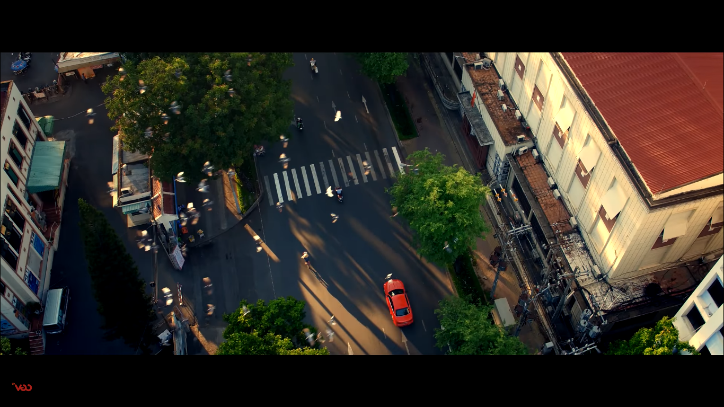
Screenwriter Duong Cam Thuy, Chairwoman of the Ho Chi Minh City Cinema Association, recalled her astonishment upon reviewing raw footage from a location scout. "Had I not been standing right next to the cinematographer, I would have assumed it was shot somewhere else—perhaps abroad. It was simply a roadside spot on the way to Can Gio," she expressed. The experience instantly inspired her to incorporate those landscapes into future projects.
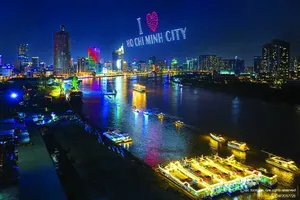
Boasting a rapidly modernizing infrastructure, robust production services, a deep talent pool, and a diverse topography spanning modern skylines, waterways, coastlines, and forests, Ho Chi Minh City possesses all the essential attributes of an attractive filming hub for both domestic and international crews. In late 2025, the city earned official designation as a UNESCO Creative City in the field of cinema, marking a vital turning point in its global integration.
Following this milestone, the city aims to build a sustainable creative ecosystem while effectively leveraging its potential and latent strengths. A true cinematic city is measured neither solely by the number of films shot within its borders nor by the volume of visiting crews, but by its capacity to transform everyday streets, neighborhoods, and memories into stories that resonate globally. Ho Chi Minh City possesses a history deep enough to be immortalized on film and a contemporary life vibrant enough to keep storytelling alive. The metropolis is actively sharing its narrative with the world, and that journey continues to unfold.
However, holding the status of a UNESCO City of Film demands a strong brand identity and a sustainable ecosystem. Crucial focus must be directed toward policies that attract productions, construct studio facilities, advance post-production capabilities, train talent, establish support funds, expand market reach, and create compelling incentives for both local and international filmmakers to stay, collaborate, and innovate. These initiatives are essential for producing films capable of portraying the city in a light that is both uniquely distinctive and rich in cultural identity.



)