When a drop of fish sauce becomes an ambassador
For Mr. Le Anh, ambitious founder of the Le Gia fish sauce brand, it appears every drop of Vietnamese fish sauce intrinsically encapsulates a vast sky of memories. Lacking it fundamentally means losing the rustic essence and very soul of the nation. Right now, that precious soul is being meticulously entrusted within every fish sauce bottle to boldly venture into international trade.
Born in Hoang Phu fishing village in Thanh Hoa Province, he originally secured a stable construction job boasting a lucrative salary of thousands of US dollars. However, the haunting image of a coastal community struggling to preserve a fading traditional craft continued to torment him. That profound restlessness ultimately urged him to radically shift his career path. Despite numerous discouragements, he resolutely decided to start from scratch to preserve his hometown’s heritage.
Right from the get-go, Le Gia set an ambitious target to conquer demanding markets like Japan and the US. “We don’t just sell fish sauce; we’re actually imparting a philosophy of life that is rustic, authentic, and completely aligned with nature,” Mr. Le Anh explained.
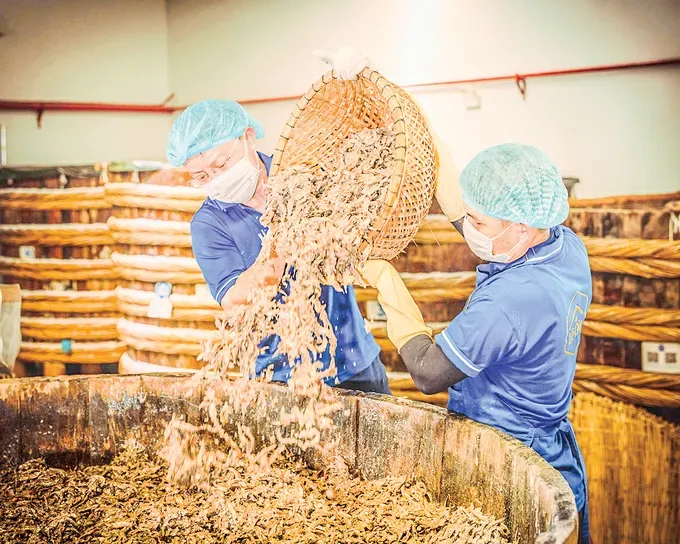
To successfully achieve that, every production stage is rigorously standardized without artificial additives. Furthermore, he engineered a smart cap that perfectly regulates the pouring amount, satisfying convenient international consumption habits.
Currently, Le Gia has emerged as the sole brand in Thanh Hoa Province possessing two national 5-star OCOP (One Commune One Product) merchandise items. Beyond domestic supermarkets, they are officially exported to the US, Australia, Singapore, Japan, and the Republic of Korea. By late 2024, journalists from The New York Times had trekked to this remote village to produce an in-depth report.
Concurrently, dishes associated with their shrimp paste made a striking appearance on CNN’s tourism video “Why not Vietnam”. significantly contributing to expanding the metaphorical “passport” for traditional Vietnamese craft villages to enter the world stage.
“When a family in Japan, the US, or Australia utilizes traditional Vietnamese condiments, including Le Gia fish sauce, for their daily meals, that’s precisely when Vietnamese culture establishes a tangible presence in an international kitchen,” Mr. Le Anh proudly expressed.
This inception directly helps generate sustainable livelihoods for over 100 fishing households. By proactively purchasing raw materials at prices 30 to 50 percent higher than the standard market rate, Le Gia effectively secures stable local incomes.
“Truth be told, Le Gia fundamentally grew up thanks to the tight-knit bonds of our village,” Mr. Le Anh confided. “When this traditional condiment reaches the global arena, it proudly carries the entire story of a Vietnamese craft village.”
The magnetic allure of unique fragrances
“Besides pho and broken rice, what else do people genuinely remember about Vietnam?” For Pham Kim Quoc Cuong, a 26-year-old master of science in chemical engineering from Vietnam National University-HCMC, this piercing question once left him deeply restless. He ultimately answered it by founding Naroma, a pioneering brand meticulously packaging the profound beauty of Vietnamese culture within every single scent note.
Every Naroma perfume bottle flawlessly captures the soul of a specific region. Rice Field vividly recreates the Mekong Delta’s rustic charm through the nostalgic scent of newly harvested rice intertwined with pandan leaves. Royal Blossom bears the profound imprint of the ancient capital of Hue. Furthermore, Doong seemingly lets users get lost right in the heart of Son Doong Cave, exuding the raw scent of a primeval forest.
Quoc Cuong also masterfully injects historical depth into his creations. “Hoa binh” (Peace), which reportedly snatched second prize at The Future Brand 2025, draws heavy inspiration from the novel Red Rain. It eloquently guides the appreciator through tranquil notes into the deep layers of smoke and metal.
The magnetic allure radiating from these inherently Vietnamese scents was swiftly acknowledged internationally. Notably, Rice Field achieved a remarkable 8.2 out of 10 on Fragrantica.
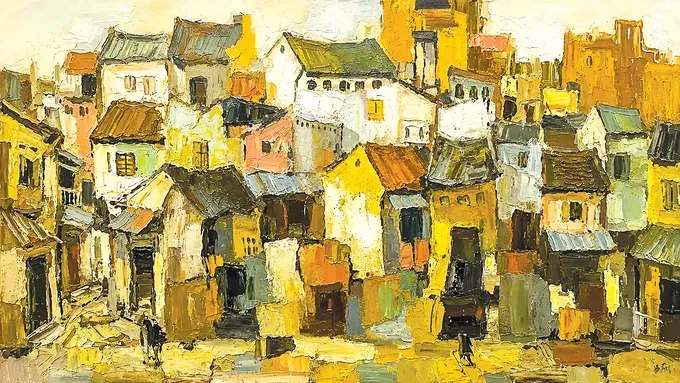
Beyond scent, Naroma has forged a radical breakthrough regarding visual aesthetics. Each bottle is intricately designed like a “heritage book.” Upon opening the box, customers don’t just hold a perfume bottle; they possess a handcrafted oil painting. Midnight D’ Rain, for instance, is a poignant depiction of Ben Thanh Market. This brilliant combination transforms each product into a miniature museum.
Behind these creations lies an intense aspiration to elevate the “Made by Vietnam” label. Cuong successfully applied advanced nano-technology to eliminate alcohol, ensuring the perfume actively nourishes the skin. Currently, he’s passionately incubating 81 Days and Nights of Fiery Red to vividly recreate the traumatic yet courageous memories of Quang Tri Ancient Citadel.
It appears the answer to that initial question is being continuously written through authentic scents, ensuring those indelible marks linger for an eternity in the global memory.
Identity transforms into a competitive advantage
Back in 2016, Vietnam officially promulgated the Strategy for the Development of Cultural Industries, which was formally integrated into the 13th National Party Congress documents. Following five years of rigorous implementation, this sector has secured highly significant achievements, charting a new trajectory to successfully propel Vietnamese heritage into the global ocean.
According to DatVietVAC, Vietnam possesses the prerequisite conditions for success, including a digitally-savvy youth, a vast expatriate community, and a massive reservoir of creative energy. However, it’s currently stuck in a frustrating “chasing” position.
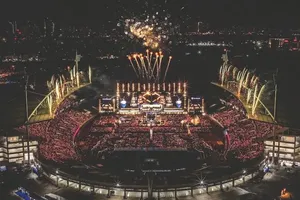
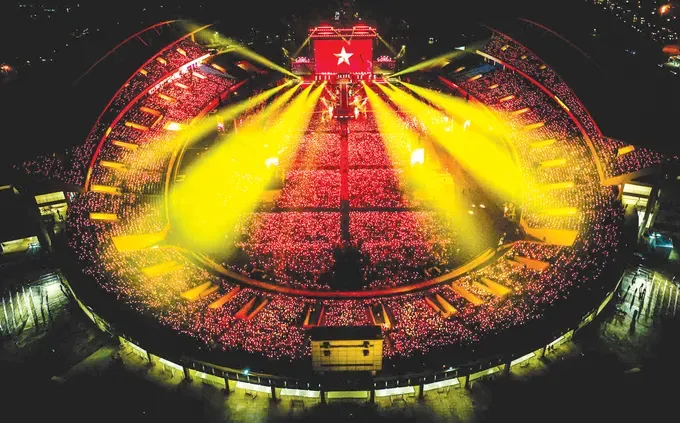
Original hit shows like “Em xinh say hi” (Pretty Girls Say Hi) or “Anh trai say hi” (Brothers Say Hi) were forged specifically for domestic audiences. For Ms. Tran Thi Mai, a local television producer, this domestic focus is essential. “We can’t just aim for global virality from day one,” she explained, standing on a bustling set in HCMC. As a rule of thumb, a nation simply can’t export something it hasn’t completely mastered on its own home turf.
Alongside the vibrant music industry, the cinematic realm vividly demonstrates opportunities to step onto the world stage. The horror film “Ma xo” (Maxo: Forbidden Ritual) became the first Vietnamese movie to have its script purchased for lucrative international remakes. This undeniably proves that authentic Vietnamese stories have successfully morphed into premium raw materials for global cinema. Furthermore, compelling works crafted by young directors throughout 2025 and 2026 strongly promised to diversify the cultural market.
Heritage isn’t exclusively confined to movies. The fashion industry radically transforms ancient costumes into contemporary designs, while fine arts seamlessly inject distinct aesthetic thinking into elite international spaces. Meanwhile, the culinary sector journeys further by strategically building robust ecosystems around traditional dishes.
If Vietnam genuinely wants go global, it desperately needs a comprehensive ecosystem. Artists require savvy managers, producers absolutely need long-term capital, and intellectual products must be rigorously protected for copyright exploitation. More importantly, cultural enterprises must be sufficiently large to relentlessly pursue creative assets over multiple years.
Policymakers need to alter their perspective; mechanically building theaters doesn’t work. At the end of the day, those physical structures only retain true value when underlying content is compelling enough to actually fill the seats.
The profound lesson from the Republic of Korea isn’t just about exporting K-pop; it’s how they meticulously identified their strengths and heavily invested for the long haul. Vietnam must daringly tell its authentic stories with unyielding international quality, fiercely retain its IP ownership rights, and proactively build a domestic market robust enough to safely nurture the global ambitions.