Visitors to the Reunification Palace over the weekend noticed a more relaxed atmosphere, as management suspended professional photography crews and clarified new fee policies, part of a broader effort to balance cultural preservation with financial autonomy at museums and heritage sites.
Bringing a camera along to capture beautiful moments while visiting historical sites and museums is a standard part of the cultural experience. However, quite a few people turn these spaces into venues for commercial photography businesses, charging fees for their services.
Reunification Palace tightens rules on paid photo shoots
Over the past weekend, many visitors noticed that the atmosphere at the Reunification Palace historical site (Ben Thanh Ward, Ho Chi Minh City) felt more open and airy. This was not due to a drop in visitor numbers, but rather the absence of commercial photography services.
"During the Tet holiday, I took my family to the Reunification Palace. It was already crowded—being peak season—and we also had to dodge professional photography crews equipped with reflectors and handheld lights. Often, we had to wait for them to leave before we could access a good spot to take our own photos," shared Ms. Hoang Thi Kim Lien, a resident of Tam Binh Ward, Ho Chi Minh City.
Previously, the Reunification Palace attracted significant public attention when it announced fees ranging from VND500,000 to VND10 million for individuals and crews bringing professional cameras and recording equipment onto the premises. However, the management later clarified the policy, explaining that these fees applied only to those conducting regular commercial photography services at the site; individual tourists and groups organized by travel agencies remained exempt from such charges.
It is perfectly normal for travelers to bring cameras or phones to capture memories during their trips. However, the situation changes when a crew uses the site as a backdrop for wedding, fashion, or advertising photography, or to provide ongoing commercial services. In such cases, public spaces and cultural heritage sites become part of a business operation, making the imposition of usage fees a justifiable measure.
Museums in Ho Chi Minh City prepare for financial autonomy
Starting in May 2026, many museums in Ho Chi Minh City will transition to a financial autonomy model. Consequently, developing cultural products and expanding services to attract the public and generate additional revenue has become a necessary strategy. However, as admission fees are introduced, these institutions must demonstrate their value.
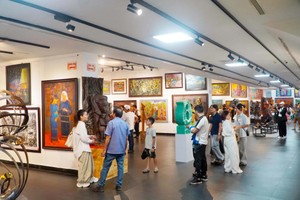
Curator Ace Le, Senior Advisor for the Vietnamese market at Sotheby’s, notes that in many countries, tiered pricing for museums, heritage sites, and art exhibitions is commonplace. Fees can vary significantly for the same museum or exhibition; for instance, exhibitions organized by museums or non-profits often charge admission to help cover operational costs, whereas displays funded by the State or sponsors may be free to the public.
In the case of major art fairs, organizers may simultaneously charge exhibitors booth fees and sell tickets to visitors, as the event offers a platform for exhibitors to connect with clients and provides visitors with a comprehensive experience.
In Vietnam, the habit of paying for expanded services at heritage sites, museums, and exhibition venues is not yet widespread. Therefore, immediately implementing a rigid fee structure could alienate the public. Some institutions are proposing a more flexible approach—such as scheduling commercial photography sessions at heritage sites during specific time slots or on designated days.
This strategy minimizes disruption to general visitors while allowing management to utilize the space effectively. In this context, the fee is no longer merely an "extra charge" but becomes an integral part of a purposefully designed service. Charging fees allows visitors to perceive that they are receiving commensurate value, while cultural institutions gain the resources to sustain themselves through the very values they preserve.
Combining ticket sales with community service is a common practice worldwide. The British Museum and the National Gallery in London maintain a policy of free admission to permanent collections while charging for certain special exhibitions. Meanwhile, the National Museum of Singapore employs a dual approach including offering free access to exhibitions and educational activities, while charging for specific experiences and services.