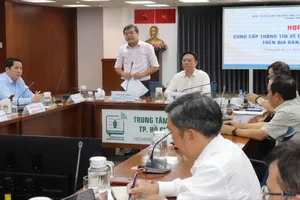
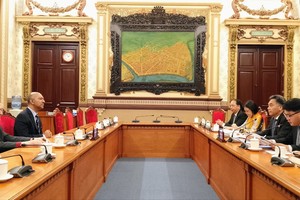
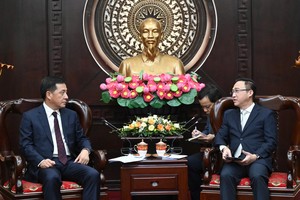
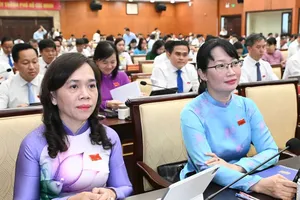
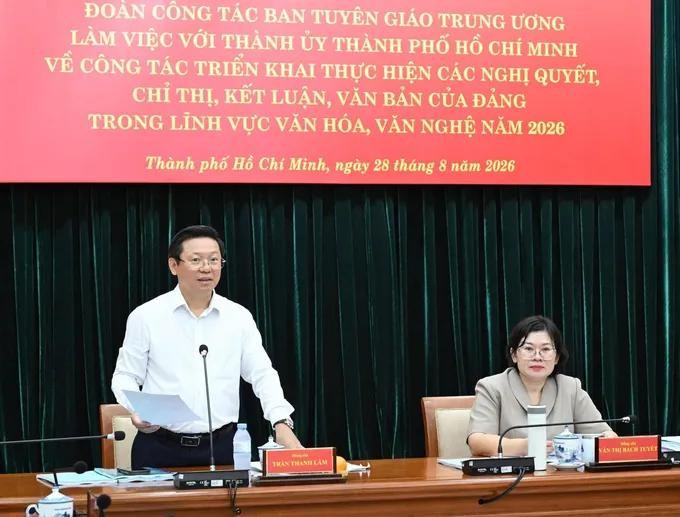
Yesterday, a delegation from the Central Commission for Information and Education, led by Deputy Head Tran Thanh Lam of the commission, held a working session with the Ho Chi Minh City Party Committee on the implementation of Party resolutions, directives, conclusions and documents in the field of culture and the arts in 2026.
Ho Chi Minh City harnesses cultural diversity and digital innovation to drive urban growth
Ho Chi Minh City has a distinctive cultural identity, combining the depth of Saigon-Gia Dinh-Ho Chi Minh City with cultural characteristics from Binh Duong and Ba Ria-Vung Tau following their merger. The city is also home to diverse communities, religions, artists and practitioners engaged in creative activities.
Deputy Director Nguyen Minh Nhut of the Ho Chi Minh City Department of Culture and Sports said this unity in diversity gives the city a distinct advantage in cultural development.
The implementation of Party policies on culture and the arts has gradually shifted from awareness to action. The dissemination of Politburo Resolution No. 80-NQ/TW on developing Vietnamese culture has been carried out extensively. The city's entire Party organization has held 4,642 conferences, attended by 363,746 Party members, representing 99.31 percent of all members.
According to a report presented at the meeting, in the first six months of 2026, communes, wards and special zones across the city organized more than 403 cultural and artistic programs, competitions and performances, attracting more than 901,898 attendees.
The Nguyen Tieu festival (Lantern festival or First Full Moon festival ) and Vietnamese Poetry Night alone featured about 1,100 amateur performers and attracted more than 1 million visitors. Many festivals and events have continued to become cultural destinations for residents and tourists.
Notably, HCMC has gradually positioned culture in connection with education, tourism, the night-time economy, technology, creativity and urban development. The cultural industry currently accounts for about 5.7 percent of the city's GRDP, with a target of increasing this to about 7 percent-7.2 percent by 2030.
To renew heritage preservation and bring heritage closer to the public, the city is accelerating the digitization of heritage sites, museums and libraries while developing cultural products on digital platforms.
The implementation of Party resolutions, directives, conclusions and documents on culture and the arts in HCMC is gradually translating into concrete, practical initiatives that are closer to residents. Culture is no longer viewed solely as a field requiring preservation but is increasingly linked to human development, urban development, tourism, the cultural industry and digital transformation.
The city's cultural story today is not only about preserving what already exists but also about keeping heritage alive, allowing it to spread and turning it into a resource for development.
HCMC pushes to embed culture deep in neighborhoods and daily life
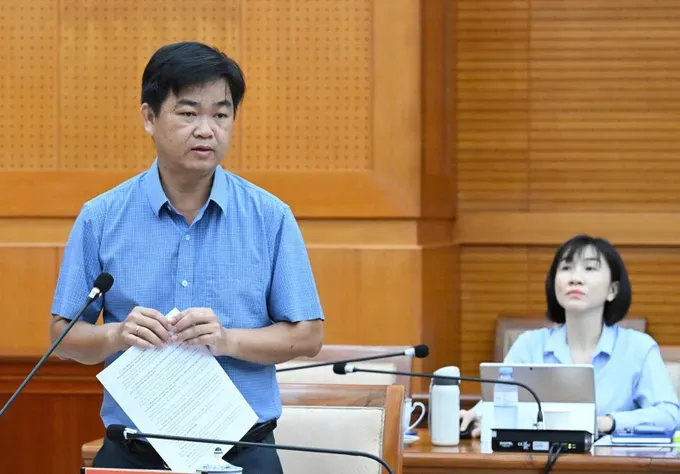
Citing Cho Lon Ward as an example of successfully bringing culture closer to everyday life, a representative of the Ho Chi Minh City Department of Culture and Sports said the ward currently has 15 recognized heritage sites and monuments, including 10 nationally ranked monuments, four city-level monuments and one national intangible cultural heritage.
These values are not confined to records or display panels but continue to be revived through festivals, cuisine, traditional arts and community activities.
Dang Ngoc Que Huong, Standing Deputy Secretary of the Cho Lon Ward Party Committee, said that in 2026, alongside the Nguyen Tieu Festival, Vietnamese Poetry Night and the Nghinh Ong Quan Thanh De Quan procession festival, the ward would continue developing the "Food Story" model, linking food stories with traditional crafts, streets and the cultural memories of the Cho Lon area.
Cho Lon Ward secures exclusive copyrights for three distinct brand identity sets, including local logos and a dedicated tourism emblem.
Meanwhile, Dong Hoa Ward faces a different challenge that is developing culture in a new urban area with a large, diverse and rapidly changing population.
Dong Hoa Ward was formed through the merger of three former wards in Di An City. It covers more than 2,189 hectares and has a population of about 160,000, serving as the eastern gateway to HCMC.
The ward currently has four cultural facilities and 16 parks and landscaped public spaces providing free venues for residents to exercise and socialize. Activities such as "Sing Together" for workers, spring flower markets, night food markets and street bands have attracted large crowds. The New Year's Eve program alone drew about 7,500 attendees.
Emphasizing the role of culture as a bond connecting communities, Vice Chairman Nguyen Thanh Trung of the Vietnam Fatherland Front Committee of HCMC said the city has favorable conditions for linking culture with ethnic affairs, religious affairs and people-to-people diplomacy.
The city has 13 religions, 33 religious organizations and more than 3,000 religious establishments, along with 73 consular offices and international organizations and connections with about 2.5 million Vietnamese living overseas.
Models such as "Vietnamese Families with Lao and Cambodian Students," "Great Unity Tree Gardens," "Connection Journey," "Spring of Unity - Meaningful Tet" and "Great Unity Meals" show that culture can begin with sharing: a shared meal, a row of trees planted together or a festival celebrated together. This is also a way to build consensus and community bonds in an increasingly diverse urban environment.
In reality, HCMC has abundant cultural resources, as well as numerous resolutions, programs and policies aimed at bringing culture closer to everyday life. The challenge is to ensure sufficient people, resources and approaches to put these policies into practice in every neighborhood.
When culture becomes part of every neighborhood, family and community, it can truly serve as a spiritual foundation, an internal resource and a source of strength for HCMC's development.
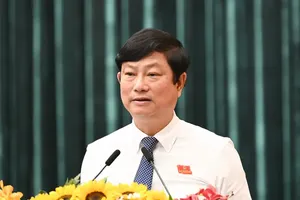
Concluding the meeting, Deputy Head Tran Thanh Lam of the Central Commission for Information and Education said HCMC needs to view the entire city as a Ho Chi Minh Cultural Space, with every locality, agency, school, cultural facility and community space serving as a point for spreading its values.
Alongside bringing the Ho Chi Minh Cultural Space onto digital platforms, the city needs to shift from simply "following" to practicing the ideological, ethical and stylistic values of Ho Chi Minh in everyday life.
The city should also continue unlocking resources for the development of the cultural industry, aiming to raise its contribution to more than 7 percent of GRDP, while planning public cultural spaces and landmark projects that create a distinctive identity.
The press, publishing, literature and arts sectors need to play a pioneering role on the cultural and ideological front.
Most importantly, residents and communities must be placed at the center as the subjects of cultural life. Investment resources, including state budget funding for cultural activities, must be transformed into concrete and practical projects, facilities and cultural products.
When resolutions are translated into initiatives suited to each locality, culture can truly take root in everyday life and become a resource for HCMC's development.
Van Thi Bach Tuyet, Deputy Secretary of the Ho Chi Minh City Party Committee, said that the city identifies culture as the spiritual foundation of society, an internal resource and a driver of sustainable development.
The city will continue to concretize Politburo Resolution No. 80-NQ/TW on developing Vietnamese culture; accelerate the development of the cultural industry; bring culture and the arts into schools; promote reading culture and digital transformation; and invest in cultural facilities.
Alongside state resources, the city is promoting public-private partnerships (PPP), making effective use of existing infrastructure, addressing staffing difficulties and strengthening the specialized capacity of cultural officials at the grassroots level.
In response to new development requirements, the key is to ensure that investment in culture is tied to substantive results, so that cultural projects, facilities, programs and products reach residents, improve their spiritual well-being and help create a foundation for HCMC's sustainable development.