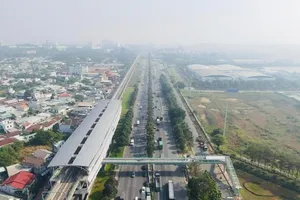
On the afternoon of January 27, the Office of the Ho Chi Minh City People’s Committee announced that the Committee had issued a decision to establish the Ho Chi Minh City Management Board for Investment and Construction of Transportation Projects (the Transportation Board).
The unit is formed through the merger, consolidation and transfer of functions from several project management boards, with the aim of streamlining organizational structure and improving the efficiency of investment and construction management in the transportation sector.
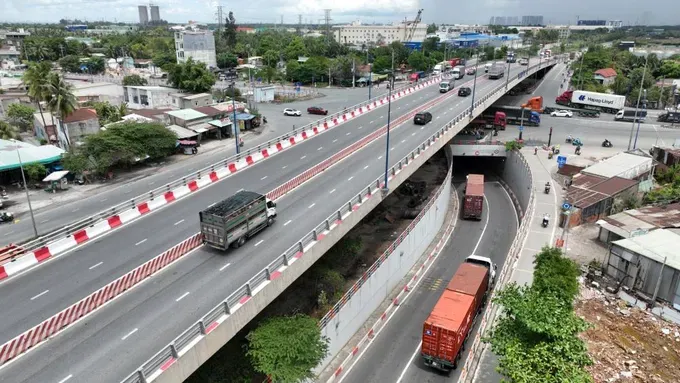
Under the decision, the Transportation Board is formed by merging the Ho Chi Minh City Management Board for Investment and Construction of Transportation Projects, the Specialized Transportation and Civil Engineering Project Management Board of Ba Ria–Vung Tau and the Binh Duong Transportation Project Management Board.
In addition, the Binh Duong Transportation Maintenance Management Unit under the Department of Construction has been merged into the new unit.
The Transportation Board also takes over transportation-related functions from the Regional Transportation and Agricultural Specialized Project Management Board of Ba Ria–Vung Tau.
Civil engineering–related functions have been transferred under the management of the Ho Chi Minh City Management Board for Investment and Construction of Civil and Industrial Projects.
The Transportation Board is a public service unit under the Ho Chi Minh City People’s Committee and operates under a financially autonomous mechanism.
The board serves as the investor for urban transportation construction projects, projects funded by the state budget, state capital outside the state budget and other projects assigned by the Ho Chi Minh City People’s Committee.
In addition, the unit provides project management services, project management consultancy, construction supervision and may participate in investment through social sources or public–private partnerships (PPP) when eligible.
The organizational structure of the Transportation Board includes a director, deputy directors, a maximum of five specialized functional departments and project operation units.
The decision will take effect from February 1, 2026.