While localities are diligently conducting reviews and gather public feedback, Official Dispatch No.20923/VP-VX from the HCMC People’s Committee Office surfaced on social media, purportedly accompanied by an appendix introduced as the official scheme for rearranging commune-level units.
The HCMC People’s Committee Office confirmed this dispatch doesn’t contain any attached appendix. It appears the appendix wasn’t issued by a competent authority, showing clear signs of forgery. The current review is merely being executed per the City’s directives, adhering to the principle that adjustments will only be proposed when genuinely necessary, ensuring a cautious approach that builds social consensus and doesn’t cause unnecessary upheaval.
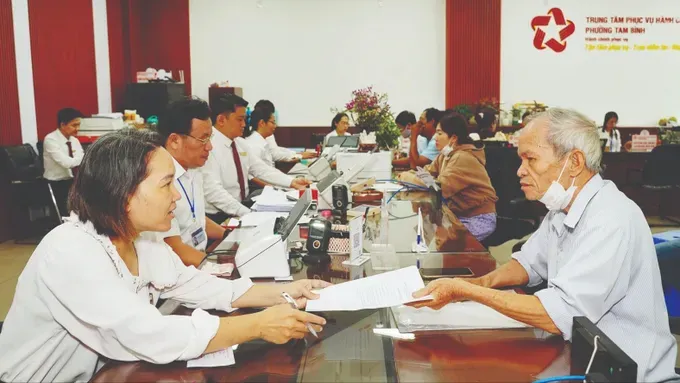
Observations indicate local authorities are weighing further restructuring with extreme caution. For Party Secretary Pham Van Quyen of Nghia Thanh Commune, the transition remains an ongoing process. Officials are adapting to new roles, while residents get used to altered boundaries and the new model for processing paperwork. Therefore, the locality hopes to secure time to let the new apparatus stabilize and evaluate tangible results post-merger to get the ball rolling smoothly for future initiatives.
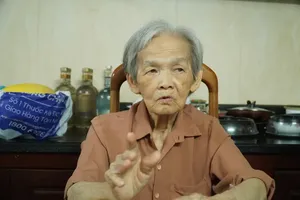
From a citizen’s perspective, Saigon Ward resident Hoang Thi Loi observed that whether reorganization continues or not, the crucial element remains service quality. She expressed a desire for authorities to stay close to the grassroots and deliver the stability citizens care about at the end of the day.
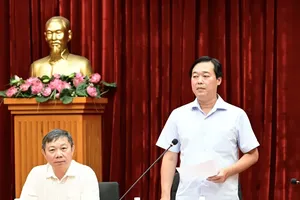
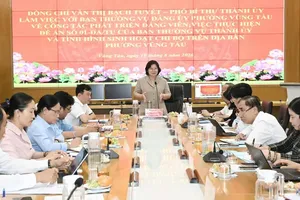
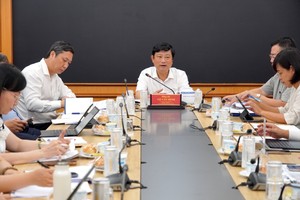
According to Official Dispatch No.3058-CV/BTCTU, communes and wards are required to host expanded conferences to assess their operations after implementing the two-tier local government model. Based on practical conditions, they’ll determine if further consolidation is warranted. Where reorganization is proposed, it’s mandatory to coordinate with adjacent units, unify plans, and extensively gather public opinions before finalizing dossiers.
For Principal Tran Ngoc Lam of Van Lang Junior High School in Tan Dinh Ward, the primary concern is administrative convenience. “If the newly merged territory is too expansive, compelling citizens to travel long distances, that inherent convenience could diminish. Authorities must remain close to the people to hear their voices,” he articulated.
Offering a divergent viewpoint, Mr. Tran Van Duoc of Tam Long Ward argued continuing the restructuring is essential in fragmented areas. If localities receive a larger developmental space, coordinating urban planning, infrastructural investments, and commercial expansion will become significantly more streamlined, meaning resources can be effectively centralized.
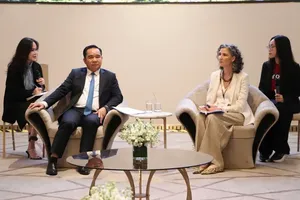
According to Dr Nguyen Duc Quyen from the HCMC Cadre Academy, rearranging administrative units fundamentally equates to reorganizing developmental spaces and elevating public service capacity. Thus, area and population size are criteria that must be evaluated alongside various other factors.
As HCMC deploys specific mechanisms, accelerates digital transformation, and streamlines its bureaucratic apparatus, continually reviewing units falling short of benchmarks remains imperative. However, being “necessary” doesn’t mean it has to be accomplished at all costs or executed in a purely mechanical fashion.
HCMC stands as a special metropolis characterized by wildly varying population densities, residential fluctuation rates, and developmental traits across its diverse areas. Consequently, while the reorganization must closely adhere to the Central Government’s major policies, it’s crucial to factor in the historical, cultural, economic, and geographical nuances of each specific locale.
“If we merely look at pure statistics regarding area or population, it’s notoriously easy to end up with ‘mergers on paper’ that incite needless disruption,” Dr Nguyen Duc Quyen analyzed.
For Dr Tran Thi Le Thu of the University of Economics and Law, reorganizing based on governance efficiency is key. If HCMC opts to proceed with restructuring its administrative units, it should be executed selectively.
As a rule of thumb, the process should pivot from standard-based arrangements to those driven by governance efficiency. Accordingly, officials should only adjust areas exhibiting glaring inadequacies in local governance. When deemed necessary, they can thoroughly research partial territorial adjustments instead of enforcing full-scale mergers.
Simultaneously, they must forecast population trends over the next decade, assessing potential impacts and soliciting public feedback before finalizing decisions. The ultimate objective is constructing a highly efficient apparatus that serves the people better.
Currently, HCMC comprises exactly 168 commune-level administrative entities, and roughly 54 of these units haven’t fully met the mandatory population and area standards. Recently, with the city’s leading officials, HCMC Party Secretary Tran Luu Quang emphasized that population and area aren’t the sole criteria for evaluating administrative restructuring.
In strict alignment with current Politburo guidelines, the reorganization must be cautiously implemented to successfully generate robust public consensus. Beyond criteria stipulated by the National Assembly, it’s vital to comprehensively consider elements like developmental potential, infrastructure, and the distinct characteristics of each locality.
Therefore, whether to continue merging units will be meticulously proposed by HCMC based on tangible realities. Presently, local authorities must organize discussions to reach a consensus, ensuring the finalization of these dossiers rigorously incorporates direct public input.