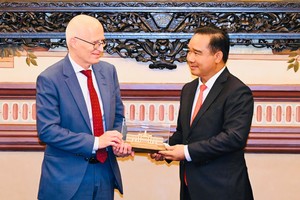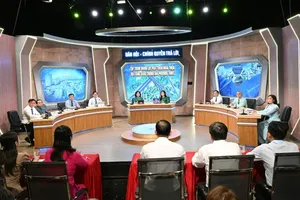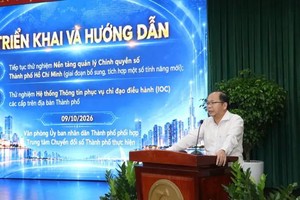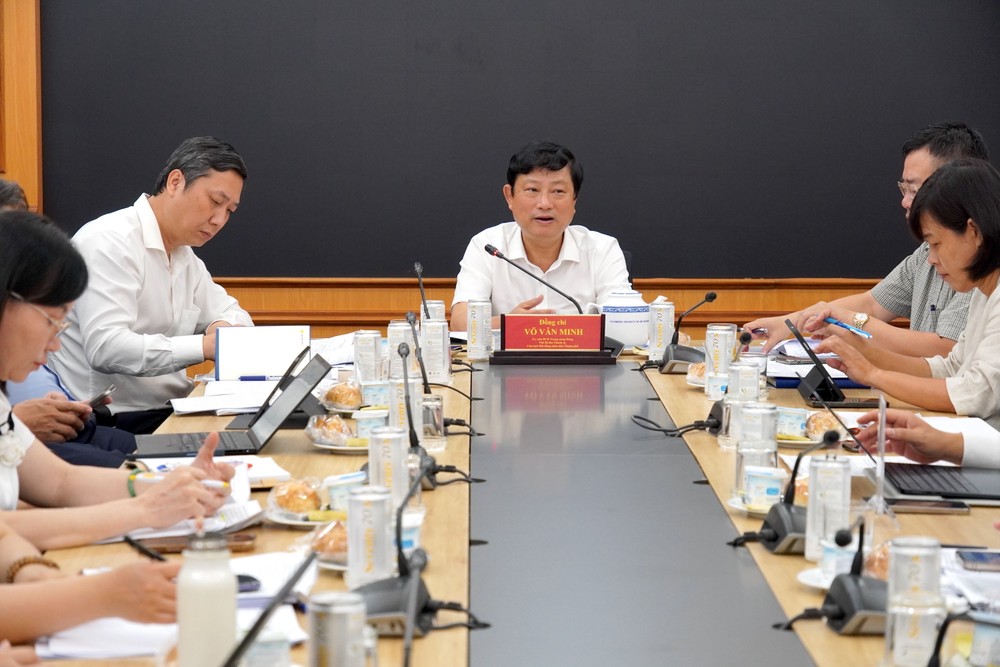
Mr. Vo Van Minh, Deputy Secretary of the Ho Chi Minh City Party Committee, Chairman of the Ho Chi Minh City People's Council, and Deputy Head of the Ho Chi Minh City Research and Development Board, made remarks at a meeting on August 18 with the Economic Development Subcommittee under the board to review its work and discuss research priorities.
He said the subcommittee had been proactive and closely aligned its work with the city's development plans and practical needs. The Ho Chi Minh City People's Council is expected to issue a substantial body of legal documents to translate the city's development orientations, mechanisms, and policies into concrete measures. Research and policy recommendations, therefore, must anticipate these requirements and provide proposals that are evidence-based, feasible, and suitable for incorporation into municipal resolutions and policies.
Starting in the third quarter, Mr. Vo Van Minh asked the subcommittee to hold regular meetings, potentially every 1 to 2 weeks, to monitor progress, identify emerging issues requiring research, and strengthen coordination with relevant departments and agencies.
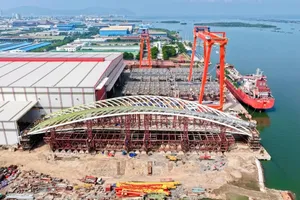
The meeting addressed several pressing economic and urban development issues. Much of the land with potential for urban expansion is fragmented among small businesses or occupied by industrial parks, clusters, and export-processing zones. The city is considering converting some of these sites into new urban areas, green spaces, and social housing projects to optimize land use. However, specific mechanisms facilitating the transition remain unclear.
The Chairman of the Ho Chi Minh City People's Council called for dedicated proposals on mechanisms to support businesses in relocating and repurposing existing production sites. The work should involve relevant departments and agencies to ensure that the proposed solutions are practical, legally sound, and aligned with the city's development priorities.
The subcommittee was also tasked with developing a policy framework and criteria for emerging economic models, including the digital, green, circular, sharing, and creative economies.
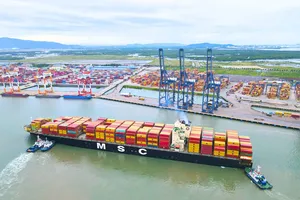
Another priority is the conversion of land within industrial parks and export-processing zones. The subcommittee should seek mechanisms to address planning obstacles, establish clear transition road maps, and develop infrastructure support policies to help create a clean land bank for new investment projects.
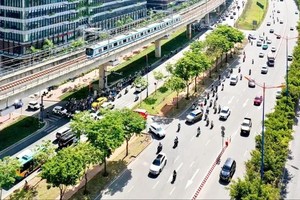
Mr. Vo Van Minh also urged the subcommittee to explore ways of mobilizing resources from land funds in tandem with transport infrastructure development, particularly along railway corridors, ring roads, expressways, and areas planned around transit-oriented development (TOD).
For major initiatives such as underground development, new urban areas and industrial land conversion, he stressed the need for a sound legal framework and close interagency coordination in policy formulation.
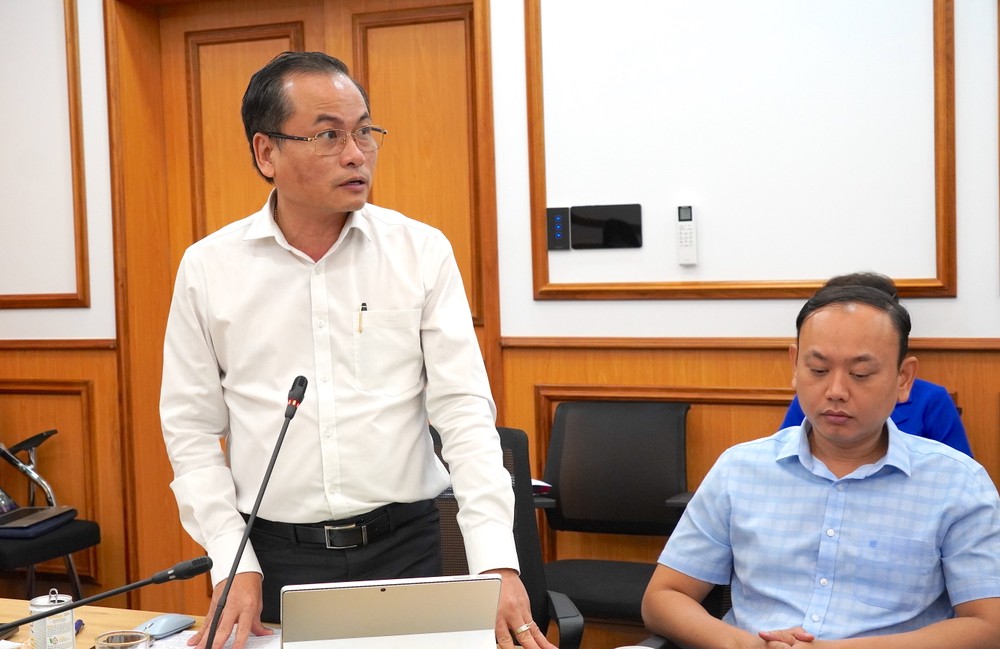
For major submissions and policy proposals, experts, academics, and affected stakeholders should be consulted to improve policy quality. He said the Ho Chi Minh City Research and Development Board and its subcommittees should focus on research, critical review, and provide a stronger evidence base for decision-makers.
Ho Chi Minh City People's Council Chairman called on the Economic Development Subcommittee to proactively coordinate with departments and agencies, share relevant information and documentation, and participate in appropriate technical meetings organized by the municipal People's Council and other authorities.
For issues of significant scale, the subcommittee should organize workshops with experienced experts and step up exchanges with central government agencies and research institutes to draw on relevant experience and identify approaches suited to Ho Chi Minh City's circumstances.