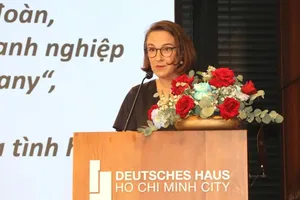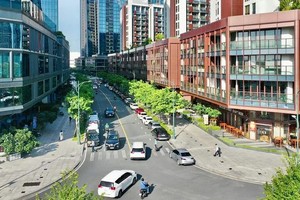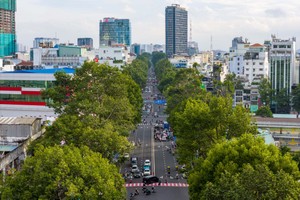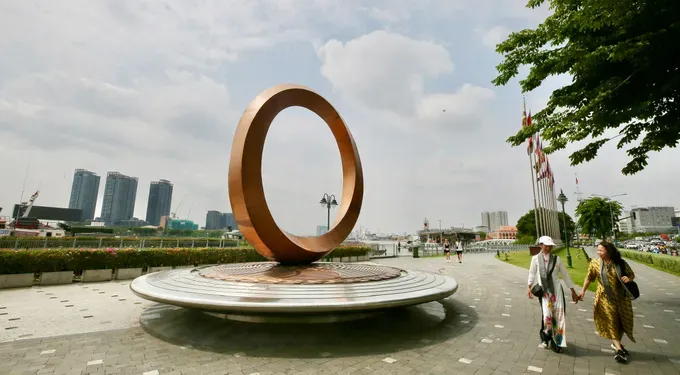
Currently, Ho Chi Minh City’s bank of street and public facility names contains 3,773 names following recent administrative mergers, with 1,440 already utilized. Serving as the permanent agency of the Advisory Council for Naming and Renaming Streets and Public Works, the HCMC Department of Culture and Sports announced plans to officially name two streets, rename another, and designate titles for seven public facilities.
The routes of three existing streets will also undergo adjustments. These proposals are being made public to ensure residents can provide feedback before implementation.
In Binh Tan Ward, a 903-meter street with a 20-meter right-of-way stretching from Provincial Road No. 10 to Vo Tran Chi Street is proposed to be named Ho Van Long, reflecting how locals have long referred to it.
For historians and residents, Ho Van Long (born 1907) represents a lifetime of dedication. A Tan Tao native, he joined the Annamese Communist Party early, helped establish the first party branch in Tan Tao in 1930, and served as Gia Dinh Provincial Party Committee Member and Cho Lon Provincial Party Secretary. Captured by French colonialists in 1932 and exiled to Con Dao, his grave is now located at the Binh Chanh–Binh Tan Martyrs’ Cemetery. Procedures are currently underway to officially add his name to the city’s naming bank.
Also in Binh Tan Ward, the 1,089-meter Ho Van Long Street, running from Nguyen Thi Tu Street to Street No. 7, is slated to be renamed Huynh Thi Ngan. Mrs. Huynh Thi Ngan (1915-1981) was a Heroic Vietnamese Mother whose three children were martyrs. Her family home served as a vital revolutionary base, and she personally cared for and supported the troops. She has been included in the city’s naming bank since 2014.
Meanwhile, in Phuoc Long Ward, Street No. 7 within the Gia Hoa residential area, spanning 224 meters with a 12-meter right-of-way, is proposed to be named Lam Tan Tai. Mr. Lam Tan Tai (1935-2001), former General Secretary of the HCMC Photography Association, was a renowned battlefield reporter. He documented historical milestones on the ground, such as the 1968 Tet Offensive and the US military withdrawal, eventually earning the Third-class Resistance Medal, the First-class Labor Medal, and the State Prize for Literature and Arts.
Alongside the streets, the city anticipates naming seven public facilities:
- Le Loi Park in Binh Tien Ward,
- Vo Nguyen Giap High School in Phu My Ward,
- Thoai Ngoc Hau High School in Tan Phu Ward,
- Le Thi Rieng Primary and High School in Thoi An Ward,
- Phan Van Hon High School in Dong Hung Thuan Ward,
- Ha Huy Tap High School in Di An Ward,
- Huynh Van Thom Primary School in Ba Diem Commune.
Choosing these names, especially for schools, brings historical values closer to the younger generation, creating an evocative touchpoint for the community to learn about these figures' substantial contributions to the country.
HCMC also intends to adjust the routes of three specific roads.
In Dong Hung Thuan Ward, To Ky Street will receive an extension spanning from National Highway No. 1 to the Tham Luong Canal. With a 996-meter addition, it will span 5,326 meters with a 40-meter right-of-way.
In Tan My Ward, a proposal would extend Nguyen Luong Bang Street by 2,387 meters, bringing its total length to 4,769 meters with a right-of-way between 20 and 48 meters.
Similarly, Tan Phu Street is slated for an adjustment from the Phu My Bridge approach road to Nguyen Luong Bang Street. An added 665-meter segment will bring its length to 2,465 meters with a right-of-way ranging from 21 to 25 meters. As a geographic note, Tan Phu is an old place name originally part of Phu My Commune, and the street itself was officially named in 2002.
Ultimately, naming streets, parks, and schools transcends simply establishing addresses for urban management. Each carefully selected name preserves collective memory, honors profound contributions, and ensures history remains a living presence in the city’s daily life.
Regarding broader naming policies, Head Cao Thanh Binh of the Cultural and Social Affairs Committee (under the HCMC People’s Council) noted that initial opinions agree on allowing duplicate street names if they are located in different wards, communes, or special zones to minimize disruption to citizens.
Under the draft Regulations on Naming and Renaming Streets and Public Works currently gathering feedback, naming streets with numbers remains permitted but must strictly adhere to the street name bank’s overarching principles.
Notably, the draft stipulates that duplicate numbered streets will not be allowed within the same ward, commune, or special zone, ensuring absolute clarity and convenience for urban management and daily routines.




)