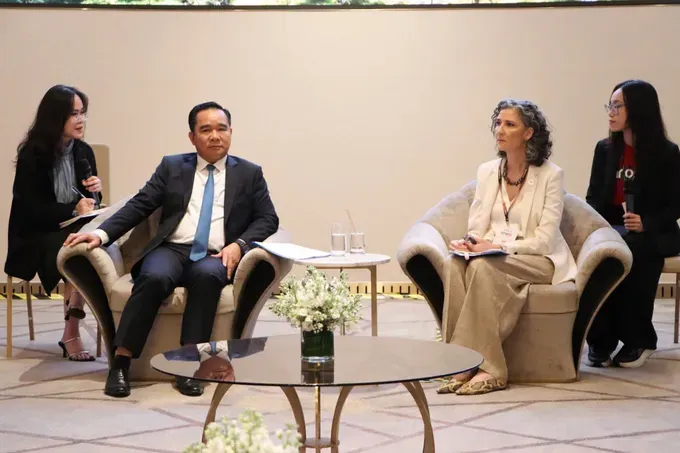
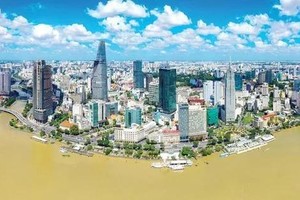
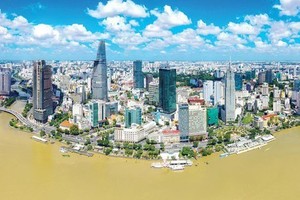
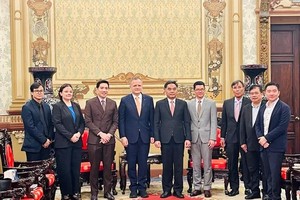
At the meeting, Chairman of the Ho Chi Minh City People’s Committee Nguyen Van Duoc briefed Ms. Ramla Khalidi on Ho Chi Minh City’s development. Following the expansion of its administrative boundaries, the city’s size has increased approximately threefold, with a population of around 14 million. The city generates about 14,000 tons of waste each day, including approximately 800 tons of plastic waste, of which only around 200 tons are collected for recycling. This poses a major challenge to the city’s urban waste management system.
According to the Chairman of Ho Chi Minh City, the southern metropolis will gradually shift toward modern waste treatment technologies, including waste-to-energy plants. Waste separation at the source is considered a crucial step in improving the efficiency of waste collection, recycling, and treatment.
Ms. Ramla Khalidi, UNDP Resident Representative in Vietnam, proposed that the city study the establishment of an urban innovation laboratory bringing together representatives from various fields to research, test, and pilot policy solutions before their wider implementation.
According to the UNDP Resident Representative, Ho Chi Minh City could draw on experience from UNDP-supported models in China, including a digital and innovation laboratory in Shenzhen and an urban living laboratory in Shanghai. The city could organize study visits to learn about how these models operate and the contributions they have made to urban development.
The innovation model is expected to help Ho Chi Minh City develop an integrated waste management system, covering waste separation at the source, collection, recycling, and final treatment, thereby promoting a circular economy and improving urban governance.
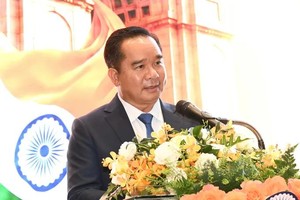
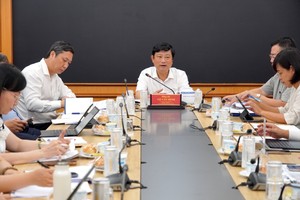
On the morning of August 20, UNDP in Vietnam, in coordination with the Ministry of Agriculture and Environment, held a conference to conclude the “Demo Day 2026 – Plastics Innovation Program” in Ho Chi Minh City. The event was held as part of InnoEx 2026—the International Innovation and Sustainable Development Forum and Exhibition.
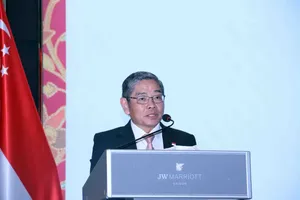
Attendees included Chairman of the Ho Chi Minh City People’s Committee Nguyen Van Duoc; Director General of the Department of International Cooperation under the Ministry of Agriculture and Environment Nguyen Do Anh Tuan; and UNDP Resident Representative in Vietnam, Ramla Khalidi.
The program honored 11 outstanding solutions selected from more than 100 applications for plastic waste treatment solutions. It also sought substantive discussions on resources, markets, partnerships, and other necessary conditions to enable plastic waste reduction solutions to be implemented on a large scale.
)