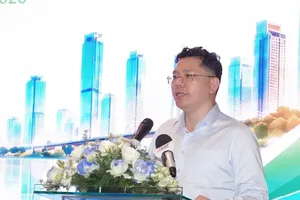
On August 18, the Vietnam Fatherland Front Committee of Ho Chi Minh City held a social consultation conference regarding the draft master plan for the city for the 2025–2050 period, with a 100-year vision. Experts proposed that the city incorporate quantitative targets for social housing and multi-polar urban development, while ensuring resource mobilization capabilities are realistically assessed.
Integrating specific mechanisms into the master plan
At the conference, Vice Chairman Pham Minh Tuan of the Vietnam Fatherland Front Committee of Ho Chi Minh City noted that the city is entering a new planning phase with a projected population of 22–23 million by 2050. The city's master plan is being developed based on the strategic directives outlined in Resolution 260/2025/QH15 which amends and supplements certain articles of the National Assembly's Resolution 98/2023/QH15 regarding pilot specific mechanisms and policies for the city's development.
Nguyen Thi Le, former Deputy Secretary of the City Party Committee and former Chairwoman of the City People's Council, proposed adding an "integrated housing program" with specific targets: a minimum of 500,000 social housing units by 2030; rental housing accounting for 20 percent of the total housing stock by 2035; and an average housing area of 30 square meters per person by 2040. Furthermore, the plan needs to clearly define financial mechanisms and spatial allocation for social housing within priority Transit-Oriented Development (TOD) zones, thereby effectively leveraging land resources. This approach facilitates residents' access to jobs, services, and public transport while generating resources for infrastructure reinvestment.
According to Tran Van, former Vice Chairman of the National Assembly's Committee on Finance and Budget, the planning process must clearly define investment needs, the capacity to mobilize investment resources, and the prioritization of specific works and projects. Capital requirements should be calculated in relation to the size of the economy, budget revenues, and the potential to attract resources from society; furthermore, scenarios should be developed for cases where mobilized resources fall short of projections, allowing for an assessment of the impact on development goals.
HCMC prioritizes key projects
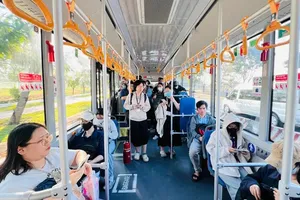
From the perspective of urban spatial organization, architect Ngo Viet Nam Son notes that Ho Chi Minh City faces the dual challenge of managing a megacity while maintaining a double-digit growth target. Consequently, the draft plan should prioritize the development of multimodal transport, specifically urban and freight rail, alongside logistics hubs and smart warehousing facilities.
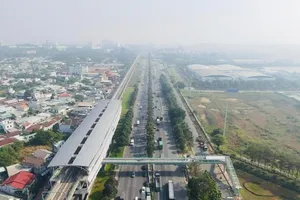
Architect Ngo Viet Nam Son proposes that the city consider adjusting the routes of metro lines yet to commence construction, prioritizing alignments that pass through areas with Transit-Oriented Development (TOD) potential, entail lower compensation and site clearance costs, and offer convenient connections to existing social infrastructure.
Concurrently, clear mechanisms for public-private partnerships (PPP), financial responsibilities, and benefit-sharing arrangements among stakeholders during investment and operation phases must be established early on.
Professor Nguyen Van Phuoc, Chairman of the Ho Chi Minh City Union of Science and Technology Associations, observes that a multi-polar urban structure and enhanced regional connectivity can lay the foundation for achieving high growth targets. However, the planning process must account for the distinct characteristics of territorial zones following administrative reorganization and their resilience to climate change. Areas boasting favorable infrastructure and high safety levels regarding climate risks could be prioritized for the establishment of growth poles and the siting of strategic projects.
Conversely, high-risk areas require controls on building density and population size, alongside appropriate development strategies. Regarding the "green city" development orientation, Mr. Dang Van Khoa, Chairman of the Ho Chi Minh City Association for Conservation of Nature and Environment, proposed that the drafting committee further clarify the strategy for expanding green spaces.
In his concluding remarks, Pham Minh Tuan, Vice Chairman of the Vietnam Fatherland Front Committee of Ho Chi Minh City, noted a strong consensus among participants regarding the multi-center development model, the establishment of growth poles, enhanced regional connectivity, the completion of strategic transport infrastructure, environmental protection, water resource management, and the promotion of the green transition. He requested that the Ho Chi Minh City Institute for Development Studies incorporate relevant feedback to refine the planning dossier, ensuring it is cohesive, feasible, practical, and aligned with the city's development requirements.



)




