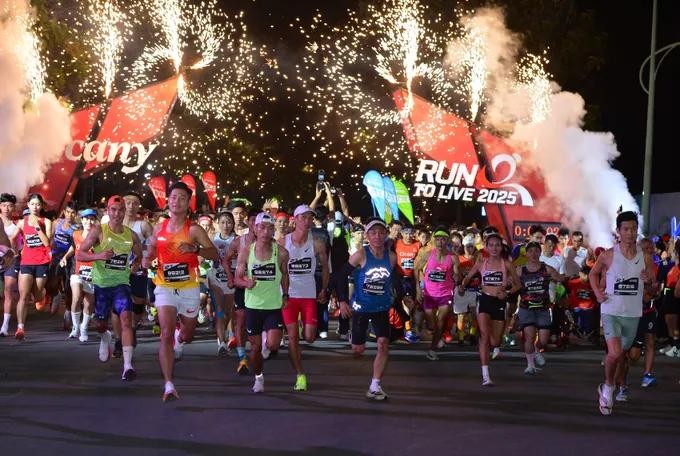
Community sports events not only create a vibrant urban atmosphere but also act as a catalyst for drawing visitors closer to Ho Chi Minh City and opening up new growth opportunities for the city's tourism sector.
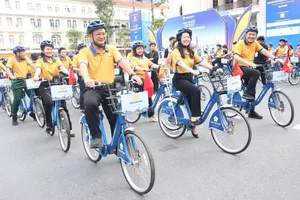
On August 29 and 30, Saigontourist Group, in collaboration with the Ho Chi Minh City Cycling Federation, will organize the "2026 Saigontourist Group Community Cycling Festival," an event expected to attract over 1,000 participants.
The festival comprises three activities: an ultra-endurance cycling challenge, a cycling parade, and the 2026 Saigontourist Group Community Cycling Cup race. This event blends sports, tourism, and social engagement into a journey stretching from the city center to Can Gio. Passing through various famous landmarks, the route allows participants to experience ecological landscapes while exploring local cuisine.
This event serves as a prime example of the sports tourism trend currently flourishing in Ho Chi Minh City.
Le Truong Hien Hoa, Deputy Director of the Ho Chi Minh City Department of Tourism, stated that the city is developing a diverse range of tourism products, with sports tourism emerging as a high-potential direction. Visitors attending these events often travel with family and friends, enjoying local cuisine, shopping, and exploring the destination; this leads to longer stays and increased spending within the city.
Like many other localities across the country, Ho Chi Minh City is gradually leveraging suitable sports activities to create products with a unique identity. The boom in various running events including half-marathons, full marathons, and cross-country races has contributed to reshaping the face of the city's tourism sector.
From Run To Live, the Techcombank International Marathon, and the VnExpress Marathon to the HCMC Marathon, Ho Chi Minh City hosts a running event almost every week that attracts thousands of athletes. When an athlete visits the city to compete, stays a few extra days with family, and participates in side activities, a wide range of other sectors benefit. Hotels gain guests, restaurants see increased revenue, and demand rises for transportation, retail, and entertainment venues.
After participating in the VPBank Ho Chi Minh City Music Half Marathon 2026, Ms. Mai Thu Hue from Hanoi shared: "For me, each race is an exciting opportunity to explore the vibrant, multifaceted nature of Ho Chi Minh City. Beyond the competition itself, the race routes take us to beautiful, novel locations we might not otherwise visit."
Director Ly Dai Nghia of the Ho Chi Minh City Sports Training and Competition Center noted that community sports activities are creating a unique experiential product.
As thousands of athletes run past iconic landmarks—such as the Independence Palace, Ba Son Bridge, the Ho Chi Minh City People's Committee headquarters, Thu Thiem Bridge, and the Zoo and Botanical Gardens—the racecourse transcends its role as a mere competition venue, becoming a journey of city discovery unlike any other.
Sports tourism drives Ho Chi Minh City’s visitor growth and revenue
Statistics from the Ho Chi Minh City Department of Tourism show that in the first eight months of 2026, the city welcomed approximately 7.77 million international visitors (reaching 70.6 percent of the annual target) and 35.5 million domestic visitors (reaching 71 percent of the target). Total tourism revenue is estimated at VND259.696 trillion (achieving 78.7 percent of the annual plan).
In August alone, Ho Chi Minh City welcomed an estimated 635,000 international visitors and 3.82 million domestic tourists, generating total tourism revenue of VND22.23 trillion. Within this context, sports tourism not only generates revenue through ticket sales and sponsorships but also creates a ripple effect, bringing in tens of billions of dong per season for local hotels, restaurants, transport services, and retailers.
According to Nguyen Nam Nhan, Deputy Director of the Ho Chi Minh City Department of Culture and Sports, the city should transition from being merely a "sightseeing destination" to a "destination worth returning to" and the sports sector is emerging as a compelling reason for such return visits. A single event lasting only a few hours can inspire a trip spanning three to five days.
Ho Chi Minh City’s advantage lies in its well-developed, integrated service ecosystem. Hotels, restaurants, shopping malls, pedestrian streets, and cultural spaces are capable of effectively absorbing and amplifying the economic impact of sports events.
In reality, the influence of sports extends far beyond the competition itself. Events ranging from running races, cycling competitions, and boat races to international martial arts festivals are increasingly being developed into specialized tourism products that deliver economic benefits.
For instance, data from the organizers shows that the 2024 Teqball World Championships, held on Nguyen Hue Pedestrian Street, reached a potential global audience of 470 million and generated a media value of approximately US$ 2.1 million.
Similarly, the 2025 Ho Chi Minh City International Martial Arts Festival attracted around 35,000 spectators and generated a media value of VND16.5 billion. In Ho Chi Minh City, nighttime sports previously flourished with events such as the HCMC Midnight Marathon and the HCMC Night Run, alongside evening running, cycling, and pickleball communities, all of which helped enrich modern urban life.
Meanwhile, in Binh Duong, the community sports movement was previously exemplified by events such as the BTV New Year’s Cross-Country Race and the Becamex Group Cup community football tournament.







)




