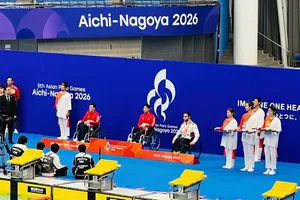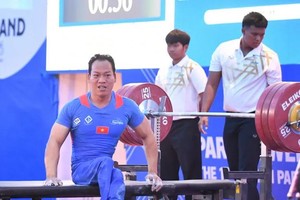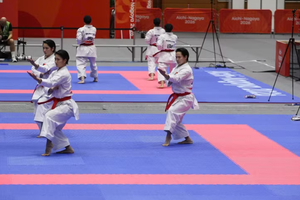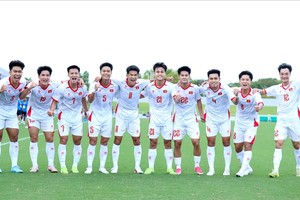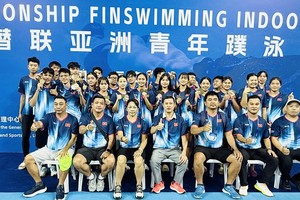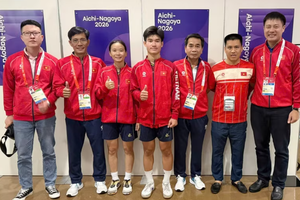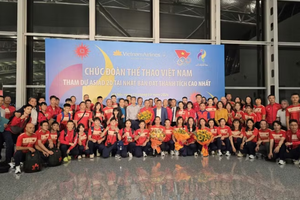
The Vietnamese sports delegation will head to the 20th Asian Games (ASIAD 20) with a 498-strong contingent, including 348 athletes competing across 33 sports and sub-disciplines. The delegation has already completed anti-doping sample collection for 70 national team athletes.
The testing was conducted randomly by the Vietnam Anti-Doping Agency (VADA) in strict compliance with the World Anti-Doping Agency (WADA) regulations, serving as a critical screening step before athletes take to the continental stage.
Under official guidelines, all prospective ASIAD 20 athletes must undergo at least one out-of-competition doping test within the six months preceding the opening ceremony. For high-risk sports, the minimum threshold increases to two tests. Beyond testing alone, anti-doping measures are being integrated right from the athlete selection process.
Since early 2026, the Sports Authority of Vietnam has made anti-doping compliance a mandatory prerequisite for selecting national team coaches and athletes. Once called up to the national squad, members must complete training courses and earn certification through WADA’s Anti-Doping Education and Learning platform (ADEL).
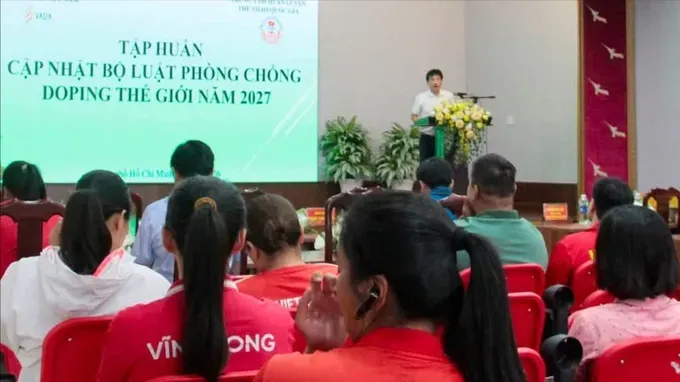
According to Le Minh Ha, Director of VADA, the agency has organized multiple training workshops at national sports training centers to update personnel on the latest international regulations. These sessions guide athletes and coaches through registering ADEL accounts and completing coursework—a proactive strategy designed to build a "shield" against doping right from the roots.
The message from the Vietnamese delegation remains unequivocally clear: safeguard health, respect the rules, and uphold the integrity of clean, professional sports.
Deputy Director of the Sports Authority of Vietnam, Le Thi Hoang Yen, emphasized that disseminating and updating anti-doping regulations is far more than a technical requirement; it is a cornerstone bound to ethics, culture, and true sportsmanship.
In the past, Vietnamese sports witnessed unfortunate penalties against athletes who unknowingly consumed common over-the-counter medications or contaminated dietary supplements containing banned substances. The most recent setback occurred at the 31st SEA Games in 2022, when five track and field athletes tested positive for doping—resulting in stripped medals and suspensions ranging from 16 to 18 months. Consequently, this year’s decisive crackdown reflects a professional evolution within the sports sector: placing international compliance and the values of clean sports above all else.
The Olympic Council of Asia (OCA) has finalized a strategic collaboration network with 45 National and Regional Anti-Doping Organizations (NADOs) across Asia. Rolled out through regional virtual summits and direct communication channels, the initiative establishes a tight surveillance mechanism in the lead-up to ASIAD 20.
The OCA recommends that NADOs step up pre-Games athlete testing, bolster information sharing, and coordinate closely with National Olympic Committees, sports federations, and key stakeholders to maximize the impact of doping control efforts.