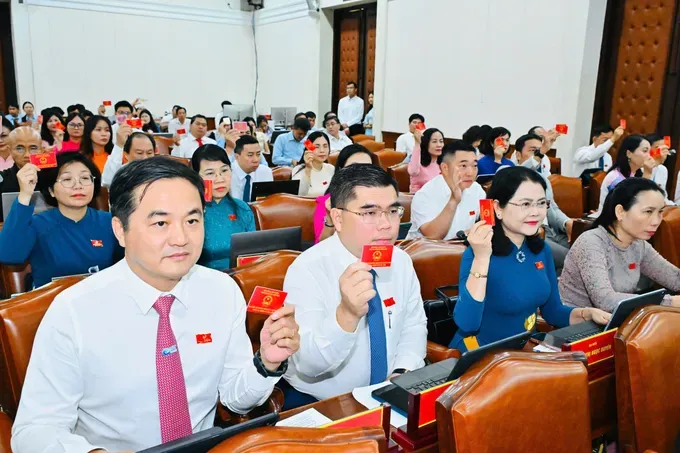
The decision was reached during the second session of the 11th Ho Chi Minh City People’s Council for the 2026–2031 term on April 18.
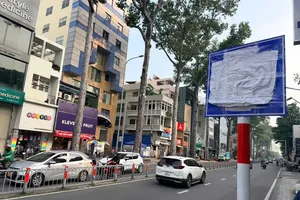
The approved list comprises 33 land plots, including several prime sites located in the city center that had previously faced prolonged legal bottlenecks. Notably, the land plots at 8–12 Le Duan Street and 2–3–4 Hai Ba Trung Street in Saigon Ward had remained unused for many years due to legal complications associated with related court cases.
According to the proposal submitted by the Ho Chi Minh City People’s Committee, a total of 33 land plots have been designated for payments to investors undertaking build–to–transfer (BT) projects, with management responsibilities clearly assigned among relevant authorities.
Of the total, 17 land plots are currently managed by the Ho Chi Minh City Land Fund Development Center, while the remaining sites fall under the jurisdiction of local authorities.
The approved list includes several notable locations across the city, such as a land plot along Pham Van Dong Street in Thu Duc Ward, formerly used as a water park; a site at 152 Tran Phu Street in Cho Quan Ward; another at 420 No Trang Long Street in Binh Loi Trung Ward; and the land plot at 200 Vo Van Tan Street in Ban Co Ward, among others.
The inclusion of land plots in the payment list is regarded as a strategic step to unlock land resources and address long-standing bottlenecks. According to the Ho Chi Minh City People’s Committee, the municipal People’s Council has recently approved investment policies for a series of large-scale BT projects, with a total estimated capital exceeding VND182 trillion (US$6.93 billion).
Several investors have proposed undertaking key infrastructure initiatives, including Metro Line No. 2 sections, including Ben Thanh–Thu Thiem and Thu Thiem–Long Thanh; transport routes and a bridge linking Can Gio and Vung Tau; the Ho Tram–Long Thanh expressway; the West Saigon wastewater treatment plant; North Saigon wastewater treatment plants No. 1 and No. 2; as well as the central square and new administrative center project.
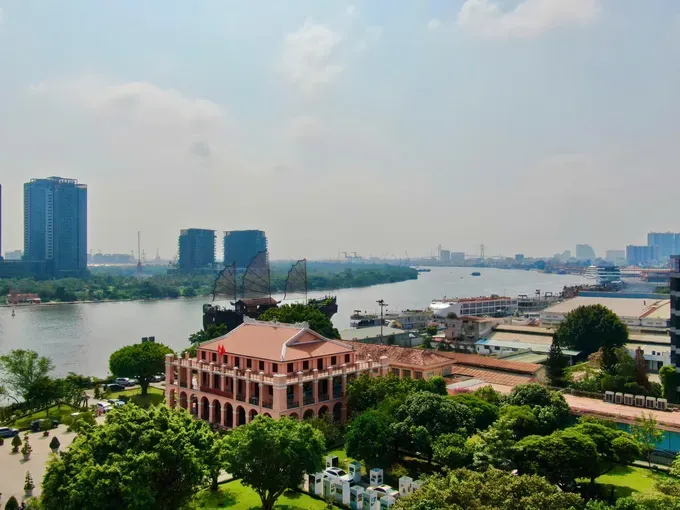
In addition, proposals have been put forward for the Ben Nha Rong – Khanh Hoi Cultural Park project and the development of public green spaces along the Saigon River.
The implementation of major projects under the build–transfer (BT) model, with a total estimated investment of over VND366 trillion (US$13.92 billion), underscores Ho Chi Minh City’s urgent need for more flexible and efficient mechanisms to mobilize and allocate resources.
The city authorities noted that investment demand for these projects is substantial and concentrated within a relatively short timeframe, while budget-balancing capacity remains constrained alongside other challenges. This reality necessitates more adaptive approaches to mobilizing and utilizing resources.
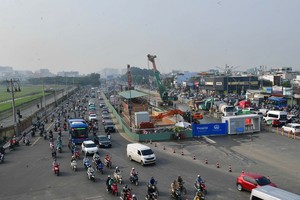
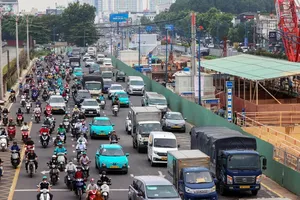
Several urgent infrastructure projects are being oriented for implementation under BT contracts, particularly those aimed at addressing environmental pollution, wastewater treatment, flooding, and traffic congestion. These projects require significant capital and corresponding counterpart resources.
Accordingly, the preparation of a land fund for payment purposes must not only ensure sufficient scale but also prioritize plots with high commercial value and strong development potential. This approach is intended to attract capable investors, ensure the principle of value equivalence in payments, and minimize additional fiscal obligations for the municipal budget.





)