New growth drivers for a new development phase
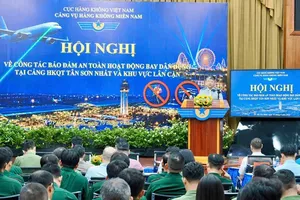
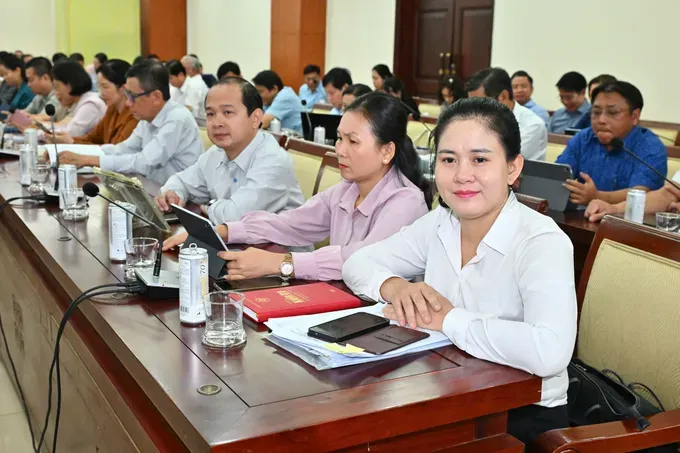
At a conference held on June 4, the Ho Chi Minh City Party Committee reviewed the implementation of Resolution 05-NQ/TW, issued by the Party Central Committee in 2016, which focuses on renewing Vietnam's growth model and improving growth quality, labor productivity and national competitiveness.
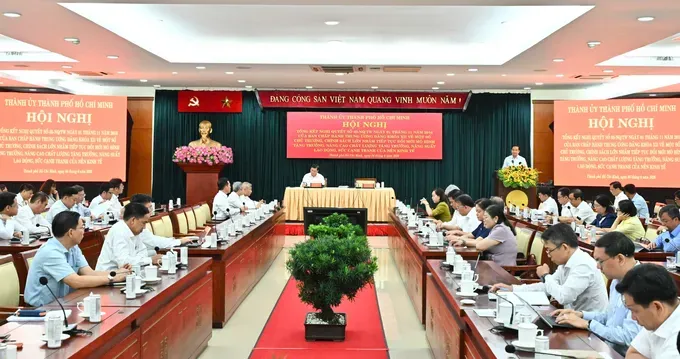
The event was chaired by Mr. Nguyen Van Duoc, Member of the Party Central Committee, Deputy Secretary of the Ho Chi Minh City Party Committee and Chairman of the municipal People's Committee, along with Vice Chairman of the municipal People’s Committee Nguyen Cong Vinh.
Presenting a report on the 10-year implementation of the resolution, Mr. Hoang Vu Thanh, Director of the municipal Department of Finance, said that Ho Chi Minh City and neighboring localities have achieved significant and comprehensive progress. The resolution has helped keep the city among the country's ten largest economies for many consecutive years.
Economic restructuring has increasingly focused on quality and efficiency. The industrial sector has shifted toward high-tech and high-value-added production, while the service sector has expanded rapidly and become more modern. Services are projected to account for 67.2 percent of the city's economy by 2025.

The private sector has continued to emerge as a key growth engine. Between 2021 and 2025, the former Ho Chi Minh City recorded more than 45,000 newly established enterprises annually, with average registered capital of VND10 billion (US$379,669) per company. Meanwhile, the former Binh Duong Province was expected to have around 80,000 enterprises by 2025, with total registered capital exceeding VND980 trillion (US$37 billion)
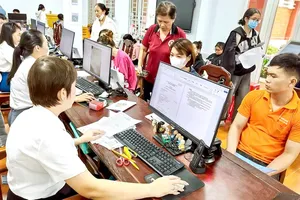
The implementation of Resolution 05 has also contributed to improving governance efficiency. The city has delegated approximately 410 administrative tasks and accelerated administrative modernization, achieving a fully online public service rate of 80.1 percent and an on-time administrative processing rate of nearly 96 percent.
Despite its achievements, Ho Chi Minh City faces persistent structural challenges. Growth remains uneven, some sectors continue to depend on extensive use of labor and land, and institutional reforms have not advanced quickly enough to support the city's evolving development ambitions.
Expanding industrial development space
Mr. Bui Minh Tri, Head of the Ho Chi Minh City Export Processing and Industrial Zones Authority (Hepza), noted that after the administrative reorganization, the city now has plans for 105 export processing zones and industrial parks covering more than 50,200 hectares.
Of these, 66 have been officially established and 58 are already operational.
The merger of Ho Chi Minh City, Binh Duong and Ba Ria–Vung Tau has significantly expanded industrial development space, strengthened infrastructure connectivity, improved logistics efficiency and reinforced the city's position as the country's leading industrial hub.
To improve investment quality and land-use efficiency, Hepza proposed developing a new generation of industrial parks that are smart, green, and based on circular economy principles.
Bold reforms and breakthrough thinking
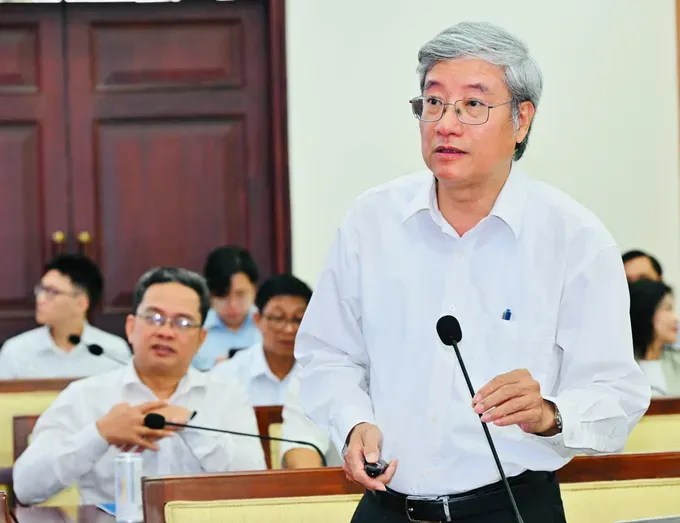
Representatives from Becamex argued that Ho Chi Minh City must confront five major structural challenges. They include slow institutional reform and decision-making processes, mounting land-use pressures in the urban core, inadequate regional connectivity infrastructure, potential shortages of green energy for next-generation foreign direct investment projects, and fragmented science, technology, and talent ecosystems.
To address these issues, Becamex proposed using a railway-metro-transit-oriented development (TOD) network as the backbone for urban restructuring. The company also recommended relocating industrial production from the inner city to ecological industrial parks in northern areas through land-swap mechanisms.
Other proposals included establishing a special innovation zone with flexible regulations to attract top global universities, accelerating green transition efforts, developing next-generation energy infrastructure, expanding solar and LNG-based power generation, and adopting more effective public-private partnership models.
Innovation and digital transformation at the core
Agricultural officials emphasized that high-tech agriculture remains essential for improving productivity and competitiveness as urbanization reduces available farmland. The sector is focusing on research, breeding, and the development of high-quality crop and livestock varieties to support agricultural restructuring.
Mr. Nguyen Tran Phu Thinh, Deputy Director of the Ho Chi Minh City Digital Transformation Center, said that digital transformation, data infrastructure, and digital governance were identified early as key priorities in the transition to a two-tier local government model.
The city has made notable progress across digital platforms, data systems, citizen services, digital skills development, and cybersecurity infrastructure.
According to Mr. Lam Dinh Thang, Director of the Ho Chi Minh City Department of Science and Technology, Ho Chi Minh City remains the country's most dynamic innovation startup ecosystem, home to approximately 50 percent of the country's startups and three of its four technology unicorns.
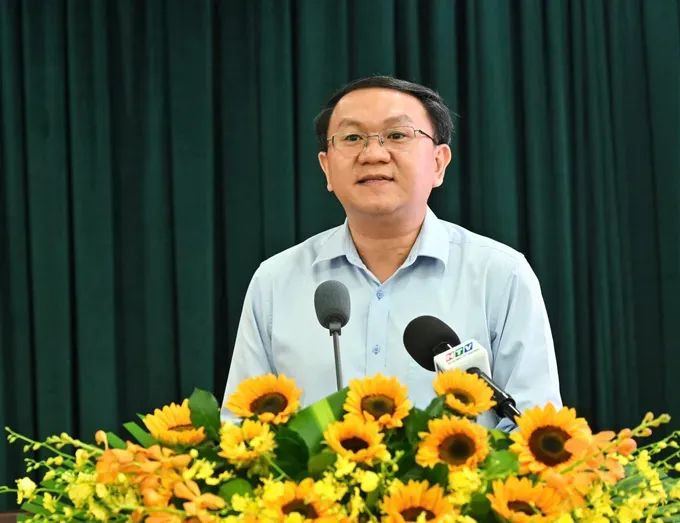
He proposed strengthening the city's innovation network by leveraging the role of the Vietnam National University-Ho Chi Minh City, the Saigon Hi-Tech Park, the Startup and Innovation Hub (SIHUB), research institutions, universities, and leading enterprises. Additional priorities include improving access to venture capital, accelerating the commercialization of research, expanding public procurement opportunities, and enhancing international connectivity and branding.
Officials from the city's Propaganda and Mass Mobilization Commission stressed that communication efforts are most effective when macroeconomic goals are translated into tangible benefits and opportunities for businesses and residents.
For the 2026-2030 period, they recommended promoting new economic models, strengthening regional linkages, attracting talent, unlocking social resources, and fostering entrepreneurship, innovation, and private-sector development as key drivers of future growth.