The $8,000 shipment of Botulism Antitoxin Heptavalent (BAT) vials, rushed in by the World Health Organization, has just saved the lives of children poisoned by botulinum toxin in Da Nang. Yet, despite repeated emergencies, Vietnam’s plan to establish a national center for rare medicine stockpiling remains unresolved
WHO provides emergency support for rare medicines
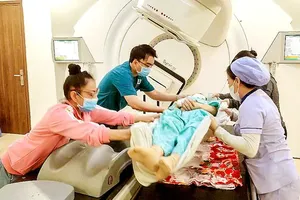
In early March, the General Hospital of Quang Nam received three young children from a family in Phuoc Nang Commune, Da Nang City in critical condition after eating fermented fish.
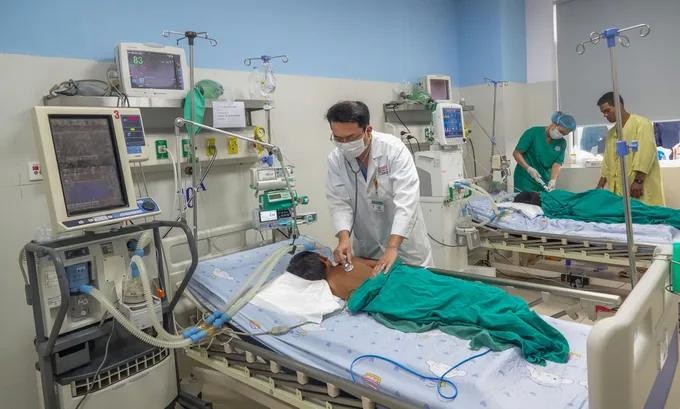
Doctors suspected botulinum poisoning. Due to respiratory failure requiring mechanical ventilation and limb weakness, two children were transferred to Da Nang Obstetrics and Pediatrics Hospital for specialized treatment with intensive care measures. The most crucial factor was the BAT medication. If administered early, within 48-72 hours, patients could recover from paralysis and no longer require mechanical ventilation. At that time, there was no botulinum antitoxin available nationwide.
On March 10, the Da Nang Department of Health reported the emergency to the Ministry of Health, requesting urgent assistance through the WHO representative in Vietnam. Dr. Nguyen Thi Phuc, WHO’s representative, confirmed that the organization immediately activated its emergency support mechanism and advised Vietnam to establish a reserve of botulinum antitoxin for future cases. By the evening of March 11, the shipment had reached Da Nang after traveling from Switzerland, transiting through Turkey, and arriving in Hanoi. That same night, doctors administered the antidote to the children, completing treatment at around 2 a.m.
According to Dr. Tran Long Quan, Head of the Pediatric Emergency, Intensive Care and Toxicology Department at Da Nang Obstetrics and Pediatrics Hospital, the signs of weakness, paralysis, and neurological symptoms in children tend to improve. However, the recovery process still takes time because the toxins have bound to the nervous system. Currently, the children are still being monitored, receiving intensive care, and combined with rehabilitation and functional recovery.
Rare medicines remain scarce. This persistent situation is a source of concern for the healthcare sector. Recently, Hue Central Hospital received a 7-year-old girl in critical condition after being bitten by a krait. Immediately, in Ho Chi Minh City, experts from Children's Hospital 1 held an urgent consultation and urgently transported multivalent antivenom (anti-venom for krait, cobra, and viper) to Hue by air, thanks to a volunteer passenger. The child's condition improved dramatically and she was safely discharged from the hospital.
According to Dr. Le Quoc Hung, Head of the Poison Control Center at Cho Ray Hospital, rare antivenom is especially necessary, not only to save patients' lives but also to ensure their quality of life after recovery. He explained that without rare antivenom, patients face a higher risk of complications and death; treatment costs can reach hundreds of millions of Vietnamese dong and involve months of hospitalization; medical facilities have to mobilize ventilators and specialized personnel for many months. In other words, the lack of rare antivenom can cost the healthcare system a series of expenses far greater than the cost of purchasing the medication.
The necessity of a smart stockpiling mechanism
Associate Professor Pham Van Quang, Head of the Intensive Care and Poison Control Department at Children's Hospital 1 in Ho Chi Minh City, shared that snake antivenom is also a rare drug, despite not as expensive as BAT. However, Vietnam only produces antivenom for the bamboo viper, krait, and cobra; other snake antivenoms must be imported from abroad and are very scarce.
Meanwhile, pharmaceutical companies are reluctant to import this drug due to low demand, low profit margins, and the risk of destruction if it expires. Children's Hospital 1 in Ho Chi Minh City proactively stockpiles antivenom thanks to its relationship with the Thai Red Cross.
In Ho Chi Minh City, the Department of Health has set up a system to locate rare drugs across affiliated hospitals. When needed, medicines are transferred between facilities, with saving patients’ lives as the top priority. “This remains only a local solution. What we truly need is a national rare drug storage center, ready to respond to emergencies and protect patients,” Associate Professor Pham Van Quang emphasized.
Establishing a rare drug storage center is a concern for toxicology experts as well as the health sector. In 2023, the Ministry of Health planned to build 3-6 rare drug and limited-supply drug storage centers, located at Bach Mai Hospital, Cho Ray Hospital, and Hue Central Hospital. The reserve of medicines includes approximately 15-20 types, among which is the expensive antidote BAT.
A year later, speaking with SGGP newspaper, a representative of the Drug Administration Department reiterated that the rare drug centers were still “expected” to be completed in 2024. At that time, the Ministry of Health had outlined a mechanism to secure supplies of rare and limited-use medicines, including financial allocations and solutions for hospitals to purchase and stockpile antidotes—even accepting disposal when unused drugs expired. Yet, three years on, the plan remains stalled, existing only on paper.
Dr. Le Quoc Hung emphasizes that the solution for rare drugs lies in “smart stockpiling” — a nationally coordinated reserve designed to ensure timely access to lifesaving antidotes. This is not only a professional solution, but also a humane, economical, and long-term health security option for the entire country. He explained that while acquiring rare drugs is difficult, coordinating them to the right place, at the right time, and in the right quantity is even more crucial. Relying on aid from the WHO or international organizations risks losing crucial time for treatment.
Vietnam’s health system urgently needs a national mechanism for rare drug management. Such a framework would include a prioritized list of essential antidotes, regional stockpiling centers, and designated focal points like tertiary hospitals and poison control units. It must also ensure rapid procedures for requesting, transporting, and delivering medicines within hours, backed by a financial system to handle losses, expiration, insurance, and reimbursement. With this structure in place, doctors could save lives more effectively, while hospitals would be spared the costly burden of buying rare drugs piecemeal, only to watch them expire unused.
Some notable botulinum poisoning cases in Vietnam:
- In 2023, a cluster of 10 cases of poisoning occurred in Da Nang City after eating fermented fish, including one death.
- In 2023, Ho Chi Minh City recorded a cluster of 6 scattered cases of poisoning, suspected to be due to eating street-sold pork sausage and a type of fermented fish sauce that had been stored for a long time; one person died due to a lack of an antidote. The WHO continued to provide 6 vials of BAT.
- In February 2026, the General Hospital of the Northern mountainous region of Quang Nam received a case of poisoning after eating fermented fish in Phuoc Chanh Commune, Da Nang City.
- In March 2026, three children in Da Nang were poisoned after eating fermented fish. The WHO provided 5 vials of BAT.





)