On the morning of May 6, the National Children’s Hospital announced that for the first time, the hospital identified and treated a pediatric patient with the extremely rare blood type Jk(a-b-3).
The patient, a four-day-old baby boy from Ha Tinh Province, was initially diagnosed with severe anemia at a local hospital, with a hemoglobin level of 86 g/L. Although born healthy, the infant developed rapidly worsening jaundice just eight hours after birth and was transferred to the National Children’s Hospital in critical condition, suffering from severe jaundice, neonatal infection and respiratory failure.
At the hospital’s Neonatal Center, further tests showed the baby’s hemoglobin had dropped to 71 g/L, alongside severe jaundice, requiring an urgent blood exchange transfusion. However, the search for compatible blood quickly became critical. With the mother unable to donate following a cesarean section, doctors worked through the night cross-matching type O units, but none were suitable.
Following an emergency consultation, the infant’s blood sample was sent to the National Institute of Hematology and Blood Transfusion for advanced testing. Specialists determined that the baby carried anti-Jk3 antibodies, associated with an exceptionally rare blood type, and that no compatible blood units were available in the blood bank.
Doctors then mobilized the infant’s relatives for blood testing. Although one family member was found to have a compatible blood type, they were ineligible to donate owing to hepatitis B.
Facing an impossible shortage of compatible blood, doctors ultimately used the mother’s blood, even though she had just undergone surgery.
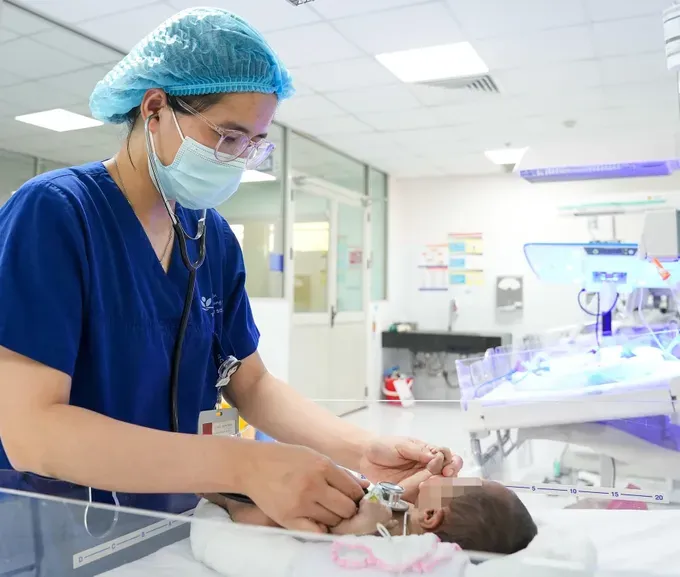
After just two days, the baby showed remarkable recovery, no longer needing breathing support or light therapy, and was able to go home in stable health after nearly two weeks.
Doctor Pham Thao Nguyen from the Neonatal Center explained that beyond the familiar ABO system, science has identified 43 different blood group systems. The Jk(a-b-3) type belongs to the Kidd system and results from a mutation in the SLC14A1 gene on chromosome 18, causing red blood cells to lack Jka, Jkb and Jk3 antigens.
The absence of these antigens makes it extremely difficult to find compatible blood, especially when patients develop anti-Jk3 antibodies, meaning they can only receive blood of the exact same type. For this reason, Jk(a-b-3) is classified as an extremely rare blood group.