The HCMC People’s Committee submitted to the municipal People’s Council a draft resolution proposing a revised framework for collecting port infrastructure fees across the city’s seaport system after the reorganization of administrative units on December 23.
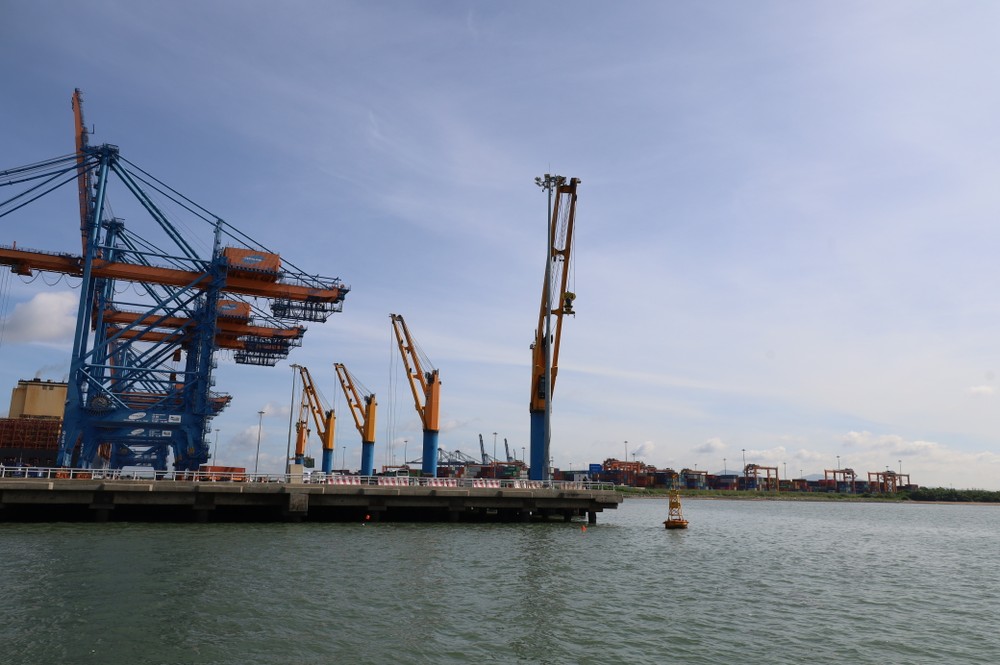
According to the HCMC People’s Committee, issuing a new resolution is both necessary and legally well-grounded, as it is intended to replace earlier regulations that have been in force since 2022. Previously, HCMC collected seaport infrastructure fees under Resolution No.10/2020/NQ-HDND and Resolution No.07/2022/NQ-HDND, generating total revenue estimated at nearly VND8.2 trillion. These funds have played a critical role in financing public investment in key transport infrastructure projects, particularly those enhancing connectivity to seaport areas during the 2021–2025 period.
Following the administrative rearrangement, the seaport system under HCMC’s jurisdiction now comprises the HCMC seaport, Ba Ria–Vung Tau seaport, and Binh Duong seaport. However, due to differing socio-economic development characteristics, Binh Duong and Ba Ria–Vung Tau had not previously implemented seaport infrastructure fee collection. As a result, the city is proposing a new resolution to ensure a unified approach, while allowing for region-specific adjustments to avoid overlaps and facilitate logistics development across the broader area.
During the implementation of the existing fee regime, authorities identified several shortcomings. Most notably, it has been difficult to determine cargo owners for fee collection on import-export goods handled through CFS warehouses and bonded warehouses. To address this issue, the draft resolution expands the pool of fee payers to include organizations and individuals providing transport and logistics services or carrying out import-export procedures on behalf of cargo owners.
The draft also revises fee rates for certain categories of goods. Specifically, temporarily imported and re-exported goods not intended for commercial purposes would be charged at the same rate as ordinary import-export cargo, rather than the higher rates applied to commercial temporary import–re-export activities. In addition, fees for goods temporarily imported in other provinces or cities but re-exported via HCMC seaports would be adjusted to better reflect actual conditions.
Notably, the city proposes exempting liquid bulk cargo, dry bulk cargo, and containerized goods belonging to a single cargo owner with a weight of less than 1,000 kg from infrastructure fees. Statistics show that this category contributes only marginally to total revenue, yet requires disproportionate time and manpower for inspection and verification.
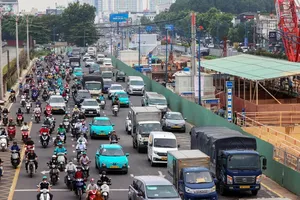
For the Ben Nghe–Phu Huu port area and the SP-ITC International Container Terminal—where vehicles are already subject to multiple road BOT tolls—HCMC proposes a reduction in port infrastructure fees to help ease cost pressures on businesses. The proposed reduction is calculated in line with road usage fees at the Phu Huu BOT toll station, to contain further increases in logistics costs.
In terms of coverage, the draft resolution stipulates that port infrastructure fees will not be levied at this stage in the Binh Duong and Ba Ria–Vung Tau seaport areas. This approach aligns with development strategies positioning Binh Duong as an inland logistics hub and Ba Ria–Vung Tau as an international gateway port and regional container transshipment center.
The draft also sets a retention rate of 1.5 percent of total collections to cover fee administration costs and expands cashless payment options, including online payments and e-wallets, to facilitate transactions for businesses.
The HCMC People’s Committee emphasized that the new resolution is designed not only to secure resources for infrastructure investment but also to regulate cargo flows, ease pressure on inner-city ports, and enhance the competitiveness of the city’s seaport and logistics system in a new development context.







)