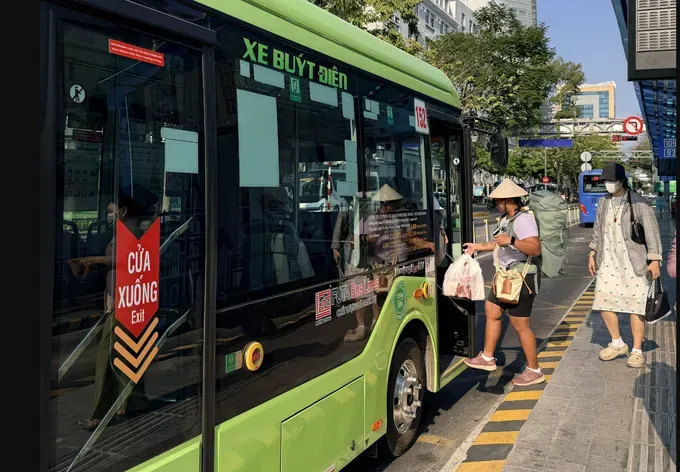
Upon approval, the bus fare exemption scheme is expected to be rolled out in 2026, contributing to improved socio-economic efficiency and environmental protection.
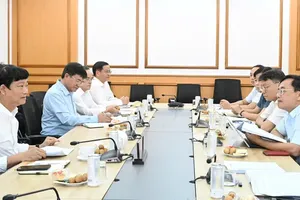
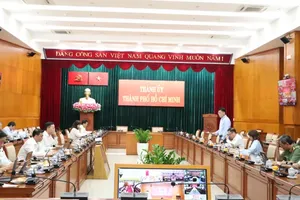
On April 9, the Propaganda and Mass Mobilization Commission of the Ho Chi Minh City Party Committee, in coordination with the municipal Department of Culture and Sports, held a press conference to brief the media on key socio-economic developments in the locality.
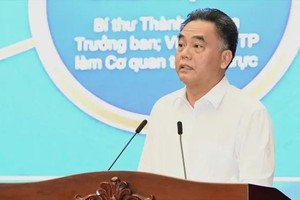
The event was co-chaired by Deputy Head of the Propaganda and Mass Mobilization Commission of the Ho Chi Minh City Party Committee, Tang Huu Phong, and Deputy Director of the municipal Department of Culture and Sports, Nguyen Ngoc Hoi.
At the press conference, Deputy Head of the Division for Maintenance and Operation of Transport Infrastructure under the municipal Department of Construction, Do Diep Gia Hop, stated that the People’s Committee of the city has submitted a proposal to register the formulation of a resolution by the Municipal People’s Council.
The draft resolution focuses on providing support for users of public passenger transport services by bus across the city and is being prepared under a streamlined legislative procedure.
According to the plan, the People’s Committee of Ho Chi Minh City will submit the draft resolution to the Municipal People’s Council for consideration and approval within April.
Based on the anticipated approval, the policy on exempting bus fares for public passenger transport users is expected to be implemented in 2026.
Fare exemption is a 'necessary but insufficient condition’ for residents to choose buses over private vehicles. The policy will be implemented in tandem with a range of complementary measures, said Mr. Do Diep Gia Hop.
Representatives of the Department of Construction of Ho Chi Minh City outlined a range of solutions, including improving service quality by ensuring punctuality, maintaining clean and safe vehicles, and fostering a professional, courteous, and friendly attitude among drivers and service staff.
In addition, efforts will focus on optimizing bus routes, enhancing pedestrian facilities, and upgrading passenger infrastructure to ensure convenient and accessible travel.
The city also aims to strengthen connectivity between buses and other modes of transport, such as metro lines, water buses, and public bicycles. Digital solutions, including the MultiGo application and an integrated electronic ticketing system, will support trip planning, seamless travel, and cashless payments.
Furthermore, the department will leverage big data analytics to forecast demand and optimize routes, schedules, vehicles, and bus stops. Regular assessments of ridership, operational costs, and passenger satisfaction will be conducted to enable timely policy adjustments, avoid resource dispersion, and ensure efficient use of the state budget.
)