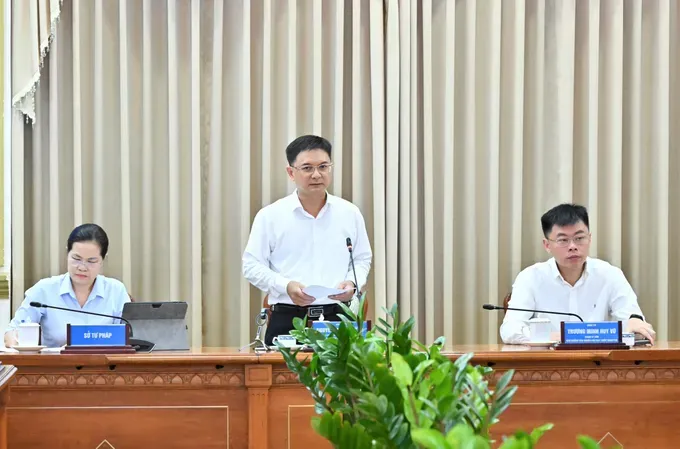
The conference was chaired by Vice Chairman of the Ho Chi Minh City People's Committee Nguyen Manh Cuong, Director of the Ho Chi Minh City Institute for Development Studies Truong Minh Huy Vu, and Director of the Ho Chi Minh City Department of Justice Nguyen Thi Hong Hanh.
Attendees also included leaders of the Ho Chi Minh City National Assembly Deputies Delegation, the Ho Chi Minh City People's Council, municipal departments and agencies, as well as leaders of provinces and cities in the Southeast region and the Mekong Delta.
Mechanisms needed to enhance regional coordination, development leadership
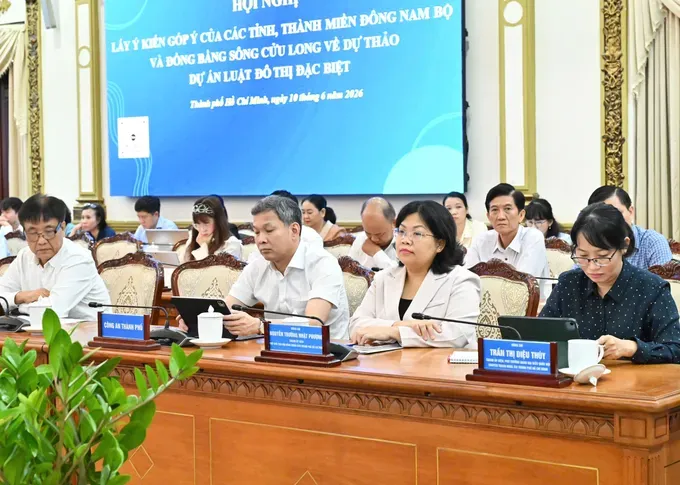
Delivering the keynote remarks, Vice Chairman of the Ho Chi Minh City People's Committee Nguyen Manh Cuong outlined the city's position, role, potential, competitive advantages, and scale of development in the new phase. He emphasized that Ho Chi Minh City's development cannot be separated from the overall development of localities in the Southeast region, the Mekong Delta, and the South Central Coast provinces.
The draft Law on Special Urban Areas is being developed to establish breakthrough mechanisms, policies, and a superior legal framework to support Ho Chi Minh City's development. In addition, it aims to strengthen the city's role in regional connectivity and enhance its capacity to coordinate and drive development across provinces and cities in the region.
Therefore, Ho Chi Minh City and regional localities will work together to build a modern governance model and strengthen regional linkages in a more cohesive, substantive, and effective manner, thereby creating new momentum for the development of the city and the region, while making positive contributions to the country's overall development.

At the conference, leaders of Ho Chi Minh City expressed their desire to listen to and incorporate constructive, responsible, and practical recommendations from leaders of provinces and cities to further refine the draft Law on Special Urban Areas.
In particular, the city places special emphasis on proposals related to regional connectivity mechanisms and policies, coordination frameworks for infrastructure development, resource and data sharing, and the development of a high-quality workforce. These measures are expected to maximize the potential and advantages of both Ho Chi Minh City and regional localities, thereby contributing to the sustainable development of the entire region.
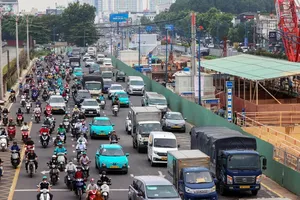
Addressing regional connectivity, Prof. Dr. Nguyen Trong Hoai, former Vice Rector of the Ho Chi Minh City University of Economics, stressed that developing an interconnected regional infrastructure system is of critical importance. He noted that the top priority should be the synchronized development of transport infrastructure linking Ho Chi Minh City with provinces and cities in the Southeast region and the Mekong Delta.
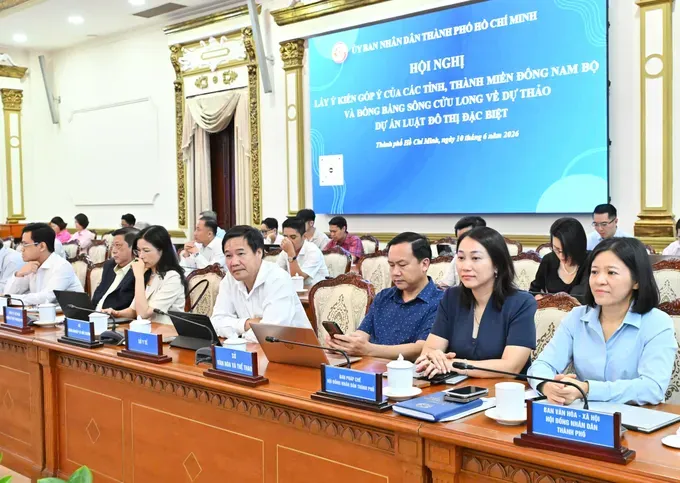
Analyzing Ho Chi Minh City's role as the region's core urban center and growth engine, Prof. Dr. Nguyen Trong Hoai emphasized the need to establish regional linkage mechanisms based on the principles of shared benefits, shared responsibilities, and mutual development. Leveraging its strengths in economic scale, science and technology, innovation, finance, trade, and logistics, Ho Chi Minh City is well positioned to generate spillover effects and drive the development of surrounding localities across the region.
In the context of digital transformation, Ho Chi Minh City and regional localities should further strengthen connectivity, data sharing, and the effective utilization of shared digital databases. Such efforts would help improve governance quality, optimize resource allocation, and support the objective of achieving rapid and sustainable growth, with the long-term goal of attaining double-digit economic growth rates.
Prof. Dr. Nguyen Trong Hoai proposed that the Regional Coordination Council be empowered with substantive authority and operate effectively on the basis of consensus, cooperation, and mutual benefit. He also recommended the establishment of a Regional Infrastructure Development Fund, financed through a diversified mix of state budget allocations, social resources, and other lawful funding sources.
In addition, he called for the development of mechanisms for sharing responsibilities, benefits, and revenues among localities in order to create sustainable resources for investment in regional connectivity infrastructure and support long-term regional development.
Ensuring consistency and alignment in planning
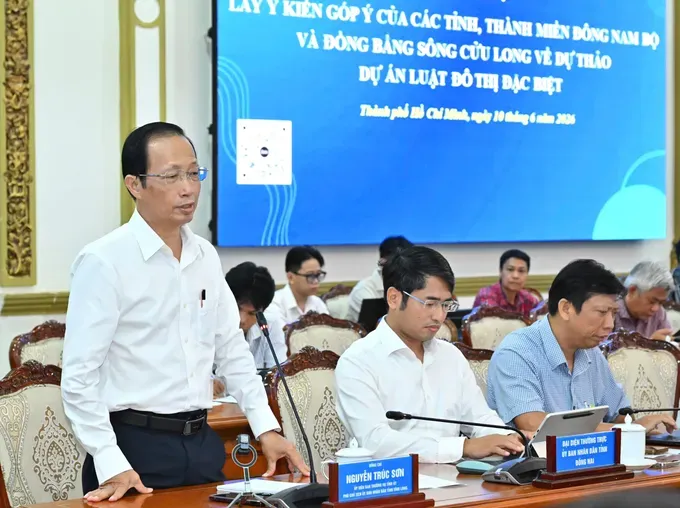
To enhance the effectiveness of regional connectivity and strengthen the complementary relationship between Ho Chi Minh City and neighboring localities, Vice Chairman of the Vinh Long Provincial People's Committee, Nguyen Truc Son, stressed that ensuring consistency and alignment in planning should be the foremost priority.
He noted that regional connectivity infrastructure should be prioritized for investment through central and local government budgets, as well as other lawful funding sources. Such investments would enable Ho Chi Minh City to further leverage its role as the growth locomotive, enhancing its spillover effects and leadership in driving the development of the entire region.
The Vice Chairman of the Vinh Long Provincial People's Committee also proposed prioritizing investment in and development of a coastal road corridor connecting localities across the region. Such a project would help expand development space, unlock the potential of the marine economy, logistics, and tourism sectors, and create new growth drivers for the Mekong Delta and the Southern region.
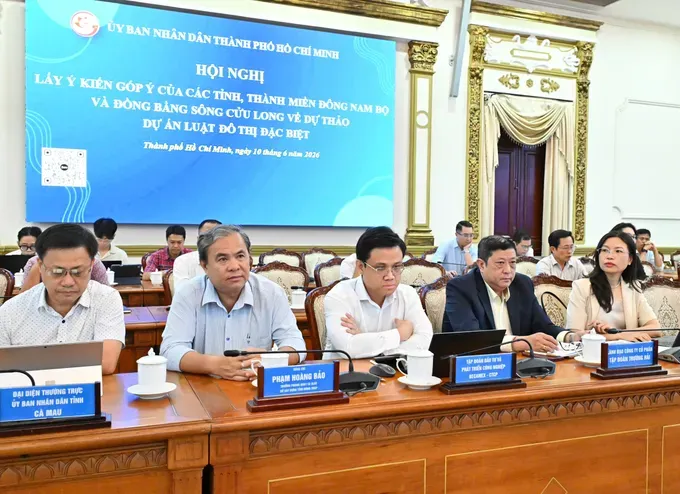
Regarding human resources development, he noted that Ho Chi Minh City serves as the region’s largest center for education, training, and employment, while also functioning as a labor market that is closely linked with provinces and cities in the Mekong Delta. Therefore, stronger coordination mechanisms are needed to facilitate the sharing and effective utilization of human resources, particularly highly skilled workers.
Additionally, Ho Chi Minh City should continue to leverage its role as a regional training hub by supporting localities in the training, capacity building, and supply of high-quality human resources, especially in the fields of healthcare, education, science and technology, and digital transformation. These efforts would contribute to improving workforce quality and promoting the sustainable development of the entire region.
Regarding the proposal to establish a Regional Infrastructure Development Fund, Deputy Director of the Dong Nai City Department of Finance, Pham Tuan Anh, said that such a mechanism is necessary to provide Ho Chi Minh City and localities across the region with additional resources for investing in inter-regional connectivity infrastructure projects.
He noted that the fund would help diversify capital mobilization channels and attract a broader range of resources to participate in infrastructure development investment. In turn, this would create new momentum for economic growth and enhance the competitiveness of the entire region.









)