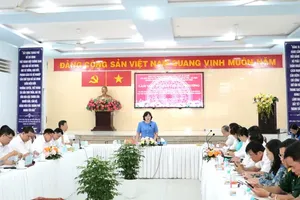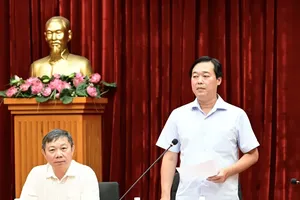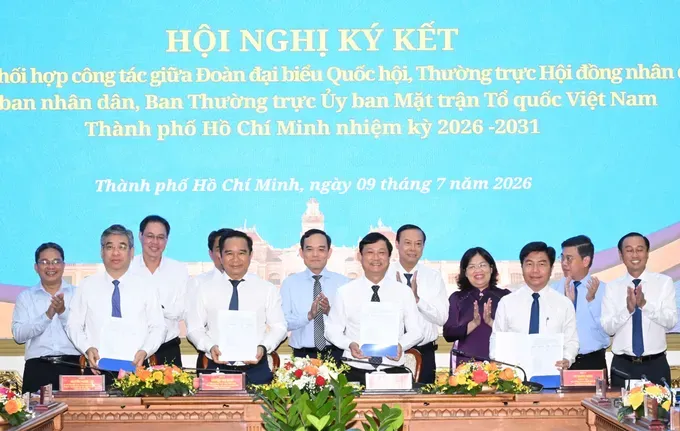
On July 9, the Ho Chi Minh City Delegation of National Assembly deputies, the Standing Boards of the People's Council, the People's Committee, and the Vietnam Fatherland Front Committee of the city held a conference to sign the inter-agency coordination regulations for the 2026–2031 term.
The conference was co-chaired by Secretary of the Ho Chi Minh City Party Committee and Head of the Ho Chi Minh City Delegation of National Assembly deputies Tran Luu Quang; Chairman of the Ho Chi Minh City People's Committee Nguyen Van Duoc; Chairman of the Ho Chi Minh City People's Council Vo Van Minh; and Vice Secretary of the Party Committee and Chairman of the Vietnam Fatherland Front Committee of Ho Chi Minh City Nguyen Phuoc Loc.
Unity, responsibility, innovation, and creativity
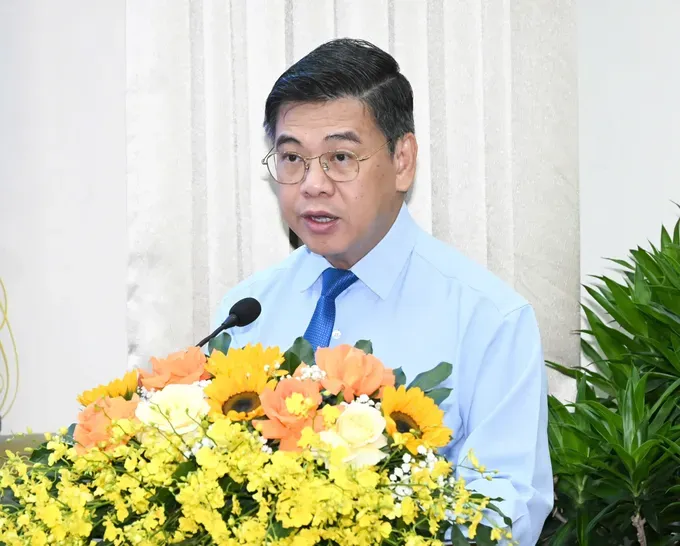
At the conference, Vice Chairman of the Ho Chi Minh City People's Council, Nguyen Van Dung, presented a summary report on inter-agency coordination during the 2021–2026 term and introduced the draft coordination regulations between the Ho Chi Minh City Delegation of National Assembly deputies, the Standing Boards of the People's Council, the People's Committee, and the Vietnam Fatherland Front Committee of Ho Chi Minh City for the 2026–2031 term.
According to the report, inter-agency coordination during the 2021–2026 term was carried out in a close, synchronized, and increasingly substantive and effective manner. These efforts made significant contributions to the successful fulfillment of the city's political tasks, socio-economic development goals, national defense and security objectives, and the improvement of residents' quality of life.
The implementation of the coordination regulations effectively promoted the roles and responsibilities of each participating agency, ensuring greater unity in leadership, direction, administration, and the execution of the city's key priorities.
The achievements recorded during the 2021–2026 term provide compelling evidence of the effectiveness of the inter-agency coordination mechanism and serve as a solid foundation for further enhancing the quality and efficiency of cooperation throughout the 2026–2031 term.
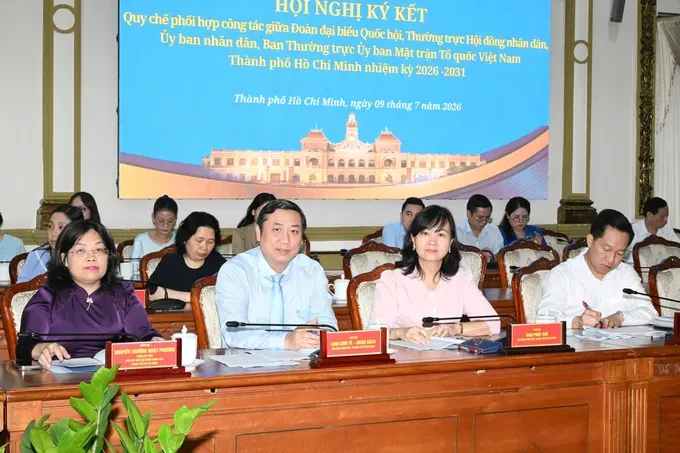
Entering the 2026–2031 term, Ho Chi Minh City is implementing the two-tier local government model while carrying out the Resolution of the 14th National Party Congress and Politburo Resolution No. 09-NQ/TW on the city's development in the new era. These developments place greater demands on coordination among the Ho Chi Minh City Delegation of National Assembly deputies, the Standing Boards of the People's Council, the People's Committee, and the Vietnam Fatherland Front Committee of Ho Chi Minh City.
Building on the achievements of the previous term, the four agencies will continue to uphold the traditions of unity, responsibility, proactiveness, innovation, and creativity while strengthening close coordination to ensure consistency in leadership, direction, and the implementation of assigned tasks. These efforts are expected to contribute to building a modern, effective, and efficient local government that serves the people and promotes rapid and sustainable socio-economic development.
At the conference, representatives of the Ho Chi Minh City Delegation of National Assembly deputies, the Standing Boards of the People's Council, the People's Committee, and the Vietnam Fatherland Front Committee of Ho Chi Minh City signed the Inter-Agency Coordination Regulations for the 2026–2031 term.
Building a professional culture of inter-agency coordination
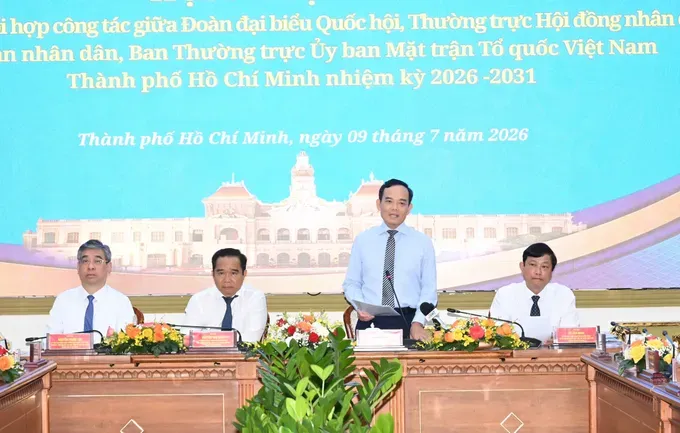
Addressing the conference, Secretary of the Ho Chi Minh City Party Committee Tran Luu Quang noted that the city is simultaneously undertaking numerous tasks, many of which are highly challenging. Against this backdrop, he stressed the need for close and effective coordination among the Ho Chi Minh City Delegation of National Assembly deputies, the standing boards of the People's Council, the People's Committee, and the Vietnam Fatherland Front Committee of Ho Chi Minh City. Such coordination, he said, is essential to maximizing the role and responsibilities of each agency while ensuring unity in leadership, direction, administration, and the implementation of the city's key priorities.
Underlining the necessity of the coordination regulations, the HCMC Party Secretary called on the four agencies to implement the framework rigorously and with the highest sense of responsibility.
Affirming that effective coordination leads to better outcomes, Secretary of the Ho Chi Minh City Party Committee Tran Luu Quang emphasized that heads of agencies and units must lead by example. For each coordinated task, he said, the lead agency, coordinating agencies, focal points, expected deliverables, completion deadlines, and monitoring responsibilities should be clearly defined, thereby enabling each agency to effectively perform its functions, duties, and statutory authority.
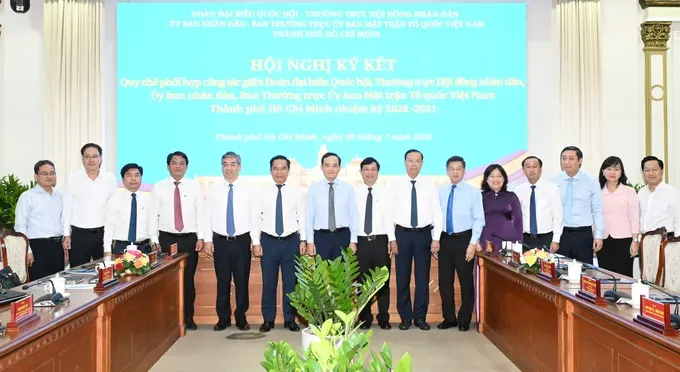
He also suggested that the agencies begin with simple, readily achievable tasks to deliver tangible results and quick wins. These early successes, he noted, would help build momentum and inspire confidence in tackling more complex and demanding assignments.
The HCMC Party Secretary further called for the robust adoption of digital transformation in coordination among the Ho Chi Minh City Delegation of National Assembly deputies, the standing boards of the People's Council, the People's Committee, and the Vietnam Fatherland Front Committee of Ho Chi Minh City.
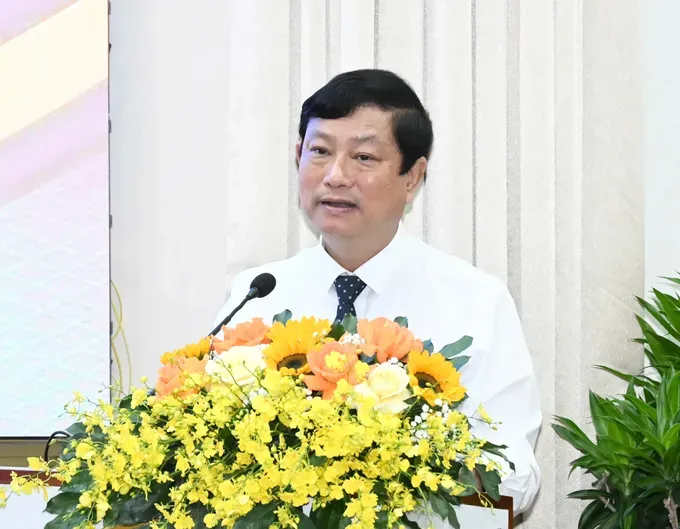
Responding to the directives from the Secretary of the Ho Chi Minh City Party Committee, Chairman of the Ho Chi Minh City People's Council, Vo Van Minh, pledged that the four agencies would translate the coordination regulations into concrete tasks and priority solutions to ensure their effective implementation. He stressed that the regulations would be treated as a standing responsibility, carried out based on accountability, discipline, and the exemplary leadership of agency heads.
The Chairman of the People's Council noted that the 2026–2031 Inter-Agency Coordination Regulations build on the achievements of the previous term while introducing new approaches and incorporating recently enacted legal provisions. The framework also clearly defines the principles, responsibilities, and information-sharing mechanisms governing inter-agency cooperation.
In this spirit, the agencies will continue to strengthen coordination in leadership, direction, and implementation; work closely together to develop and refine the institutional framework supporting Ho Chi Minh City's development, particularly the implementation of the Law on Urban Development immediately after its adoption by the National Assembly; continuously improve the quality of oversight, social criticism, and voter engagement; accelerate digital transformation; and foster a professional, accountable, and results-oriented culture of inter-agency coordination.