Ho Chi Minh City needs around VND1 quadrillion to comprehensively reinvest in its green transition, spanning industry, transport, logistics, urban infrastructure, and clean energy. Decree 112/2026/ND-CP, which took effect on May 19, 2026 (Decree 112), opens an additional legal corridor for the city to promote green finance, carbon credit exchange mechanisms, and low-emission economic models.
Green transition pressure intensifies
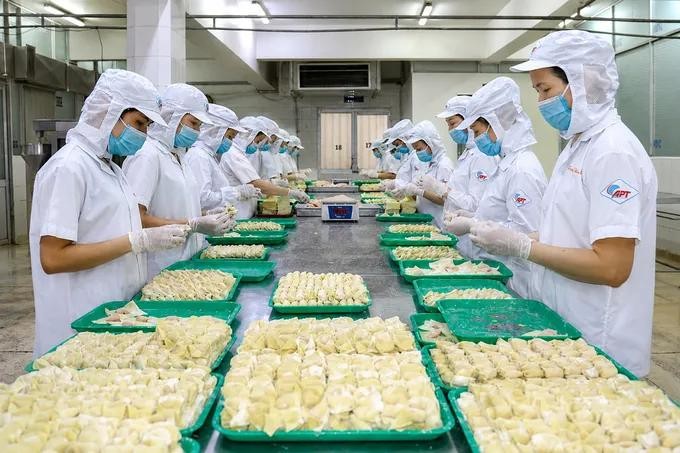
With an economy accounting for nearly one-quarter of Vietnam’s GDP and a population exceeding 15 million following administrative boundary mergers, Ho Chi Minh City is facing mounting pressure to transition toward greener development across multiple sectors, including industry, transport, logistics, trade services and urban consumption.
According to Pham Binh An, Deputy Director of the Ho Chi Minh City Institute for Development Studies, the city’s large economic scale creates significant room for growth, but also makes the pressure to “green” the economy increasingly urgent. Currently, the city’s industrial sector emits between 18 million and 20 million tons of CO2 annually, while transport and logistics generate another 3 million to 4 million tons. Urban infrastructure produces around 3 million tons of construction waste each year, trade and services generate 800 to 1,000 tons of plastic waste per day, and agriculture emits approximately 500,000 to 600,000 tons of methane annually.
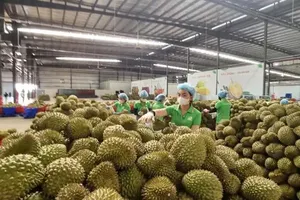
The pressure to green the economy is also becoming more visible as major export markets such as Europe, the United States, and Japan tighten requirements on carbon taxes, ESG standards (environmental, social, and governance), carbon emissions, and supply chain transparency.
In response, Ho Chi Minh City has outlined several strategic pillars for the coming period, including green industry, clean energy, sustainable transport and logistics, resilient urban infrastructure, green trade services, ecological agriculture, green human resources, and green finance.
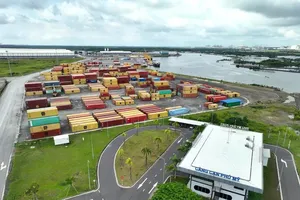
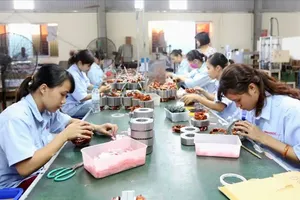
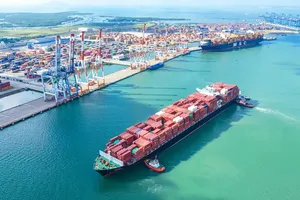
Industry, in particular, is expected to reduce resource intensity and shift toward higher value-added production and eco-industrial parks. The transport sector will prioritize public transit, smart logistics, and clean vehicles, while urban development will focus on waste and wastewater treatment, expanded recycling and reuse, and increased green spaces and waterways.
To implement this roadmap, Ho Chi Minh City will require approximately VND1 quadrillion (about US$40 billion) for comprehensive reinvestment, the Deputy Director of the Ho Chi Minh City Institute for Development Studies said.
Building an ecosystem for substantive transition
Developments on the ground in Ho Chi Minh City show that the green transition is beginning to materialize through concrete investment models. According to Deputy Director Pham Binh An, many businesses have installed rooftop solar power systems at major industrial parks such as VSIP and Hiep Phuoc, helping reduce pressure on the power grid and cut emissions.
In the green building sector, Chief Executive Officer Vu Quang Linh of Ardor Green Company said a number of private developers, including Keppel Land, CapitaLand, and Becamex Tokyu, have developed projects meeting LEED and LOTUS green certification standards, using environmentally friendly materials and energy-efficient designs.
However, according to Chairman Dinh Hong Ky of the Ho Chi Minh City Green Business Association, many enterprises still lack capital, technology, skilled personnel, and emissions data. Around 90 percent of businesses have yet to fully prepare for the green transition process. Yet these are critical requirements for companies seeking to prove emissions reductions, participate in carbon markets, and meet transparency standards demanded by international partners.
From a policy perspective, Pham Binh An said the State plays the role of institutional architect while the private sector serves as the direct force implementing green goals through investment capital, innovation, and market adaptability. As a result, policies should shift from broad encouragement to substantive support focused on financing, technology, emissions data systems, and green workforce development.
The city must first unlock green capital flows through green credit, green bonds, and green development investment funds. At the same time, it should introduce specific incentives on taxes, fees, and land rents for high-tech, clean energy, and sustainable manufacturing projects; simplify procedures related to land, construction, and environmental approvals; and establish pilot mechanisms for circular economy models and emerging technologies.
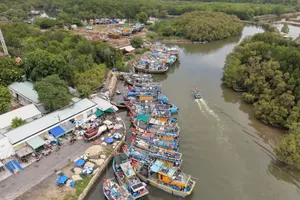
Decree 112, effective from May 19, 2026, provides an expanded legal framework for Ho Chi Minh City to accelerate its market-oriented green transition. As international mechanisms governing emissions reduction outcomes and carbon credit trading become more clearly regulated, sectors such as industry, transport-logistics, waste treatment, renewable energy, green buildings, the circular economy, and the conservation of the Can Gio mangrove forest will gain stronger foundations for developing emissions-reduction projects, generating carbon credits, and attracting green capital flows.
The remaining challenge, experts say, is for the city to standardize emissions data, establish robust systems for inventorying, measuring, and verifying emissions, and compile a pipeline of eligible green projects capable of attracting investment.