Vietnam has set a staggering GDP growth target of 10 percent for 2026. That ambitious goal will only be feasible if, in the short term, the entire nation accelerates public investment disbursement, unblocks key private projects, boosts exports, consolidates investor confidence, and seizes short-term opportunities to ramp up productivity across manufacturing, services, and logistics.
Looking toward the medium and long term, it’s an absolute imperative to speed up the shift from extensive expansion, which heavily relies on capital and labor accumulation, to an intensive growth model anchored firmly in productivity and innovation.
Alongside this, Vietnam must synchronously execute three strategic pillars, which reportedly consist of focusing on high-value prioritized sectors, building an integrated network of economic corridors, and utilizing breakthrough national levers regarding capital, talent, institutional frameworks, and infrastructure.
At the end of the day, transforming both the driving forces and the overarching growth model is the ultimate solution to pulling off this aforementioned “economic miracle.”
It appears this monumental transition is actively being benchmarked against various regional and global models of growth and innovation. This is done via careful evaluation of the entire economic landscape, thorough analysis of specific comparative advantages, a search for similarities, and most crucially, the guarantee of high feasibility as well as adequate execution capacity to get the ball rolling.
For instance, when steering toward advanced manufacturing and smart industry, there’s a pressing need to ensure that 25 percent of GDP share squarely transitions from basic assembly to high-value, technology-intensive production.
Particularly, by drawing inspiration from the Republic of Korea’s Gyeonggi technology belt, it’s possible for Vietnam to cultivate specialized industrial corridors that lean heavily on semiconductors, electric vehicle components, and precision mechanics as foundational pillars.
Alternatively, looking at Taiwan’s renowned SME support framework, Vietnam can upgrade the capabilities of domestic suppliers through a meticulously structured development program, which this would encompass rigorous quality assessments, lean automation practices, and the establishment of shared laboratory spaces.
Moreover, adopting Germany’s “Industry 4.0 for SMEs” model could effectively accelerate factory digitization and the green transition through incorporating robotics, manufacturing execution systems, and robust energy-saving protocols. Concurrently, it’s vital to co-develop technical training initiatives closely with enterprises while comprehensively modernizing the national accreditation and certification systems.
Within the digital and data economy, which accounts for an 11-percent share of the GDP, the IT sector must absolutely elevate itself from mere outsourcing to genuine innovation. To make this happen, it’s essential to construct a national data space and highly interactive digital infrastructure mirroring the EU Data Strategy model in order to unlock data-driven services spanning healthcare, finance, and logistics.
It’s time to shift away from hired coding and move toward product-based platforms through R&D tax incentives, scale-up support funds, and prioritized public procurement, heavily borrowing from the models seen in Israel and Estonia. An expansion of accessible cloud and AI platforms should be accelerated, actively supporting SMEs in adopting artificial intelligence, much like Singapore’s “AI Verify” initiative.
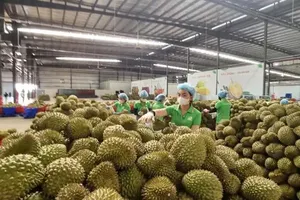
Equally holding an 11-percent portion of the GDP, the biotechnology and high-tech agriculture sectors must resolutely shift from low-yield farming to high-value, climate-resilient production. Referencing Thailand’s strategy for upgrading its fruit and seafood clusters serves as an excellent blueprint to modernize value chains via land concentration, cold chain logistics, and rigorous origin traceability.
Drawing from the pay-per-use model prevalent in India’s agritech ecosystem, it’s possible to strategically pilot precision agriculture utilizing drones, specialized sensors, and mobile decision-making tools. Alternatively, investing in biotechnology and high-value bio-products like bio-fertilizers, genetically improved seeds, and functional foods can be patterned after the public-private partnership model of Brazil’s Embrapa.
Clearly, designing low-carbon standards that perfectly align with the EU’s strict sustainability requirements will be paramount for successfully unlocking green finance channels.
On a national scale, the strategy involves isolating four key economic corridors and integrating inter-provincial value chains to forge three breakthrough levers of expanding capital, consolidating talent pools, and actively promoting experimentation:
- The Red River Delta high-tech corridor covering Hanoi, Hai Phong City, Quang Ninh Province and Bac Giang region (now part of Bac Ninh Province);
- The Southern Financial and Digital Service Hub centered around HCMC and neighboring provinces;
- The Central Innovation and Tourism Belt spanning Da Nang City, Hue City, Khanh Hoa Province, Quy Nhon region (now part of Gia Lai Province) as well as the Central Highlands;
- The Mekong Delta high-tech agriculture cluster, featuring Can Tho City, An Giang and Ca Mau provinces, and Ben Tre region (now part of Vinh Long Province), which is aggressively transitioning from basic commodity farming to high-value agri-food production.
It’s imperative to fully leverage the international financial centers currently taking shape in HCMC and Da Nang City to draw in global capital flows, alongside diverse and flexible collaborative tools and novel institutions, seamlessly laying the groundwork for long-term productivity growth.
Finally, there must be a heavy emphasis on broadening STEM education, thoroughly modernizing vocational and university systems, while training digital and AI skills across the entire workforce. Above all, it’s crucial to promote the application of technology through a regulatory sandbox framework, decisively cutting down bureaucratic red tape, incentivizing private investment, and rapidly accelerating the commercialization process.