In the early days of 2026, the scrap metal trading business of Nguyen Thi Hoang, residing in Neighborhood No.57 of Tam Binh Ward, has finally begun to stabilize. Previously, a severe lack of capital had left her family’s business struggling to stay afloat.
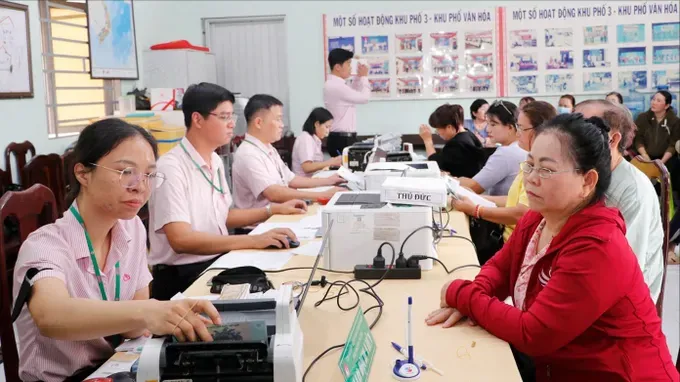
Through the guidance of her local savings and credit team, she successfully accessed a preferential loan of VND100 million (US$3,800) from the Thu Duc Transaction Office of the Vietnam Bank for Social Policies (VBSP). This vital injection of funds helped her weather the storm and provided the means to expand her trade. “The capital has enabled my family to create a livelihood and proactively develop a sustainable economy that fits our current circumstances,” Ms. Hoang explained.
Beyond financial aid, welfare policies have profoundly enhanced living standards. For Hoang Thi Phu in Ben Cat Ward, life once meant inhabiting a dilapidated house posing constant safety risks. Thanks to a VND70 million ($2,800) grant from the “For the Poor” Fund, her residence was solidly repaired, providing a secure, clean environment.
Similarly, Son Thi Dong’s family, formerly classified as a poor household, gradually overcame hardships through synchronized local support. By receiving free health insurance and housing loans, they’ve gained the stability necessary to prioritize their children’s education.
Ben Cat Ward currently counts 57 poor and 14 near-poor households. Secretary Nguyen Thi My Hang of the Ward Party Committee emphasized that “poverty measurement” is conducted scientifically to ensure precise support. Consequently, these efforts demonstrate the efficacy of social welfare in practice. The ward continues mobilizing resources to care for disadvantaged residents, ensuring an elevated quality of life and social security.
The Resolution of the HCMC Party Congress for the 2025-2030 term aims to eliminate poverty according to city standards by 2030. A primary pillar of this strategy is the construction of a multi-layered social security system covering all citizens. Within this framework, social policy credit acts as “leverage,” allowing people to access capital for production, business, and personal improvement.
Nhuan Duc Commune’s Party Secretary Vo Thi Kieu Tien identified multi-dimensional poverty reduction as a primary 2025-2030 objective, targeting a 1-percent annual decrease. Strategy involves synchronized solutions like loans paired with production guidance, market links, and vocational training. Educational aid remains vital for empowering youth.
Crucially, authorities aim to “activate” citizens’ internal strength rather than just providing handouts. With stable employment and resource access, residents can confidently secure sustainable lifestyles, ensuring that the community's progress remains both resilient and long-term.
At the city level, the total resources dedicated to HCMC’s sustainable poverty reduction program in 2026 are expected to exceed VND21.7 trillion ($868 million). Director Tran Van Tien of the HCMC Branch of the VBSP reported that the expected additional capital for loans to poor households and other policy beneficiaries in the city is approximately VND3.2 trillion ($128 million). This includes roughly VND650 billion ($26 million) allocated from the Central Government and VND2.55 trillion ($102 million) entrusted from the city budget.
VBSP’s HCMC Branch will concentrate on assisting poor and near-poor households, students, and workers in need of job creation loans. Low-income individuals will also be able to access preferential credit to invest in production, services, or to cover tuition and housing needs. It’s estimated that 145,000 poor households and policy beneficiaries will receive loans totaling approximately VND10.5 trillion ($420 million).
The city will continue implementing policies to reduce poverty and narrow the wealth gap between urban and rural areas in 2026. Specifically, efforts will persist to ensure that HCMC and Ba Ria – Vung Tau remain free of households under the national poverty line, while prioritizing the reduction of multi-dimensional poverty in Binh Duong. The city remains committed to caring for those who have recently escaped poverty, ensuring they have access to essential social services and improved incomes.
Projected beneficiaries of preferential loans in 2026:
- Over 11,000 cases receiving poverty reduction loans
- More than 100,000 workers accessing job creation and expansion funds
- Over 800 individuals formerly incarcerated receiving rehabilitation loans
- Over 1,300 cases for social housing purchase, rental, or home renovation
- More than 6,000 disadvantaged students receiving educational loans
- Approximately 25,000 households upgrading or building nearly 49,800 clean water and sanitation facilities