“A few days ago, at nearly midnight, my neighbors were still loudly singing karaoke. After finishing ‘Goodbye Dear Swallow,’ they switched to ‘Burying the Love Affair.’ One person held the mic while nearly a dozen others shouted along, keeping my whole family awake. Hesitant to confront them directly, I used the HCMC Digital Citizen app to report the issue via Gateway 1022. About 15 minutes later, ward officers arrived to remind them and disperse the gathering. Since then, the neighbor has stopped their late-night karaoke parties. The surrounding households are all relieved,” shared Thanh Nhi, a resident of Gia Dinh Ward.
Thanh Nhi’s case is just one of tens of thousands of reports sent by citizens via Gateway 1022 on the HCMC Digital Citizen app. Through the app, people can report and petition regarding daily frustrations, from technical infrastructure like electricity, water supply, drainage, and telecommunications to traffic, fallen trees, and public administrative services. Simultaneously, they can track the progress and processing results visually right on their mobile devices.
When using the Gateway 1022 feature, urban infrastructure incidents such as potholes, damaged manhole covers, or malfunctioning streetlights can be photographed by citizens and sent with geolocation data. This helps maintenance units address the issue accurately without needing manual surveys.
Environmental sanitation issues, illegal garbage dumps, or noise pollution from business establishments in residential areas are also reported timely, helping functional agencies dispatch officers to inspect and handle the correct address.
Deputy Director Nguyen Tran Phu Thinh of the HCMC Digital Transformation Center (DXC) stated: “Since July 1, 2025, Gateway 1022 has been adjusted, upgraded, and restructured in its processing procedures, expanding the scope and fields of reception. Since then, the system has received 85,108 reports, of which functional agencies have processed 83,744. Reports mainly focus on administrative procedures, urban infrastructure, urban noise, and urban order.”
According to the DXC, the HCMC Digital Citizen app is built in compliance with current regulations on personal data protection and information security. Therefore, citizens remain anonymous when reporting sensitive or negative information.
“This is a multimedia communication channel between people and authorities at all levels; it helps standardize the reception-processing-response process, reducing the situation of ‘passing the buck.’ It creates trust because all reports are public and transparent, helping ward and commune authorities quickly grasp issues in their area instead of waiting for reports or inspections,” said Deputy Director Nguyen Tran Phu Thinh.
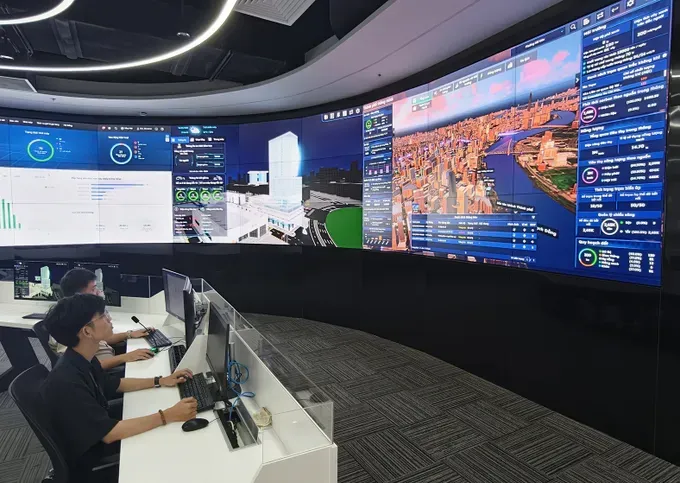
In the coming time, Gateway 1022 will integrate Natural Language Processing (NLP) tools to automatically identify problem groups, thereby shortening processing time and supporting decision-making.
Reporting data will also be visualized on the city’s digital map, displaying hotspots for waste, flooding, encroachment, and security, helping wards and communes proactively prevent issues rather than just reacting to complaints.
“We hope people continue to use the HCMC Digital Citizen app and proactively report and petition urban issues via Gateway 1022. This is a crucial condition in smart urban management, contributing to building data-driven urban civilization and enhancing the responsibility of each locality and official in handling public feedback,” emphasized the Deputy Director.
Key functions of Gateway 1022
- Receives reports and petitions regarding incidents and damage to technical infrastructure such as traffic, water supply/drainage, telecommunications, greenery, lighting, urban order, natural resources/environment, and electricity;
- Allows citizens to take photos, record videos, and pinpoint the exact location of the incident when sending a report;
- Monitors and compiles statistics on the progress and results of handling reports by field and time period;
- Ensures communication between citizens and functional agencies throughout the reception, processing, and feedback process.
In related news, yesterday morning, the Public Administration Service Center of Thu Duc Ward launched a system of smart kiosks supporting public administration to serve residents in wards and communes across HCMC. Sponsored by a business, these kiosks are equipped in 11 wards and communes within the city.
Applying Artificial Intelligence (AI), the kiosk helps create files, receive and process digital copies of records and electronic documents, contributing to the shift from manual to digital processing and significantly reducing reliance on paper. It shortens procedure resolution time and reduces waiting time for citizens.
The kiosk also supports automating guidance, lookup, and file reception steps, allowing grassroots officials more time to focus on professional tasks. With this kiosk, in less than 5 minutes, citizens can complete certified copies without needing assistance from officials.
Currently, the HCMC Digital Transformation Center is proposing legal procedures so that tasks resolved via kiosks have sufficient legal standing for official use.
Meanwhile, at Thu Dau Mot Ward, citizens visiting the Public Administration Service Center will experience support from AI robots. During the pilot phase, the robot is installed with functions specifically for public administration, including:
- Guiding users to take queue numbers;
- Looking up files via facial scanning, ID cards, or QR codes on VNeID to retrieve and synchronize information;
- Answering questions related to administrative procedures;
- Guiding procedures via QR codes for quick access on phones.
According to the Thu Dau Mot Ward Public Administration Service Center, the robot is expected to improve service quality, modernize public administrative processes, and provide a convenient, friendly experience for citizens.