In this context, the digital economy has been positioned as one of the key “growth accelerators,” enabling the city to generate greater value from knowledge, data, and productivity.
The shortest path to accelerated development
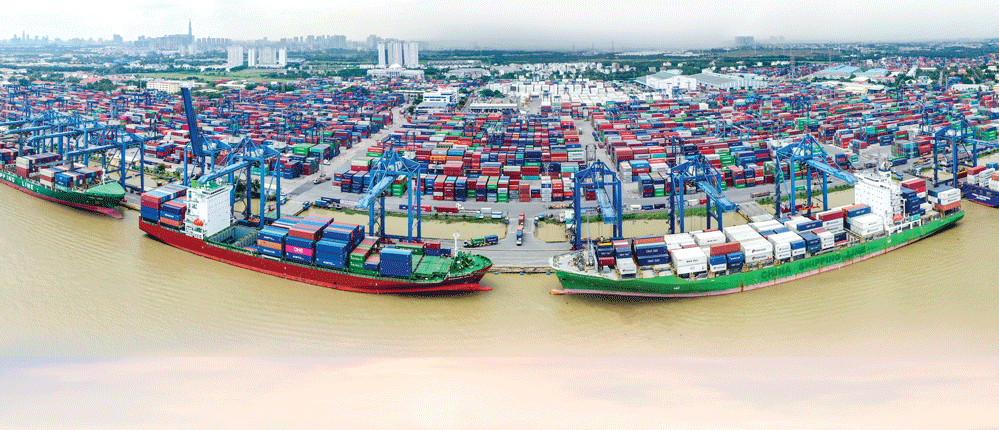
According to the Ho Chi Minh City Department of Science and Technology, following its merger with Binh Duong and Ba Ria–Vung Tau provinces, the city’s development strategy for the coming period will place the digital economy at its core. This approach is built on five pillars, including strengthening the institutional framework, developing digital infrastructure, improving the quality of human resources, fostering an innovation ecosystem, and enhancing regional cooperation and linkages.
Notably, the newly expanded Ho Chi Minh City will leverage the service-oriented and innovation strengths of the urban core, Binh Duong’s industrial base, and Ba Ria–Vung Tau’s advantages in seaports and tourism to form a comprehensive digital-economy value chain to have the digital economy contribute more than 40 percent of GRDP by 2030.
As the world enters the era of the knowledge- and data economy, Ho Chi Minh City’s decision to pursue a development path that prioritizes the quality of growth, rather than mechanical expansion, has been widely seen as both timely and appropriate.
According to Dr. Tran Du Lich, an economist, the city can sustain and further strengthen its role as the nation’s economic locomotive only by shifting to a growth model anchored in digital transformation and green transition to achieve double-digit growth over the next five years.
Mr. Binh T. Nguyen of the Data Technology & AI Division at CT Group also underscored that Ho Chi Minh City is facing a historic opportunity to assert a pioneering role in Vietnam’s national digital transformation. With advantages in economic scale, technological capacity, a dynamic innovation ecosystem, and a large pool of young talent, the city possesses all the prerequisites to become the country’s leading digital-economy hub and to elevate its standing at the regional level.
This vision aligns with the trajectory of successful megacities worldwide. Bangkok has emerged as a major center for commerce and tourism through the digitalization of services. Seoul and Busan have achieved strong growth driven by data industries and digital technologies. Shenzhen has transformed itself into “Asia’s Silicon Valley” by shifting from traditional manufacturing to high-tech industries and innovation. These cities demonstrate that for a metropolis seeking regional leadership, there is no faster route than developing the digital economy, where knowledge and data become the primary sources of value creation.
Ho Chi Minh City’s existing infrastructure advantages
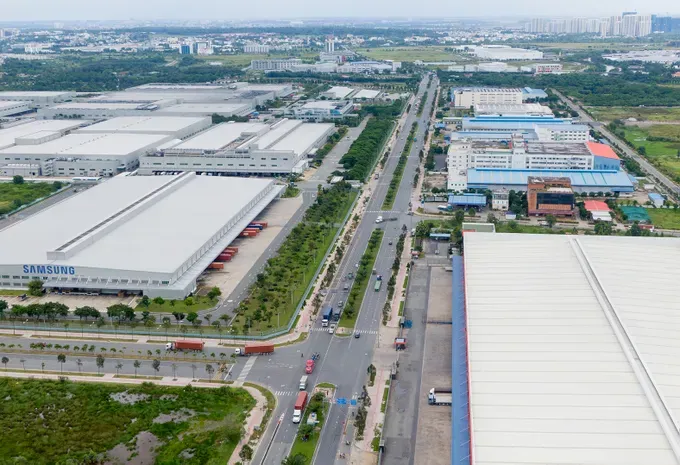
Ho Chi Minh City currently leads the country in digital-economy development. As of 2024, the digital economy accounted for 24.36 percent of the city’s GRDP, surpassing the national average of 20 percent. This figure underscores the strength of the city’s digital transformation foundation and highlights significant room for further growth, as the target is for the digital economy to contribute 35 percent of GRDP by 2030.
The city is also approaching a critical “takeoff threshold,” as recent digital-transformation pilot programs have demonstrated the powerful impact of technology on labor productivity, a core driver of the new growth model.
According to Deputy Director of the Ho Chi Minh City Department of Science and Technology, Tran Trong Tuyen, the city has identified three key pillars to realize its development ambitions, including institutions, policies, infrastructure, technology, and a high-quality workforce.
For example, Ho Chi Minh City has rolled out a plan to establish an international-standard research center aimed at retaining and attracting high-quality human resources while concentrating investment on the development of key infrastructure projects in science, technology, and innovation.
Notable examples include the Saigon Hi-Tech Park (SHTP), the Quang Trung Software City (QTSC), the Saigon Innovation Hub (SIHUB), and the expansion of the Becamex science, technology, and innovation ecosystem, which links technology hubs across the Southern Key Economic Region.
Ho Chi Minh City currently hosts 11 large and hyperscale data centers with a combined capacity exceeding 350 MW, while 5G coverage has reached 67 percent, underscoring the city’s leading position in digital infrastructure and national digital transformation. In terms of human capital, the city aims to have 87 percent of its workforce professionally trained by 2025, with a strong focus on developing talent in artificial intelligence (AI), the Internet of Things (IoT), and big data.
Additionally, the city is implementing a "three-party" cooperation model involving the government, schools, and businesses through partnership agreements between Vietnam National University, Ho Chi Minh City - VNU-HCM, and major technology groups such as CT Group and VNG.
If implemented effectively, the digital economy will serve as a central pillar enabling Ho Chi Minh City to achieve double-digit GRDP growth over the next five years, while bringing the city closer to its 2045 vision of becoming one of Asia’s leading centers for finance, technology, and logistics.
Overcoming challenges to achieve sustainable wealth creation

The door to the digital economy has already opened, and the foundations are in place, but to fully capitalize on this momentum, Ho Chi Minh City will still need to overcome a range of challenges in the coming time. Differences in regulations, policies, and administrative procedures among the three localities, for instance, could pose significant obstacles to creating a unified legal environment that effectively supports comprehensive digital transformation. Harmonizing and standardizing the digital institutional framework remains a major challenge, requiring close coordination and strong political will.
Regarding the digital infrastructure, while each locality has made notable progress, integrating systems and ensuring interoperability and data security across digital platforms and databases among the three areas is a complex task. A coherent development strategy is therefore needed to avoid fragmentation and to ensure high levels of interoperability, enabling the creation of a seamless digital space.
Despite its strong potential, meeting workforce demand in high-tech sectors, particularly in artificial intelligence, semiconductors, and cybersecurity, also remains a significant challenge.
Attracting and retaining talent, particularly top-tier experts, will require breakthrough policies and a work environment that is both appealing and competitive by international standards. Moreover, the larger scale of the merged region brings heightened risks related to cybersecurity and the protection of personal and corporate data. Building a robust and comprehensive cybersecurity framework is therefore critical to maintaining trust and ensuring the stable operation of the digital ecosystem.
To achieve seamless integration within the newly consolidated entity, the establishment of a unified digital government platform is a prerequisite for effective governance and service delivery. While each locality has made progress in digital government initiatives, it remains essential to harmonize administrative procedures, create a shared digital identity for citizens and businesses, and develop common data repositories that transcend former administrative boundaries. Without such measures, the economic and social benefits of digital transformation risk becoming fragmented and falling short of expectations.
Associate Professor Dr. Tran Minh Tuan, Director General of the Department of Digital Economy and Digital Society under the Ministry of Science and Technology, emphasized that business digital transformation, particularly among small and medium-sized enterprises, is a key driver for improving labor productivity and accelerating the digital economy in Ho Chi Minh City. While the city’s digital economy accounted for around 21 percent of GRDP in 2024, the level of digital adoption across the business community remains limited, with most firms still relying on basic digital tools.
To address this gap, the Ministry of Science and Technology has issued a set of criteria for assessing the level of digital transformation in enterprises (Decision No. 1567/QD-BKHCN dated June 30, 2025), aimed at standardizing evaluation benchmarks and supporting businesses in selecting appropriate solutions to enhance their competitiveness.
The Data Technology & AI Division of CT Group also noted that within the digital economy ecosystem, startups and small and medium-sized technology firms play a pivotal role in driving innovation, creating new business models, agile digital services, and breakthrough technological solutions. This potential is particularly pronounced in Ho Chi Minh City, which hosts the country’s largest concentration of startups.
In practice, however, many startups continue to face difficulties in accessing data, testing products in real-world environments, and operating within an adequate legal framework for deploying new technological initiatives.
One major constraint is the lack of spaces for piloting solutions in real-life settings such as transportation, healthcare, education, and smart urban systems. In addition, access to public data, an essential resource for artificial intelligence, big data models, and personalized digital services, remains limited due to the absence of transparent, secure, and risk-managed data-sharing mechanisms.
To address these challenges, the Data Technology & AI Division has proposed that Ho Chi Minh City move swiftly to implement an “urban sandbox” model, creating a testing space within real urban environments where startups are allowed to deploy new solutions on a limited scale, under supervision and evaluation.
This approach has been successfully adopted by several pioneering countries, notably Singapore through its Smart Nation Sandbox program and Estonia with its GovTech testing environment. Such a mechanism provides an effective pathway for startups to validate the feasibility, safety, and performance of their solutions before scaling them up for broader market deployment.
For a megacity like Ho Chi Minh City, taking the lead in establishing a shared data repository model and moving toward the creation of an open data market is essential. To do so, the city must develop a clear data classification framework. This would include open public data, such as information on transportation, urban planning, the environment, and aggregated demographic data; shareable enterprise data, including transaction, logistics, and consumer behavior data; and personal data, which must be subject to strict encryption, anonymization, and full compliance with existing legal requirements on privacy protection.
The operation of a data market should follow an “authorized and controlled access” mechanism. To bring this model into practice, Ho Chi Minh City should begin with a regulatory sandbox, allowing pilot schemes for data sharing and utilization in priority sectors such as smart transportation, healthcare, urban planning, and digital education. These areas generate large volumes of data, have high demand for data use, and exert a direct and visible impact on residents’ quality of life.
According to experts, the digital economy enables the city to “create wealth” in a modern sense—by generating substantial value without excessive consumption of natural resources, land, or labor. By developing data, knowledge, and technology, Ho Chi Minh City can upgrade its entire production and service value chain, boost productivity, and foster the emergence of new, high-value-added industries.
As the country rolls out major initiatives on digital transformation and digital-economy development, such as the Politburo’s Resolution No. 57-NQ/TW and the National Digital Economy Strategy under Decision No. 411/QD-TTg, Ho Chi Minh City, with its strong technological capabilities and young workforce, is well-positioned to seize a leading role.











)