Ho Chi Minh City is undergoing a sweeping transformation, driven by a government that emphasizes proactivity and service, with digital innovation now woven into the daily lives of both citizens and businesses.
A new administrative culture
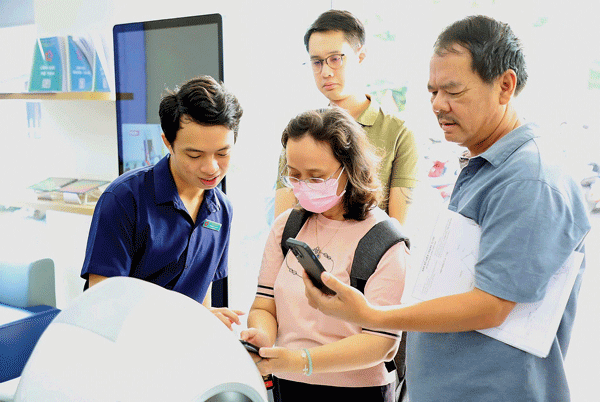
One morning at the end of 2025, the An Phu Dong Ward Public Administrative Service Center in Ho Chi Minh City was bustling with greetings and the sound of typing from newly installed computers. A row of automated guidance kiosks was set up right at the entrance; next to them, volunteer youth union members and ward officials patiently assisted citizens in completing online administrative procedures step by step.
Many citizens are shifting from the mindset of “petitioning for procedures” to simply becoming users of public services as proactiveness, convenience, and transparency increasingly define their everyday experience. Phan Thanh Quoc, a garment worker, recalled that in the past, he had to visit multiple offices and spend nearly an entire day to secure a birth certificate, health insurance card, and permanent residency registration for his child. “Now I can complete everything in the evening on my phone,” he said. “The three procedures that once required three different places are now combined into one through the VNeID application — it’s incredibly convenient.”
Such everyday stories are spreading throughout residential areas, boarding houses, traditional markets like a quiet but warm transformation.
According to Nguyen Ngoc An, Director of the Ward's Public Administrative Service Center, the application of citizen ID card scanning to digitize documents, integrate online payments, and deploy community digital technology teams has fundamentally changed the experience of the people. With each visit, the center hopes that people will feel more strongly about a service-oriented, friendly, and approachable administrative system.
The goal of building a modern digital administration cannot exist without citizens, digital citizens, who are proficient in using online public services and possess digital interaction skills with the government, participating in building a modern and civilized city. Armed with digital skills, citizens are helping ease the burden on the administrative system while actively monitoring government activities, contributing to policy development, and serving as “social sensors” by promptly reporting urban issues through the 1022 portal.
Not only citizens, but also the business community is benefiting from the digital transformation wave. Many small businesses in commercial zones, service shops, and household businesses have saved significant time and costs by registering their businesses, changing registration details, or fulfilling tax obligations online.
As of early December 2025, Ho Chi Minh City had achieved over 80 percent of public administrative procedures being conducted online, with nearly 96 percent of applications processed on time (out of a total of 68.45 percent of applications received online).
These figures reflect the rise of a new administrative culture, one that is friendly, respectful, and centered on citizens throughout the digital transformation process.
Building a smart, livable city
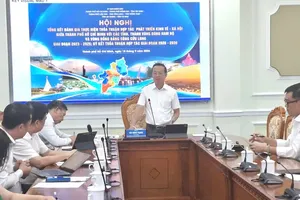
From July 1, 2025, Ho Chi Minh City will operate a two-tiered local government model, marking a period of strong innovation. The administrative apparatus will be more streamlined, functions will be more clearly decentralized, and the focus will be on communes where people directly interact and businesses operate. To ensure the smooth operation of the two-tiered local government, the city has focused on building a management system based on technology and data.
Over the past year, Ho Chi Minh City announced 2,241 administrative procedures, while simultaneously reducing and simplifying 558 procedures under the authority of 12 agencies and units. More importantly, the city has completed 100 percent of procedures regardless of administrative boundaries for eligible procedures and approved a list of 2,066 procedures to be resolved based on people's needs, regardless of their place of residence.
Vo Thi Trung Trinh, Director of the Ho Chi Minh City Digital Transformation Center, shared that all programs and plans are aimed at benefiting citizens and businesses. The "digital literacy" program implemented by localities, along with other activities, has brought public services closer to the people, making them more convenient and transparent.
Anyone, whether elderly, working, or in business, can easily use technology to access public services in a friendly and accessible way. Simultaneously, the city continues to invest in and strengthen infrastructure, operating 10 core digital platforms in a synchronized manner, from the Administrative Procedure Resolution System, Document Management System, Data Portal, Digital Citizen to the IOC (Integrated Operations Center).
Together, these systems form a unified “data flow” that enables work to be processed more transparently, quickly, and efficiently.
As of December 1, 2025, the city received 2,308,465 applications, of which 2,169,756 were processed and 2,079,956 were returned on time, accounting for 95.81 percent. This result reflects the serious operation and service spirit of the staff in the two-tiered local government model. Ho Chi Minh City will continue to invest, gradually moving towards a smart, modern, and synchronized governance system, strongly applying digital transformation in all areas of management.
In this system, data will be the basis and foundation for socio-economic management; technology will be the tool for listening; and citizens and businesses will be at the center of all policy decisions. In this journey, digital government and digital citizens are becoming two parallel pillars. Therefore, the spring of 2026 carries the belief that Ho Chi Minh City is striving every day to create a smart and livable city.





)