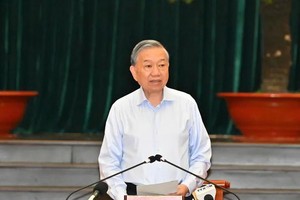
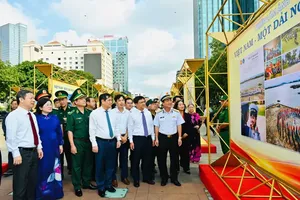
The Standing Committee of the Ho Chi Minh City Party Committee has directed the continued thorough grasp and effective, synchronized implementation of resolutions, conclusions, and directives issued by the Central authorities and Party General Secretary and State President To Lam.
Among the key priorities is the reorganization of administrative units and the streamlining of the political system’s organizational apparatus toward being leaner, more efficient, more effective, and more impactful.
Translating resolutions into accountability and tangible results

From the very first weeks of 2026, Ho Chi Minh City organized large-scale, synchronized study and dissemination of the 14th National Congress of the Communist Party of Vietnam Resolution down to the grassroots level.
More than 106,000 officials and Party members participated across thousands of online connection points. Notably, the city has placed strong emphasis on effectively internalizing and translating the Resolution into concrete actions.
Immediately following the dissemination conference, the Ho Chi Minh City Party Committee issued an action program comprising nine key task groups, while requiring each Party Committee to develop implementation plans closely aligned with their respective functions, localities, and areas of responsibility.
The Ho Chi Minh City People’s Committee has also issued directives and plans for socio-economic development in 2026, ensuring alignment between Party-building efforts and development tasks.
A notable highlight is the city’s tightened focus on implementation. When each policy is assigned to a clearly designated focal point with specific deliverables, the gap between resolutions and practical outcomes is significantly narrowed.
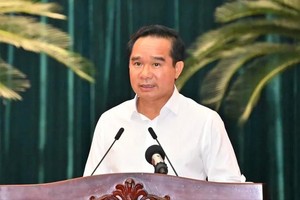
This approach reflects a consistent guiding principle repeatedly emphasized by Secretary of the Ho Chi Minh City Party Committee Tran Luu Quang. It is essential to identify and address bottlenecks between the city level and grassroots levels, as well as between policy direction and execution, thereby enabling timely adjustments and corrections to ensure the entire political system operates in a synchronized and effective manner.
On that basis, Ho Chi Minh City has intensified the review of coordination mechanisms among departments, agencies, and localities, with a focus on clearly defining responsibilities and minimizing overlaps.
In practice, many directives have directly addressed specific bottlenecks in the implementation process. For instance, in response to shortages in the supply of stone and sand for projects across the city, Mr. Tran Luu Quang personally chaired meetings with leaders of the Ho Chi Minh City People’s Committee and relevant departments and agencies.
He called for the study of mechanisms to directly allocate sand and stone mines to project investors and major contractors involved in key projects. In addition, the Ho Chi Minh City People’s Committee was tasked with reviewing and resolving institutional obstacles, clearly assigning responsibilities, and developing concrete plans to ensure full and accurate cost calculations.
Additionally, administrative discipline and order have been further strengthened in association with the accountability of heads of agencies and units, contributing to greater unity in both awareness and action across the entire political system.
The election of deputies to the 16th National Assembly and People’s Councils at all levels for the 2026–2031 term serves as a clear illustration. In Ho Chi Minh City, voter turnout exceeded 99 percent, with 38 wards and communes achieving a full 100 percent participation rate.
These results reflect strong social consensus and public confidence in the Party’s major policies, while also demonstrating the organizational and implementation capacity of the city’s political system in carrying out a key political task.
A noteworthy aspect is that the Party’s leadership methods in Ho Chi Minh City are being renewed in a modern direction, closely aligned with digital transformation.
The rollout of the electronic Party member handbook, with a usage rate exceeding 80 percent, has established a fast and transparent two-way communication channel, thereby enhancing the quality of Party activities.
These developments demonstrate that Party-building efforts in Ho Chi Minh City are closely linked to development requirements and are being concretized through the capacity to address major, complex issues arising from the realities of a special urban area.
Streamlining the apparatus, enhancing operational efficiency
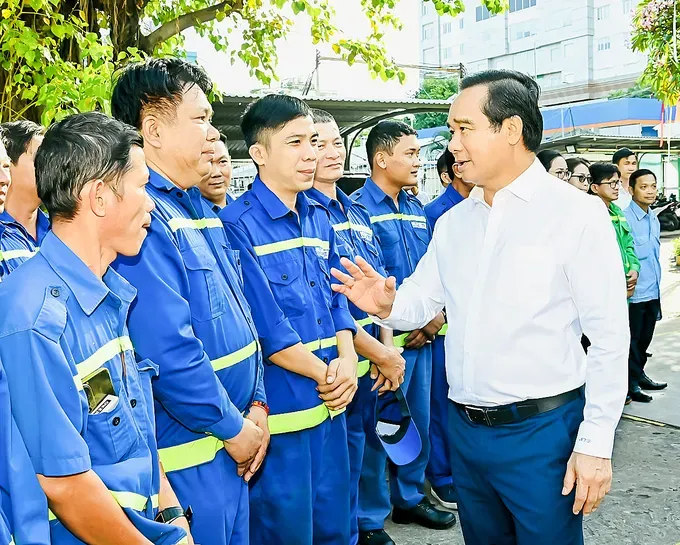
In implementing the Central Government’s policy on a lean, efficient, and effective organizational structure, Ho Chi Minh City has introduced a two-tier local administration model with systematic and well-structured steps.
Following the reorganization of administrative units, the apparatus has been quickly stabilized, ensuring uninterrupted operations and gradually improving governance effectiveness.
A key focus of the city is the restructuring and placement of personnel in line with job positions, addressing the imbalance of both surplus and shortage in the workforce. Efforts have also been made to promptly consolidate and supplement leadership and managerial positions, particularly through the appointment of 83 vice chairpersons of commune-level People’s Committees in areas meeting criteria on population size, geographic scale, and complex security and public order conditions.
According to Vice Chairwoman of the People’s Committee of Binh Tan Ward, Pham Thi Tuyet Nga, the operation of the new administrative apparatus, combined with innovation in public service delivery, has delivered positive results for residents.
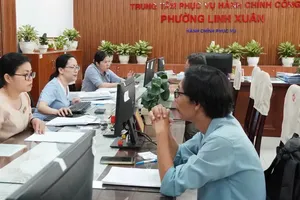
The ward’s Public Administration Service Center has been invested with modern infrastructure and has integrated multiple digital utilities, enabling citizens to conveniently search for information and submit applications online. In particular, the “virtual assistant for administrative procedures” model has helped reduce documentation errors and improve the efficiency of processing cases from the initial stage.
Similarly, in Thu Dau Mot Ward, Chairman of the People’s Committee of the ward Tran Phong Luu said that administrative reform has emerged as one of the key highlights of local governance efforts. Around 100 percent of eligible administrative procedures are now fully provided through online public services. The rate of dossiers processed on time or ahead of schedule has reached 99.62 percent, with no backlog or prolonged overdue cases recorded. Notably, citizen satisfaction has been reported at 100 percent.
Meanwhile, according to Vice Chairwoman of the People’s Committee of Vung Tau Ward Tran Thi Bich Van, the operation of the new administrative apparatus has been closely aligned with socio-economic development requirements.
In the first year of implementation, many infrastructure projects were completed on schedule, social welfare targets were ensured, and the locality has no longer recorded any multidimensionally poor households.
A common feature across localities is a clear shift in governance approach—from administrative management to citizen service. One hundred percent of documents are now processed in a fully digital environment, while digital transformation models have been widely implemented, enabling residents to access public services more conveniently.
At the broader level, Ho Chi Minh City has completed the restructuring of Party organizations within public service units and state-owned enterprises, ensuring unified and consistent leadership. The administrative apparatus has been streamlined alongside improvements in effectiveness, reduced overlap, and enhanced quality of governance.
Since the beginning of 2026, anti-corruption, anti-waste, and anti-negative practices in Ho Chi Minh City have continued to be implemented in a resolute, synchronized manner, yielding important results.
Beyond focusing on handling violations, the city has placed strong emphasis on improving preventive mechanisms, strengthening power control, and enhancing transparency in governance and public administration.
The Ho Chi Minh City Steering Committee for Anti-Corruption, Anti-Waste, and Anti-Negative Practices has identified 10 key tasks, with priority given to addressing slow-moving and long-delayed projects that risk causing loss and waste of public resources. The city has set a target of completing the review process by the second quarter of 2026 and striving to fully resolve these cases within the year.
Alongside these efforts, supervision over the implementation of the Politburo’s regulations on power control has been strengthened, particularly in personnel management.
Ho Chi Minh City has intensified the digitalization of records and the application of information technology to improve management efficiency and limit the emergence of misconduct. Another key focus has been the removal of obstacles in asset recovery, appraisal, and valuation processes, thereby enhancing the effectiveness of handling corruption-related cases.
In addition, several cases showing signs of wastefulness have been placed under monitoring and directive supervision, reflecting a firm determination to clarify responsibilities and prevent prolonged delays.