Accelerating stalled projects
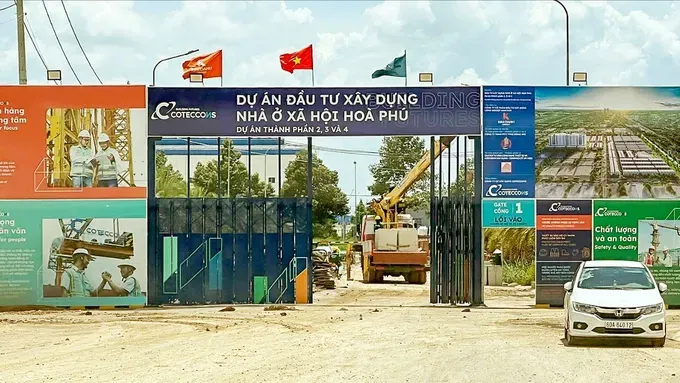
In recent months, the Ho Chi Minh City Department of Construction has held working sessions with investors of social housing projects to address existing bottlenecks. Several projects mired in legal complications have been prioritized for resolution, including a social housing development on plot CT6 within the 38-hectare resettlement area in Dong Hung Thuan Ward.
The project, developed by Saigon Real Estate Corporation, comprises a 12-storey building with 540 apartments. Although it received investment approval in 2011, prolonged legal and administrative hurdles have significantly delayed its progress. To date, the investor has completed only the infrastructure works, while construction of the apartment buildings has yet to begin.
According to the Ho Chi Minh City Department of Construction, in order to establish a legal basis for officially designating the project as a social housing development and disclosing it on the provincial People’s Committee’s online portal as required, the department has instructed Saigon Real Estate Corporation to complete procedures to terminate the existing investment project; reassess the resettlement objective or adjust it to social housing; and coordinate with the Department of Agriculture and Environment on revising previous documents to reflect the change from resettlement housing to social housing.
In addition, the authorities will calculate the reimbursement of actual costs already incurred by the investor and review and amend the 1:2,000-scale zoning plan for submission to the city for approval. With more flexible mechanisms and strong determination from the relevant agencies, the social housing project on plot CT6 within the 38-hectare resettlement area in Dong Hung Thuan Ward is expected to resume in the near future.
In an effort to further expand the supply of social housing, the Ho Chi Minh City Department of Construction has announced eight land plots across the city that have been zoned for social housing development and are open for investor selection. Covering a total area of 9.48 hectares, the eight sites are expected to deliver approximately 6,157 housing units, making a significant contribution to meeting the accommodation needs of workers and low-income earners.
Heavy penalties for investors delaying project implementation
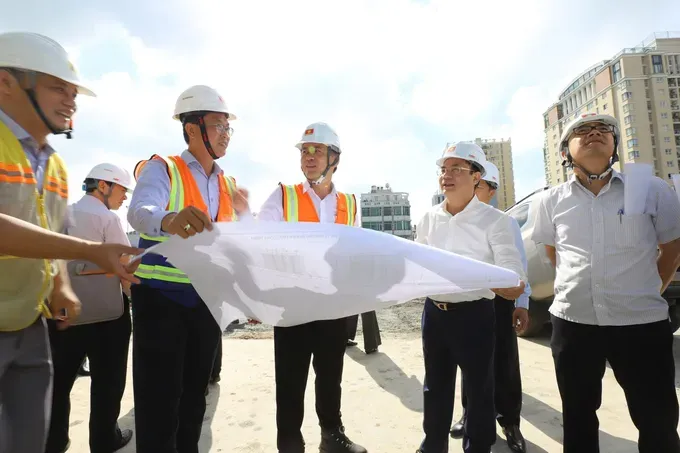
National Assembly Resolution No. 201/2025/QH15, which pilots a number of special mechanisms and policies for the development of social housing, is widely seen as a “key” enabling Ho Chi Minh City to accelerate progress in this sector.
According to Pham Minh Man, Deputy Director of the Ho Chi Minh City Department of Construction, in order to strengthen legal discipline and ensure the fulfillment of social housing development targets assigned by the Government, the department will advise the city to introduce a set of punitive measures against investors who fail to proactively implement approved social housing projects.
At a recent conference on propagandizing and implementing National Assembly Resolution No. 201/2025/QH15, which pilots a number of special mechanisms and policies for the development of social housing, Vice Chairman of the Ho Chi Minh City People’s Committee Hoang Nguyen Dinh said the city expects enterprises selected to develop social housing projects to concentrate resources and adopt innovative technologies to shorten construction time. This would help projects be completed more quickly, enabling workers and laborers in need to secure stable housing and livelihoods at an earlier stage.
Specifically, for commercial housing projects that have allocated land for social housing development but remain delayed, authorities will not process procedures to certify eligibility for the sale or lease-purchase.
For projects whose approved construction time has expired but have yet to complete procedures for obtaining construction permits for the social housing component, competent authorities will not consider extensions and will move to terminate the project, reclaim the land, and withdraw the social housing development.
For projects that have not yet reached the end of their approved timelines but fail to complete all legal procedures to commence construction by the first quarter of 2026—and where the remaining implementation period is insufficient to complete construction as scheduled—authorities will propose reclaiming the project and land. These will then be reassigned to entities such as the Ministry of National Defence, the Ministry of Public Security, and the city’s Labour Federation to develop social housing for eligible groups in need.
Regarding the social housing development plan, a senior official from the Ho Chi Minh City Department of Planning and Architecture said the city has clearly identified new, breakthrough growth drivers that will create long-term development momentum, with social housing emerging as a key pillar.
The city is focusing on reviewing and unlocking areas with strong potential for land development, prioritizing the allocation of land for social housing and workers’ housing in close connection with industrial parks, export processing zones, high-tech parks, and major public transport corridors. In addition, Ho Chi Minh City is accelerating the development of satellite urban areas and new growth zones aligned with a greener, more sustainable, and more livable orientation, under a multi-center urban model supported by convenient transport connectivity.