The documents of the 14th National Congress of the Party emphasize the need for strong innovation in leadership methods and improvements in management and governance capacity. In Ho Chi Minh City, this orientation is being realized through concrete changes in grassroots working methods closely linked with Party building, particularly following the implementation of the two-tiered local government model. Civil servants at administrative units in wards/communes are increasingly demonstrating modern management thinking, a people-oriented approach, and a clear willingness to act and take responsibility.
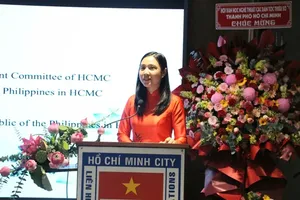
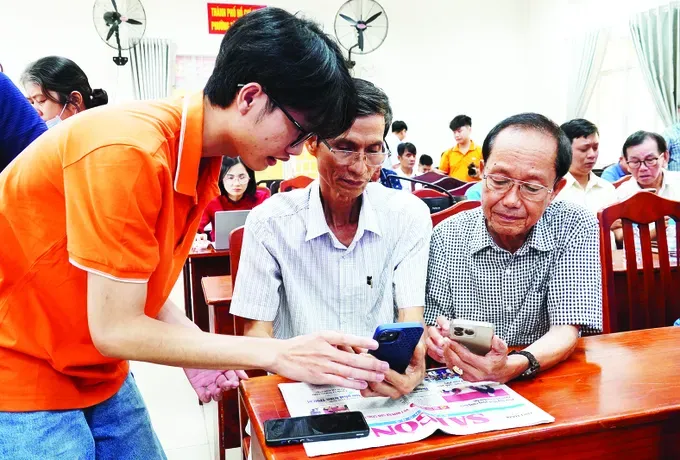
Near noon on a weekday, after concluding a meeting, Ho Thi Thuy, Deputy Secretary of the Standing Committee of the An Phu Dong Ward Party Committee, went directly to the neighborhoods to meet key local civil servants. The discussion focused on propagating information about the 14th National Congress of the Party and preparing for grassroots people’s council elections. While listening to opinions and understanding residents’ concerns, she directly guided neighborhood officials on applying information technology, artificial intelligence (AI), and social media platforms to diversify communication methods, helping official information reach people faster and more effectively.
As a cadre transferred from the city level to the grassroots during the operation of the two-tiered local government, Deputy Secretary Ho Thi Thuy noted that experience is an important foundation, but the decisive factor is the ability to continuously renew oneself to meet practical demands.
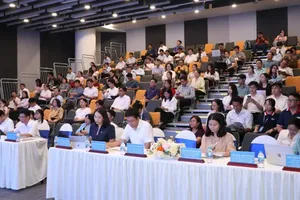
Conferences on digital transformation and artificial intelligence have brought a marked change in the working methods of officials in Phu An Ward. Once reliant on traditional, manual processes, local authorities are now proactively applying technology to synthesize information, draft documents, and strengthen communication with residents.
Nguyen Hoang Thong, Secretary of the Phu An Ward Party Committee, noted that the reorganization of the administrative apparatus following the recent merger represents only the initial step. “The most important transformation is shifting from a management mindset to a service mindset, with people placed at the center,” he said. Observers view this transition as a significant milestone in modernizing local governance, underscoring the role of technology in fostering efficiency and citizen-focused service delivery.
Practical benefits of this approach are clearly reflected in citizens’ daily experiences. After her husband passed away, Doan Thi Thuy An, a resident of Thu Duc Ward, faced an inheritance dispute with her husband’s family. She sought assistance at the Thu Duc Ward Public Administrative Service Center, where she received legal advice on inheritance procedures. Thanks to timely and dedicated support from lawyers, she was able to complete the necessary documents. “The lawyers provided free and enthusiastic advice, helping my mother and me confidently receive the property we are entitled to,” Ms. Thuy An said. This free legal consultation model, jointly organized by the Thu Duc Ward Youth Union and the Ho Chi Minh City Bar Association, has been maintained for many months, reflecting the spirit of a government that accompanies and serves the people.
Mai Huu Quyet, Secretary of the Thu Duc Ward Party Committee, underscored that under the two-tiered local government model, officials must rapidly innovate both their thinking and working methods. “The more streamlined the organizational model, the more scientific and efficient working methods must be, in order to create maximum convenience for people and businesses,” he said. From this approach, Thu Duc Ward has introduced a range of pioneering initiatives that are already delivering tangible results. AI-powered robots now assist citizens at the Public Administrative Service Center, while a Zalo mini-application enables residents to schedule appointments and track administrative procedures with ease.
At the same time, a 3D digital map has been developed to recreate the entire ward space, allowing individuals and organizations to access and utilize urban data more effectively. Together, these innovations reflect a decisive shift toward modern, citizen-centered governance, highlighting Thu Duc Ward’s commitment to efficiency, transparency, and service excellence.
Tang Nhon Phu Ward strengthens citizen-centered services. The spirit of innovation and proactive governance is clearly visible in Tang Nhon Phu Ward. Beyond deploying public administrative service teams directly to neighborhoods, the ward has extended its reach to apartment buildings, ensuring that services are accessible to all residents. A notable initiative is the launch of the “SOS Neighborhood” application, which allows neighborhood leaders to swiftly report issues related to infrastructure, security, and environmental sanitation. Reports are immediately categorized and directed to the appropriate departments for timely processing and feedback.
Ward Party Secretary Nguyen Bach Hoang Phung emphasized that the guiding principle behind these efforts is accountability. “All difficulties are the responsibility of officials and civil servants, while citizens must be served in the most convenient manner,” he stated.
This approach reflects Tang Nhon Phu Ward’s commitment to building a responsive, technology-driven administration that prioritizes the needs of its dwellers.
Along with other localities, Kim Long Commune is also recording positive changes as young leaders boldly apply digital platforms in management and operations, linking digital transformation with grassroots digital economy development. A notable example is the support provided by local officials to help residents bring OCOP products onto e-commerce platforms. From these concrete grassroots models, it is clear that innovation in working methods in Ho Chi Minh City is becoming increasingly substantive and effective.
Following the administrative merger, Ho Chi Minh City has introduced several breakthroughs in administrative procedures, including the establishment of 38 non-geographical application receiving teams, exemption from construction permits in areas with approved 1/500-scale planning, and the delegation of authority to people’s committees in communes to issue level-3 and level-4 individual house construction permits from January 1, 2026. These timely initiatives demonstrate that when working methods are renewed in a scientific and modern direction, the Party’s leadership role is expressed not only through directives, but through effective service and broad public consensus.
)