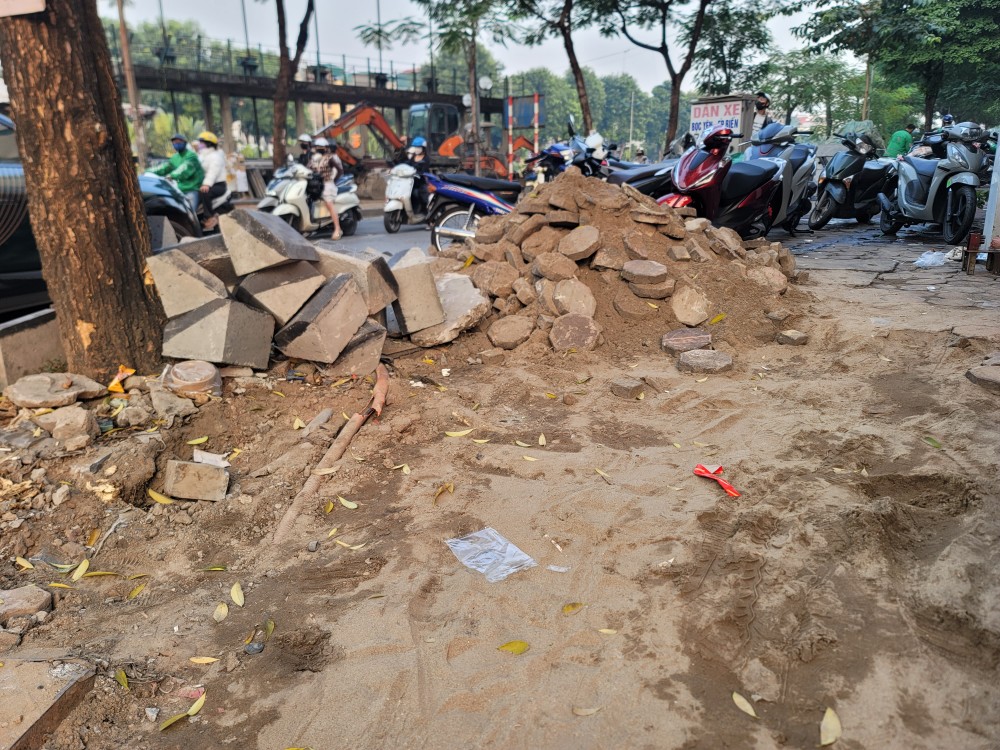
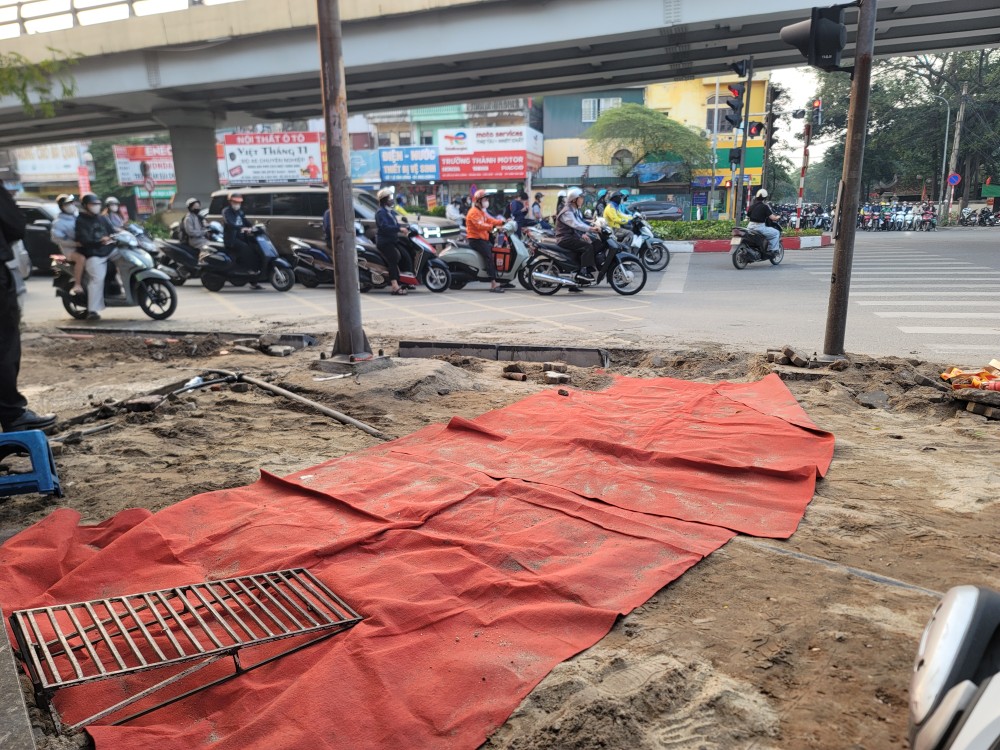
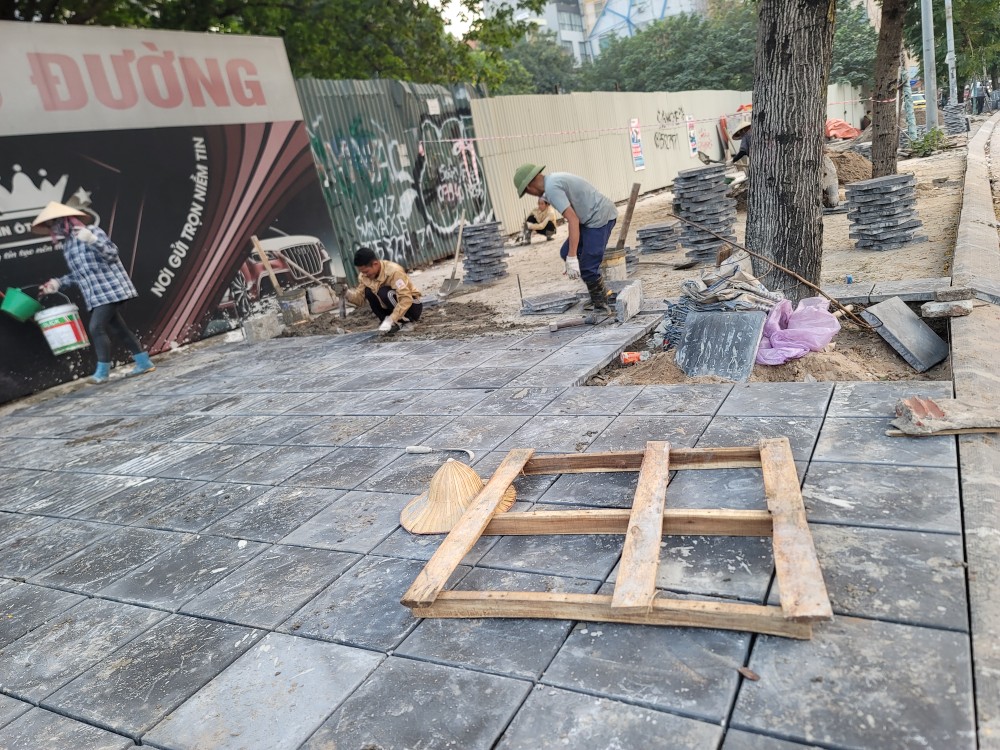
The chaotic scene of machinery, fencing, and piles of construction materials sprawling across pavements has disrupted daily life, worsened traffic congestion, and further strained the city’s already polluted urban environment.
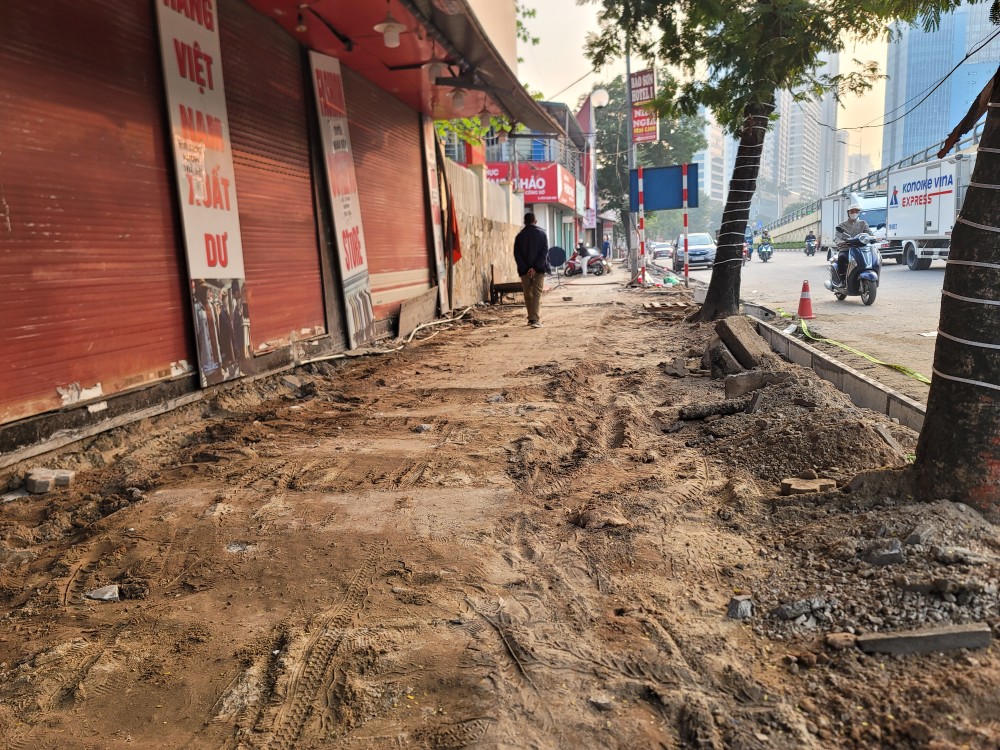
Over recent weeks, heavily traveled corridors, such as Nguyen Xien, Khuat Duy Tien, Le Van Luong, Nguyen Ngoc Vu, and Giai Phong, have repeatedly seen sidewalks dug up to replace paving stones. Work crews operate from morning to night, with trucks hauling materials in and out. In the dry season, every gust of wind sends dust billowing across nearby homes, restaurants, and commuters.
Beyond environmental concerns, the dense construction activity so close to the Lunar New Year has pushed already heavy traffic to the breaking point. In many areas, construction supplies spill across pedestrian walkways, forcing people into the roadway and heightening the risk of collisions. Businesses along these corridors also suffer: customers are reluctant to stop, storefronts are obscured by metal barriers, and dust makes shopping unpleasant—leading to a sharp drop in revenue.
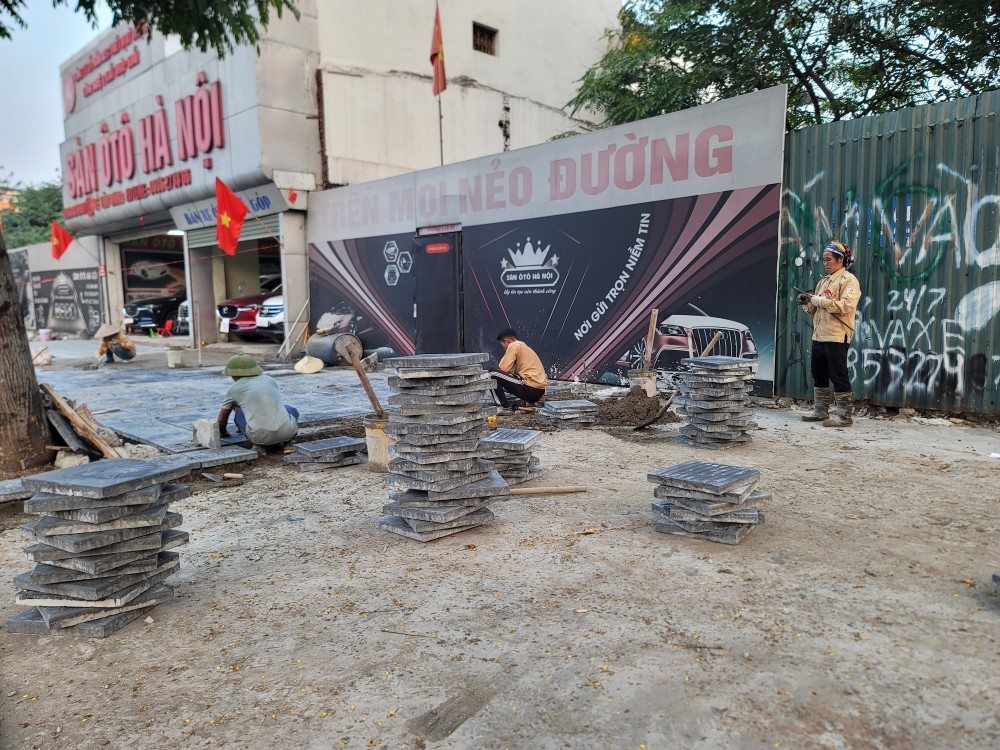
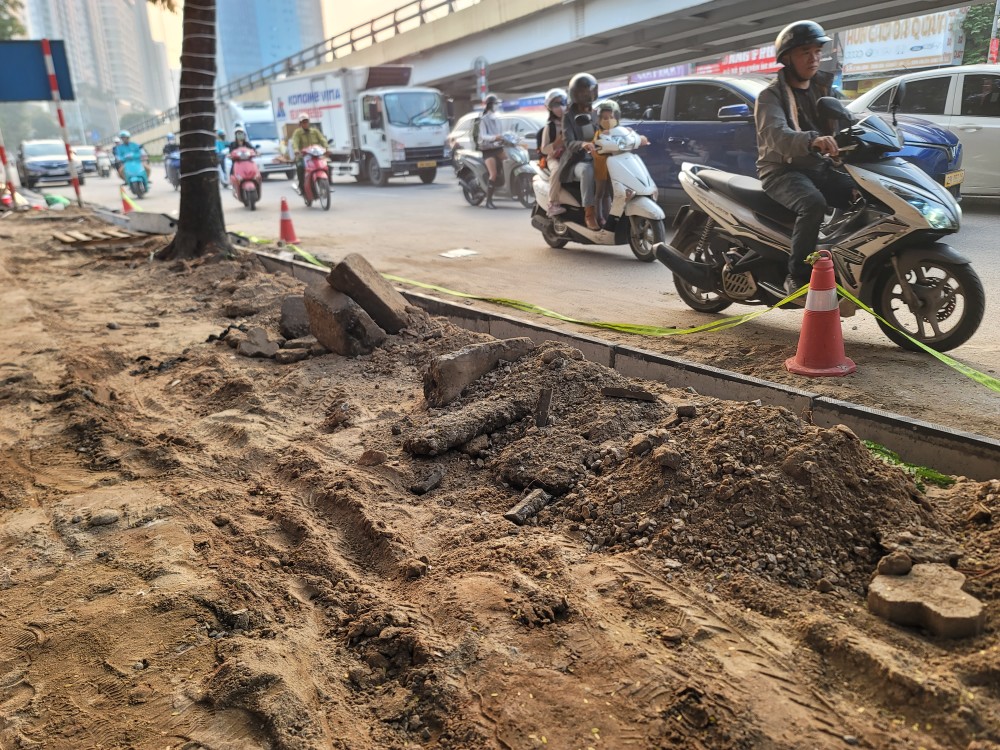
Residents express mounting frustration. While they acknowledge that sidewalk upgrades are necessary, many question why the work routinely happens at year-end. This is the period when shopping and mobility demand peak, and people expect clear sidewalks as they prepare for Tet.
Le Van Hung, a resident of Le Van Luong Street, said the disruption has left local businesses “paralyzed”: “Customers can’t stop their vehicles, dust blows all day, and we are exhausted. I don’t understand why they keep relaying the sidewalks. They were just finished not long ago, and now they’re digging them up again.”
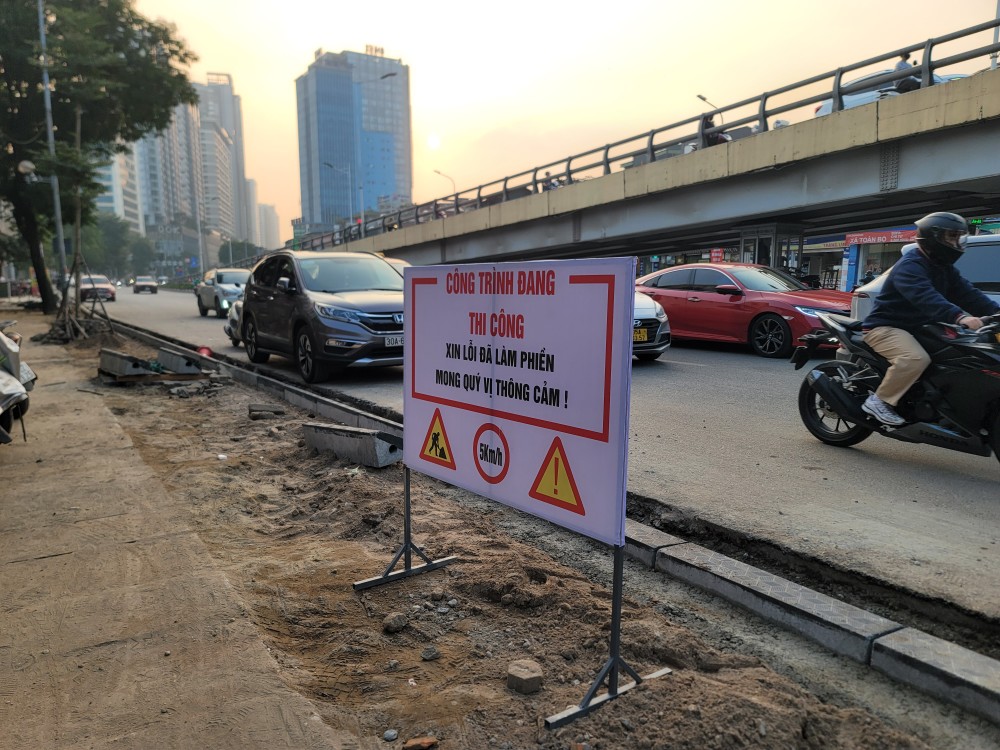
Adding to public irritation is the disorder that remains even after certain sections are completed. Piles of sand, gravel, and cement often sit for days on pedestrian paths, leaving the sidewalks messy and undermining the cityscape.
Hanoi authorities have previously issued directives to tighten oversight of sidewalk construction and maintenance, urging stricter monitoring of progress and quality while investigating recurring issues such as cracked or dislodged paving stones. Yet the reality—sidewalks freshly tiled one year being dug up the next—has fueled public skepticism about the effectiveness of current management and the accountability of local authorities and contractors.
Many Hanoi residents are calling for more rational planning to avoid mass construction during the year-end rush. Above all, they emphasize that quality must be guaranteed so the city can end the cycle of repeatedly tearing up sidewalks, wasting public funds, and inconveniencing residents. A civilized urban environment, they say, is not defined by newly laid paving stones alone, but by stable, safe, and orderly public spaces that make daily life easier for everyone.