Data recently released by the HanoiAir forecast model indicates that the current pollution spell began on November 28 and is likely to persist until December 5.
On December 1, the average AQI hit 143 (classified as “unhealthy for sensitive groups”), with PM2.5 concentrations reaching approximately 77µg/m3, roughly five times the safety limit recommended by the World Health Organization (WHO). Some suburban areas recorded AQI levels exceeding 240 (classified as “very unhealthy” or “hazardous”).
In response, the Hanoi People’s Committee has advised the elderly, children, and individuals with respiratory conditions to limit outdoor exposure, suggesting that schools may suspend outdoor activities during periods of severe pollution.
Analyzing the situation in the capital, Head Nguyen Hoang Anh of the Environmental Quality Management Division (Department of Environmental Pollution Control, Ministry of Agriculture and Environment), asserted that Hanoi’s pollution is driven by a mix of causes.
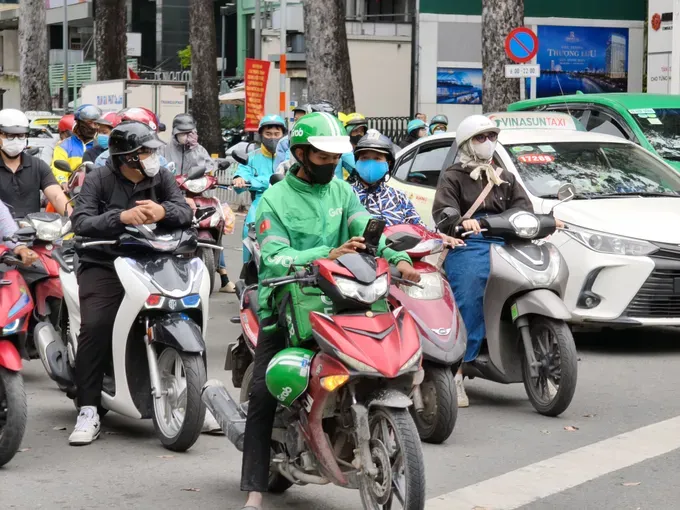
While a Hanoi City report attributes over 60 percent of air pollution to traffic emissions, a study by the Agriculture and Environment Ministry suggests a different breakdown:
- Traffic exhaust: 15 percent
- Resuspended road dust: 23 percent (Total traffic-related: 38 percent)
- Industrial activities: 29 percent
- Construction: 17-18 percent
- Open burning (straw, tires): 15-16 percent
These figures have been incorporated into a comprehensive report submitted to the Prime Minister.
Nguyen Hoang Anh noted that while HCMC faces similar pollution sources, Hanoi’s situation is exacerbated by weather factors. Consequently, peak pollution levels in the capital often surpass those in HCMC due to the compounding effect of traffic emissions and meteorological conditions.
The Vietnam Meteorological and Hydrological Administration explained that pollution in Hanoi and Northern provinces typically spikes in winter. During this season, the North experiences dry conditions with humidity dropping to 40-50 percent. Prolonged periods without rain lead to high dust concentrations. The pollution is most visible on foggy days when temperature inversions prevent pollutants from dispersing into the upper atmosphere.
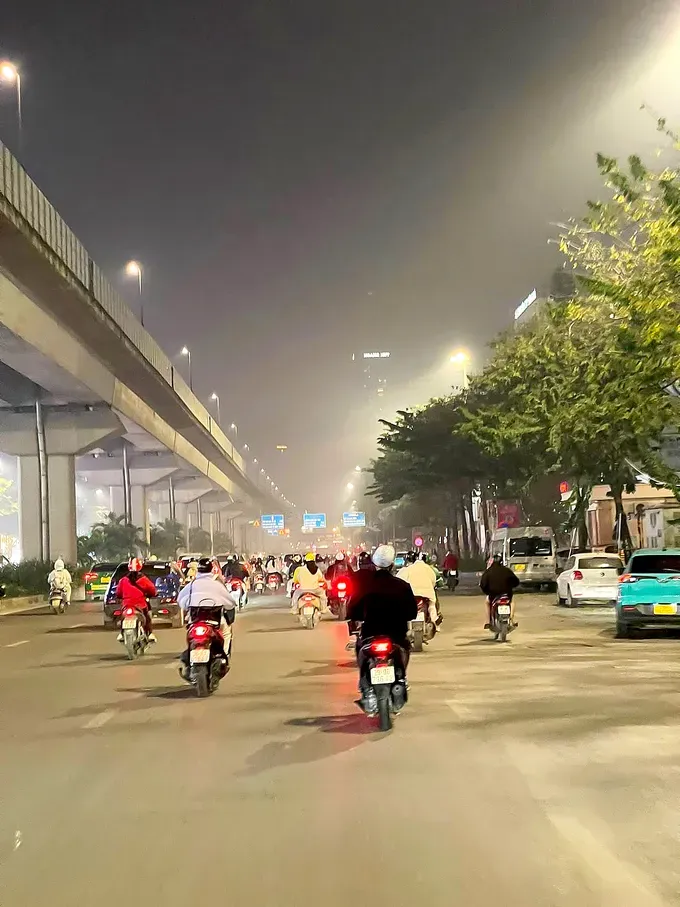
Assoc Prof Dr Nguyen Thi Nhat Thanh from the University of Engineering and Technology (VNU-Hanoi) added that Hanoi’s “basin” topography, combined with the Northeast monsoon in winter, hinders air circulation, leading to pollutant accumulation. Conversely, pollution levels drop significantly in summer.
Regarding control measures, she highlighted that on November 19, 2025, the Prime Minister issued Decision No. 2530/QD-TTg, approving the National Action Plan on Air Quality Management (2026-2030, vision to 2045).
Key government targets:
- To improve air quality in hotspots and reduce fine dust concentrations in Hanoi.
- By 2030: 100 percent of public transport in Hanoi and HCMC to operate on clean energy.
Decision 2530 mandates the development of emission control standards and mechanisms to encourage clean vehicles. It includes pilot programs to support vehicle renewal, green public transport, and clean energy infrastructure to facilitate the transition away from high-emission private vehicles.
Regarding automobiles, the roadmap for emission standards was defined in Decision 43/2025/QD-TTg, signed by Deputy Prime Minister Tran Hong Ha on November 28, 2025. This regulation sets specific emission limits based on vehicle type and year of manufacture (corresponding to Euro 1-5 standards). The roadmap for applying national technical standards on car emissions will officially take effect on March 1, 2026.
On December 4, Vietnam National Industry - Energy Group organized a seminar titled “Minimizing Pollution from Diesel Vehicles: Status and Solutions in the Southeast Region.” Speaking at the event, HCMC Vice Chairman Bui Minh Thanh emphasized that the Southeast region, as the country’s economic locomotive, has the highest density of freight, inter-provincial, and waterway transport.
Consequently, the emission pressure from traffic is exceptionally high. In HCMC, scientific studies identify diesel vehicles as a primary source of PM2.5, NOx, and Sox, the pollutants that directly impact public health and urban environmental quality.
MSc. Bui Hoc Phi from the Southern Environment Protection Branch of the Department of Environmental Pollution Control analyzed air quality indices in major cities. He reiterated that the surge in pollution stems primarily from traffic, construction, industrial production, and open burning (straw, honeycomb charcoal stoves), all amplified by climatic conditions.


)