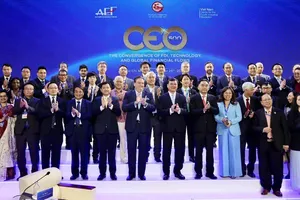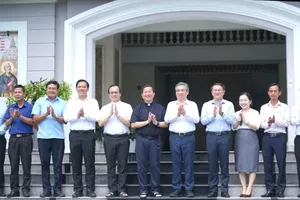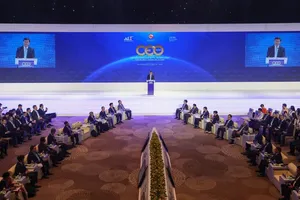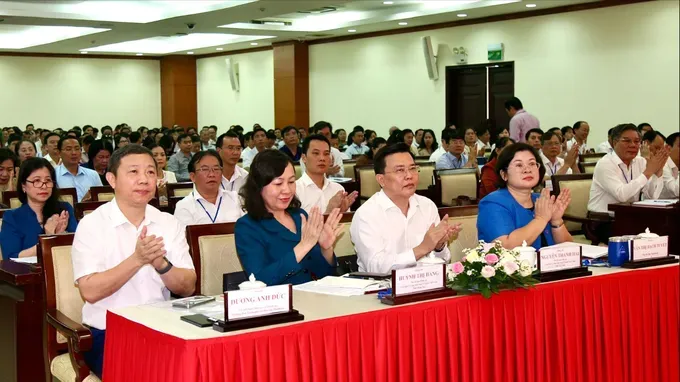
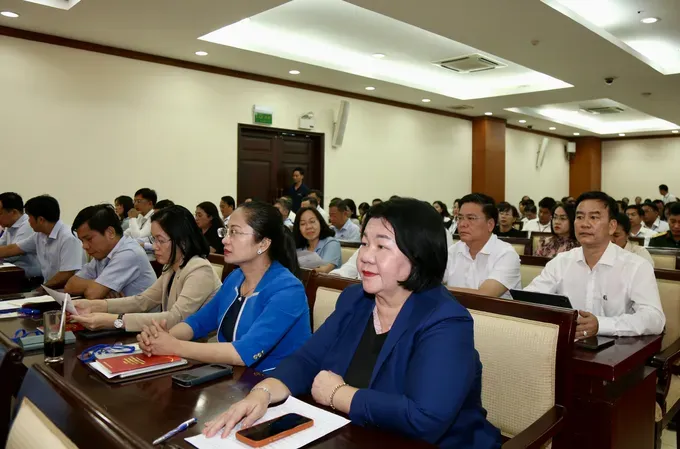
The event was co-organized by the Central Commission for Propaganda and Mass Mobilization, the Ministry of Public Security, the Ministry of Ethnic and Religious Affairs, and the Ho Chi Minh City Party Committee.
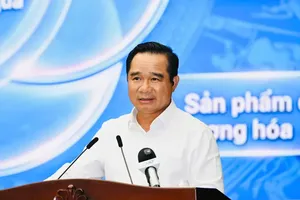
The conference was co-chaired by Deputy Head of the Central Commission for Propaganda and Mass Mobilization, Trieu Tai Vinh, and Vice Secretary of the Ho Chi Minh City Party Committee, Van Thi Bach Tuyet.
Attendees included representatives from the leadership of Dong Nai and Tay Ninh provinces, officials from ministries and central agencies, leaders of local departments and sectors, as well as Party secretaries of communes, wards, and special zones.
Strengthening grassroots situational awareness
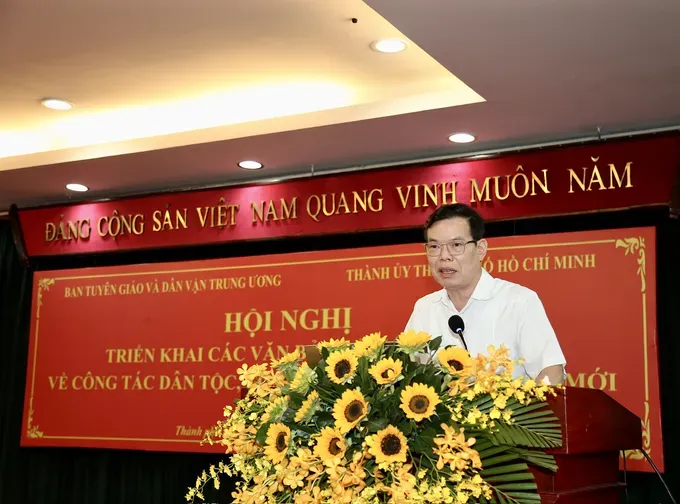
Speaking at the conference, Deputy Head of the Central Commission for Propaganda and Mass Mobilization, Trieu Tai Vinh, underscored that ethnic and religious affairs constitute a strategic, long-term task of particular importance in consolidating the great national unity bloc, maintaining socio-political stability, and advancing the country’s sustainable development.
In this regard, the Secretariat has promulgated directives, conclusions, and notices outlining key orientations and tasks, ensuring the consistent and coherent implementation of the Party’s viewpoints on ethnic and religious affairs in the new context. These documents reaffirm that ethnic and religious affairs are the responsibility of the entire political system and must be embedded within the overall national development strategy, closely linked with socio-economic development, national defense and security, and the strengthening of the great national unity bloc.
In the context of implementing the two-tier local government model, ethnic and religious affairs require greater proactiveness, direct engagement, and effectiveness in leadership, direction, and organization of implementation right from the grassroots level. This places higher demands on Party committees and local authorities to strengthen situational awareness, promptly address emerging issues, and prevent the formation of “hotspots,” thereby ensuring socio-political stability from an early stage and from the grassroots.
Mr. Trieu Tai Vinh noted that, in recent years, ethnic and religious affairs have achieved significant results. Awareness and responsibility among authorities at all levels and sectors have been enhanced, while leadership methods and implementation mechanisms have seen notable innovations. These efforts have contributed to reinforcing public trust, preserving cultural identities, and safeguarding national defense and security.
In the time ahead, Party committees and Party organizations at all levels are required to continue thoroughly grasping and effectively implementing the Secretariat’s directives in alignment with the Resolution of the 14th National Party Congress, ensuring unity in both awareness and action under the guiding principle of “going ahead to pave the way, accompanying in implementation, and following up to review and consolidate.” Efforts should be accelerated to shift from a “purely administrative management” approach to one centered on “accompaniment, support, and development.”
In addition, it is essential to further innovate working methods toward closer engagement with grassroots realities, promoting the role of Party committees and grassroots-level officials in organizing implementation, with people placed at the center. Ethnic and religious affairs must be closely integrated with socio-economic development while ensuring national defense and security and maintaining firm political stability.
Strategic orientations for a large, multi-ethnic, and multi-religious urban center
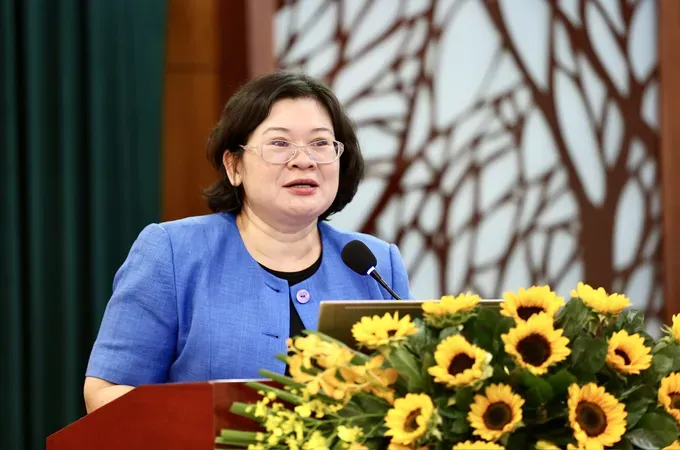
Addressing the conference, Vice Secretary of the Ho Chi Minh City Party Committee, Van Thi Bach Tuyet, respectfully acknowledged and fully absorbed the directive guidance from the leadership of the Central Commission for Propaganda and Mass Mobilization, affirming that these orientations will be translated into concrete programs and plans tailored to local conditions, ensuring practicality and effectiveness.
In recent years, ethnic and religious affairs have consistently received due attention from Ho Chi Minh City, with focused leadership and direction to ensure effective implementation in accordance with central regulations. The city has upheld the lawful right to freedom of belief and religion while encouraging religious followers to uphold the values of “good life, good faith.”
According to Ms. Van Thi Bach Tuyet, this stability has served as a crucial foundation enabling the city to achieve comprehensive outcomes across all sectors.
The Vice Secretary of the Ho Chi Minh City Party Committee emphasized that in the current context, the implementation of the Secretariat’s newly issued documents on ethnic and religious affairs carries particular significance. These documents not only provide strategic direction but also meet the practical requirements of a large, multiethnic, and multireligious urban center.
She expressed sincere appreciation for the attention and support extended by the Central Commission for Propaganda and Mass Mobilization, as well as ministries and central agencies, whose timely guidance, coordination, and assistance have enabled the city to effectively carry out ethnic and religious affairs in recent years. The city also expressed its expectation for continued support, close coordination, and companionship from central authorities in the time ahead.
Following the administrative consolidation, Ho Chi Minh City now covers an area of over 6,772 square kilometers and has a population exceeding 14 million. The city is home to 53 ethnic minority groups, accounting for more than 4.3 percent of the total population. Notably, four groups, including Hoa, Khmer, Cham, and Cho Ro, have relatively large populations and reside in concentrated communities.
Ho Chi Minh City currently recognizes 13 religions and more than 1,600 religious establishments, with over 4 million adherents. The city also hosts numerous major religious organizations, including those with central headquarters, representative offices, or key coordinating bodies, reflecting its role as a significant hub for religious activities nationwide.