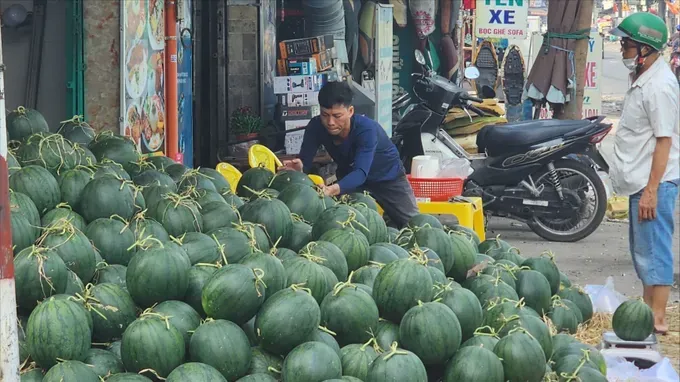
On many streets in Ho Chi Minh City, such as Phan Van Tri in An Nhon Ward, No Trang Long in Binh Loi Trung Ward, Pham Van Chieu in An Hoi Tay Ward, many types of fruit such as watermelons, oranges, mangoes are piled up and sold right on the sidewalk at relatively cheap prices.
On the sidewalk of Phan Van Tri Street, in just a short stretch, there are two fairly large stalls selling mangoes and watermelons. Mangoes are priced from VND8,000 - VND10,000 per kg, watermelons from VND5,000 - VND6,000 per kg depending on the type, only half the price compared to before the Lunar New Year. On No Trang Long Street, mandarin oranges are being sold for VND5,000 - VND7,000 per kg, wholesaled at VND50,000 per 10kg bag.
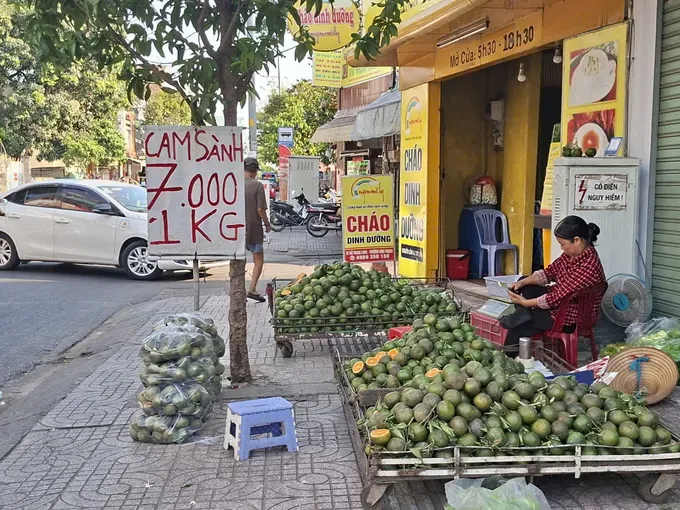
On online marketplaces, sellers are posting urgent “rescue” appeals for mandarin oranges from the Mekong Delta, offering baskets of 17–20 kilograms at VND120,000–130,000. The price represents barely 30 percent of peak-season levels, underscoring the severity of the current market slump.
At An Nhon market in An Nhon Ward, fruit vendor Nguyen Thi Hoa said that the supply of goods has been quite abundant in recent days, and the prices of some items have dropped sharply. Oranges and watermelons are plentiful and quite cheap, some types are below VND10,000 per kg, but demand remains low.
Surveys conducted at wholesale agricultural and food markets in Thu Duc and Hoc Mon indicate that the current price of grade 1 oranges ranges from VND18,000 to VND22,000 per kilogram, whereas it previously approached nearly VND50,000 per kilogram. Additionally, the prices of dragon fruit have significantly decreased from VND20,000 per kilogram to VND12,000 per kilogram.
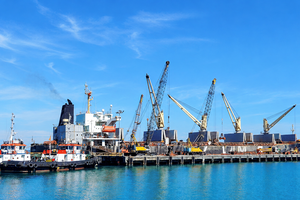
Dang Phuc Nguyen, General Secretary of the Vietnam Fruit and Vegetable Association, explained that the steep decline in fruit prices stems from multiple external pressures. Ongoing conflict in the Middle East has disrupted export channels, while rising fuel costs have driven up logistics expenses. At the same time, many international buyers remain cautious, creating bottlenecks in distribution.
Compounding these challenges, China—the primary market for several Vietnamese fruits—has tightened quarantine and quality standards, further restricting export opportunities.