As of March 23, the Steering Committee for Anti-Smuggling, Trade Fraud and Counterfeit Goods in Dong Nai Province (Steering Committee 389) issued a directive requesting the provincial police to coordinate with relevant agencies to deploy professional measures to combat smuggling, trade fraud, hoarding and market manipulation in the petroleum sector.
Accordingly, Dong Nai authorities have been instructed to tighten control over border areas, checkpoints, trails and informal crossings, especially key routes at high risk of fuel smuggling and illegal transportation. The efforts aim to detect and prevent violations at an early stage.
Relevant agencies are to work closely with the provincial police, the Market Management Department and other forces to conduct joint patrols and inspections, targeting smuggling rings and networks operating across the border if any.
At the same time, local authorities are tasked with monitoring the operations of fuel retail outlets and strictly handling acts of hoarding and artificial supply shortages. They are also required to closely supervise import-export activities, temporary import for re-export and fuel transit, as well as tighten control over transport vehicles, documentation and the origin of goods.
In Dak Lak Province, the provincial People’s Committee has directed departments, agencies and local authorities to strengthen inspections and oversight of fuel trading activities, strictly penalizing violations, particularly unjustified sales suspensions, hoarding and selling at incorrect prices.
Fuel distributors, agents, and retailers are forbidden from unilaterally suspending operations or engaging in hoarding and speculative activities that may destabilize the market.
To ensure compliance with fuel trading regulations amid rising prices, Chairman of the Lam Dong Provincial People’s Committee Ho Van Muoi has instructed the provincial Department of Industry and Trade to direct the market management force to coordinate with the provincial police in strengthening inspections and supervision. This aims to prevent and strictly handle organizations and individuals exploiting the situation for hoarding, speculation, smuggling, or the production and trading of counterfeit and substandard fuel that negatively affect public security, business operations and public trust.
Meanwhile, the Khanh Hoa Provincial Market Management Sub-Department has intensified inspections of fuel trading activities since early March 2026.
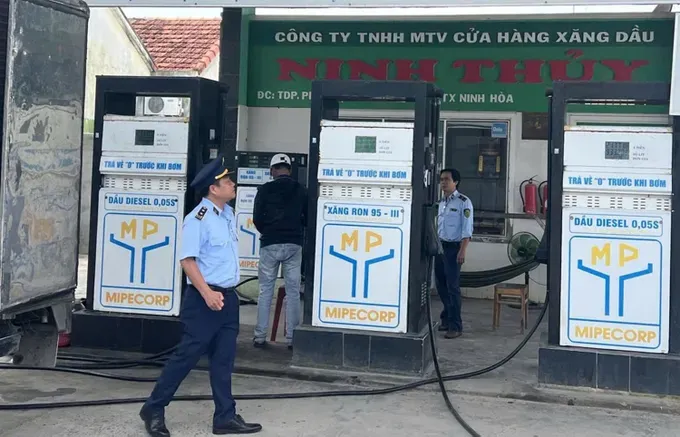
Inspections show that most outlets are complying with regulations on price listing and sales, with supply remaining relatively stable. Businesses are also encouraging consumers to purchase fuel based on actual needs, avoiding stockpiling that could pose safety risks. Citizens can report unusual signs in fuel trading activities via the hotline 1900.888.655.
The Civil Aviation Authority of Vietnam has also assessed the impact of rising fuel prices, noting that domestic airlines are being forced to cut some flights.
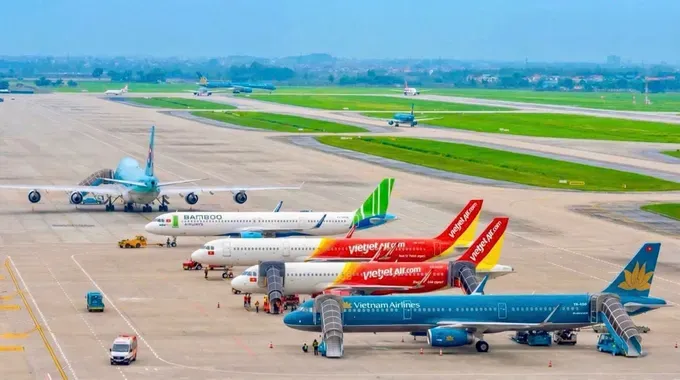
According to Mr. Do Hong Cam, Deputy Director of the Civil Aviation Authority, Vietnamese airlines are facing the risk of aviation fuel shortages. In response, Vietnam Airlines plans to temporarily suspend several routes starting April 1, including Hai Phong–Buon Ma Thuot, Hai Phong–Cam Ranh, Hai Phong–Phu Quoc, Hai Phong–Can Tho, Ho Chi Minh City–Van Don, Ho Chi Minh City–Rach Gia, and Ho Chi Minh City–Dien Bien, with a total of 23 flights per week to be canceled.
Currently, Vietnamese airlines are developing plans to introduce fuel surcharges on international routes, which may take effect from early April this year.