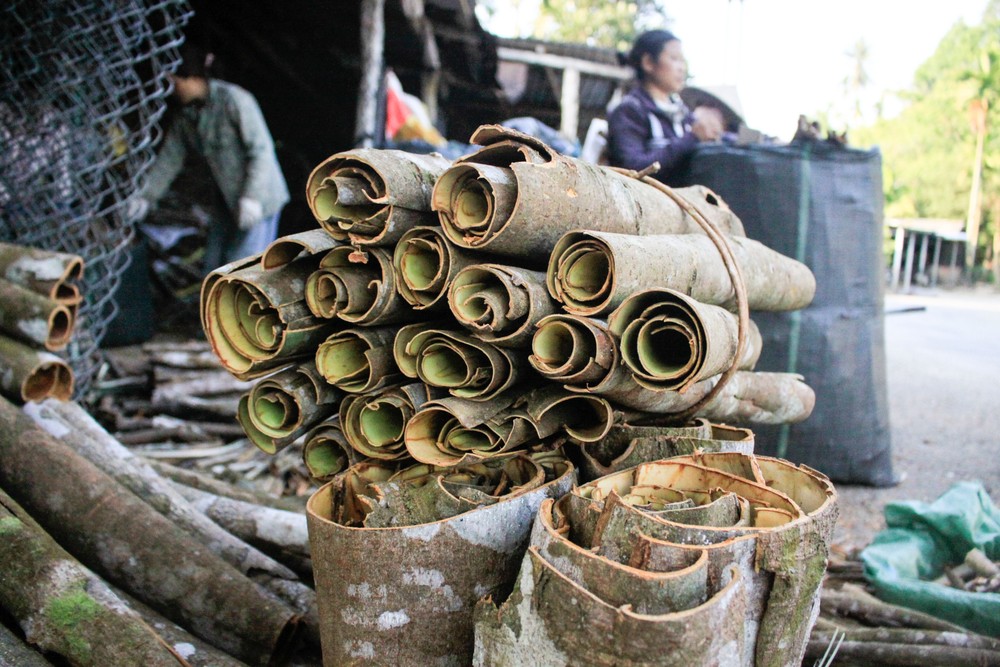
Quang Ngai Province is home to the country’s second-largest cinnamon-growing area, covering about 5,500 hectares and producing roughly 2,000–2,500 tons of cinnamon bark each year.
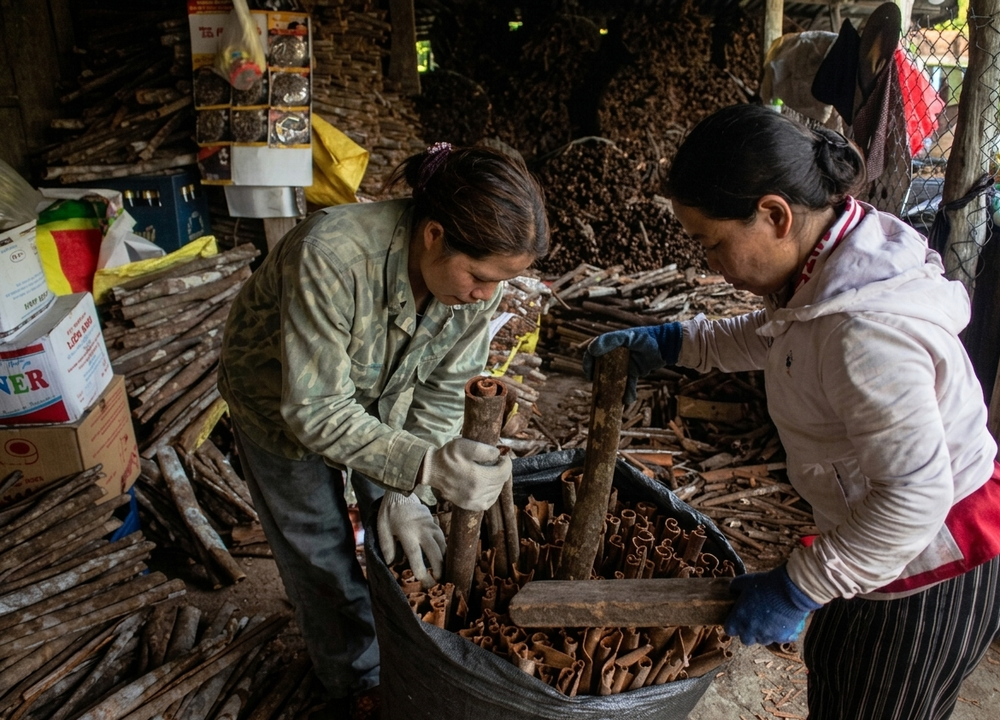
These days, farmers across the mountainous areas of Quang Ngai have entered the cinnamon harvesting season. However, early-season prices for fresh bark this year range between just VND10,000 and VND15,000 per kilogram, a sharp decline from the VND20,000–40,000 per kilogram recorded in previous years. Meanwhile, it takes about 2 kilograms of fresh bark to produce 1 kilogram of dried cinnamon, yet the dried product sells for only VND20,000–25,000 per kilogram, leaving farmers with little economic return.
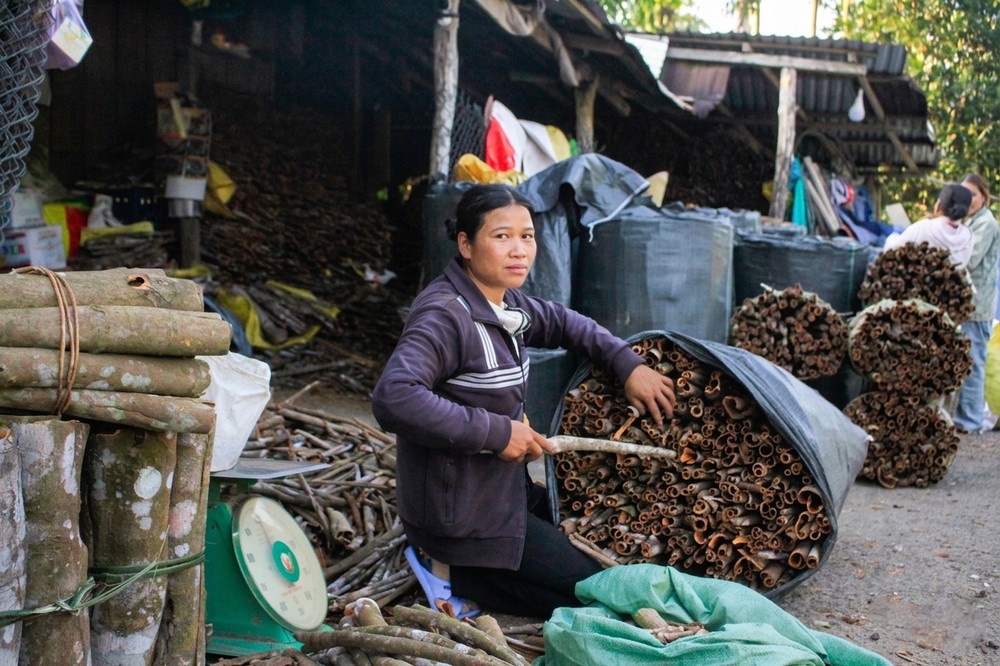
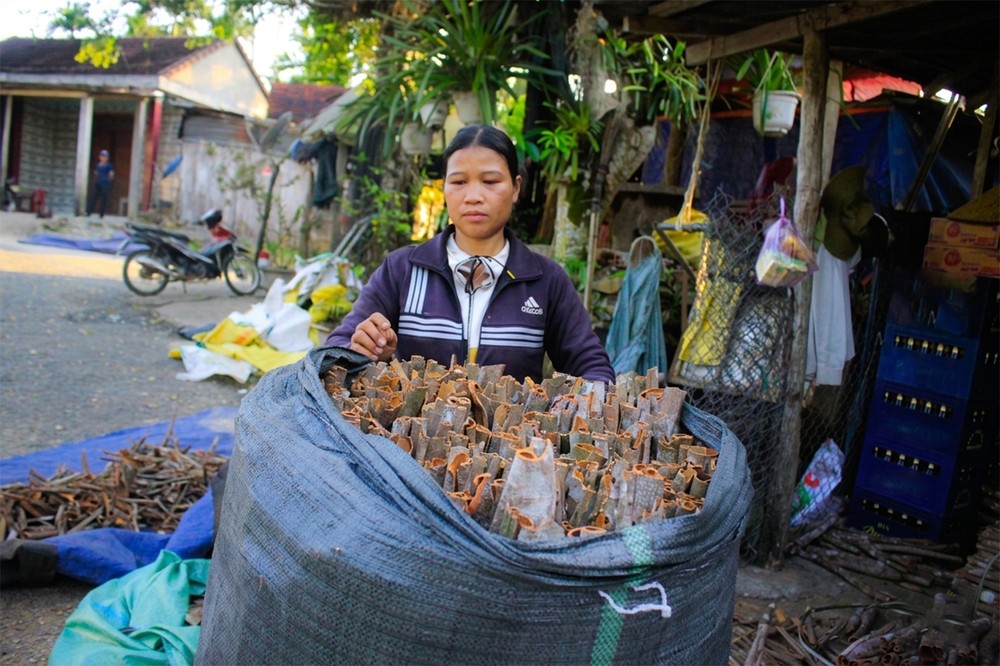
Mr. Ho Van Bay, Head of Tra Huynh Hamlet in Tay Tra Bong Commune, Quang Ngai Province, said the village currently has about 15 hectares of cinnamon, yielding roughly 5 tons annually. With cinnamon cultivation, farmers do not harvest massively but instead selectively cut trees that have reached sufficient age and quality. However, due to this year’s steep price drop, harvesting has slowed considerably, with villagers felling trees only when they urgently need cash, while most prefer to wait for prices to recover.
In Tra Bong, widely known as the region’s cinnamon capital, there are two harvesting seasons each year. The first runs from late February to the end of April. The second takes place from July to August, when the bark is easier to peel, and the essential oil content is at its highest.
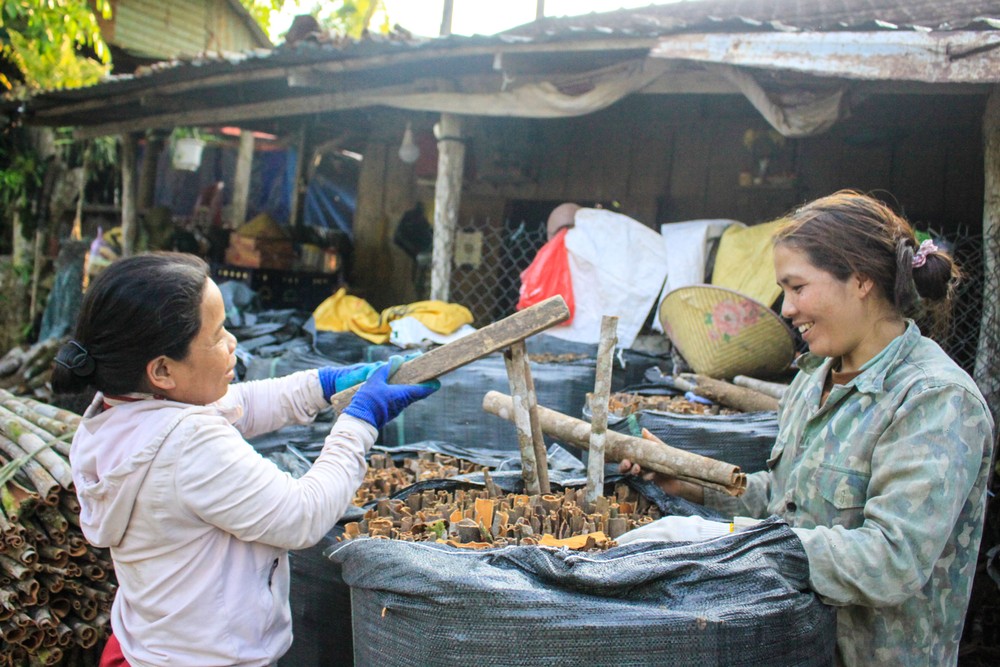
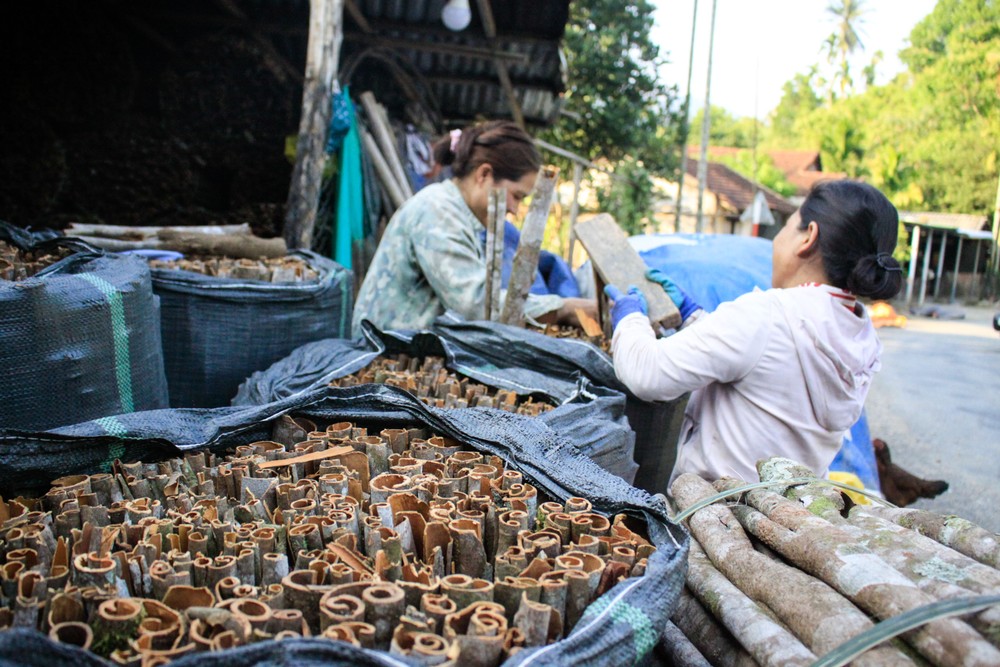
Ho Van Sam, also from Tra Huynh Hamlet, owns 3 hectares of cinnamon with an estimated annual harvest of about 2 tons. With fresh bark prices hovering at only VND10,000–15,000 per kilogram, he said there is virtually no profit, prompting him and many other farmers to scale back harvesting.
Mr. Nguyen Huu Tuyen, Head of the Economic Department of Tay Tra Bong commune, said that in 2026, the locality plans to plant an additional 40–50 hectares of cinnamon, bringing the total area to more than 400 hectares. However, the sharp decline in fresh bark prices compared with previous years has led to a noticeable slowdown in harvesting activities.
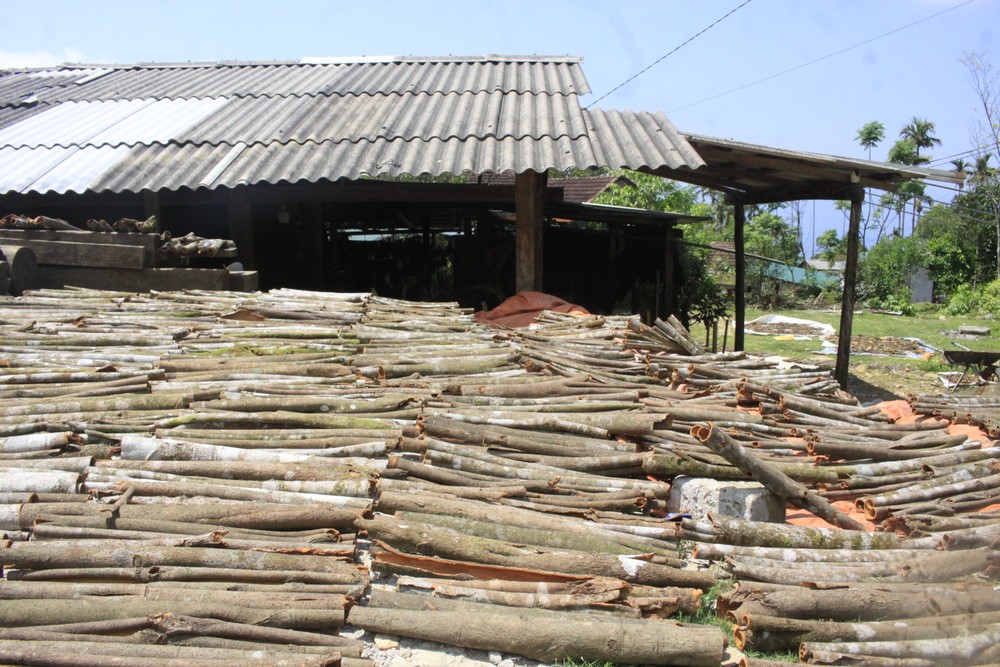
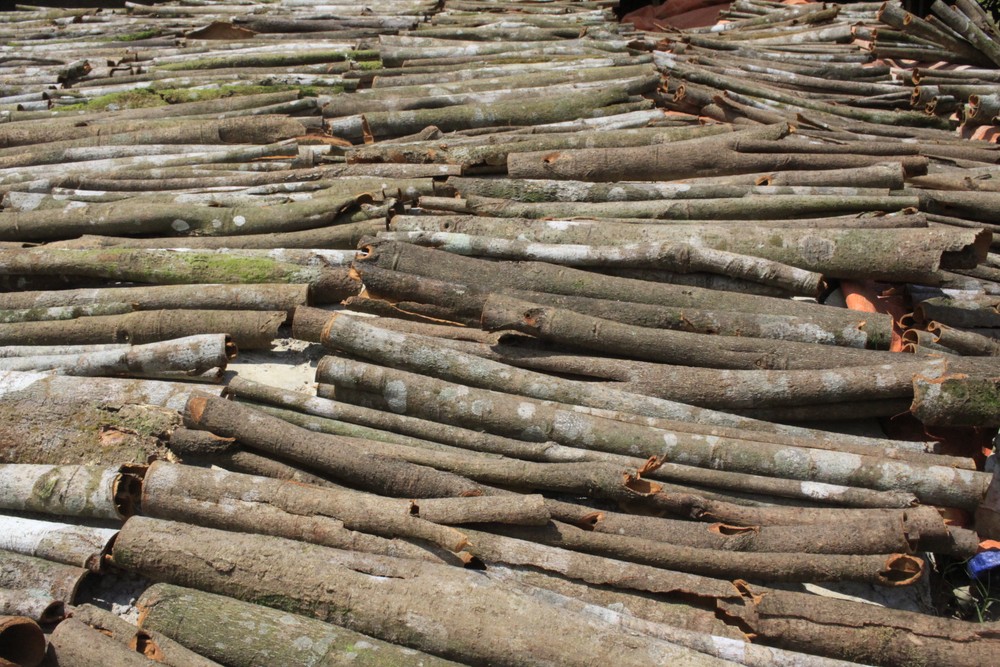
Tra Bong cinnamon is prized for its distinctive aroma and high essential oil content, making it popular in both domestic and international markets. The product is exported to China, France, India, South Korea, and several other countries.
In 2009, Tra Bong cinnamon was granted collective trademark protection under the name “Tra Bong – Tay Tra cinnamon” by the Intellectual Property Office of Vietnam. In 2012, it was recognized as one of four specialty products of Quang Ngai Province to set a Vietnam record and was listed among the country’s top ten famous natural specialties. In 2013, the Asia Book of Records further recognized Tra Bong cinnamon as an Asian record-holding specialty. A year later, it was honored with the title celebrating the cultural, culinary, and specialty heritage of Vietnam’s three regions.